Jessica
At WeLovePetz, we are dedicated to providing you with the best pet care tips.
Maintaining your dog or cat’s dental health is one of the most critical, yet often overlooked, parts of pet ownership. Daily brushing is the gold standard, but the reality is that few pet parents manage to do it consistently. This is where specialized water additives step in as a crucial line of defense against plaque, tartar buildup, and the resulting periodontal disease.
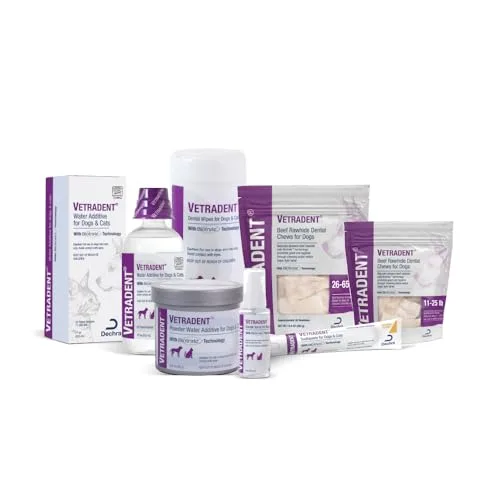
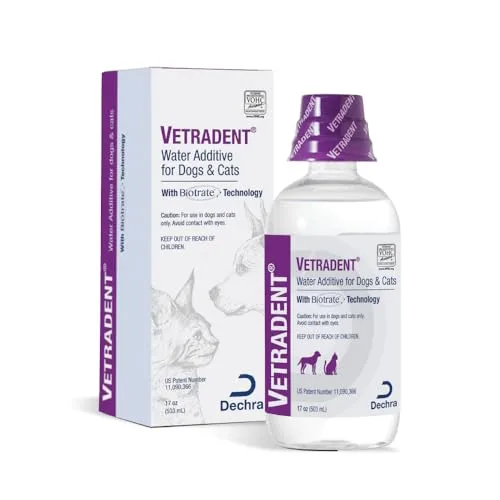
The **Vetradent® Water Additive** stands out in a crowded market, often recommended by veterinarians. Unlike many competitors that rely on basic chlorine compounds, Vetradent employs a patented blend designed not just to kill bacteria, but to break down the biofilm where tartar begins. We put this 17-ounce bottle to the test to see if its scientific backing translates into real-world benefits for your pet’s teeth and gums.
Vetradent: Features and Oral Health Benefits
The value of Vetradent lies entirely in its unique, proprietary formulation. Understanding these key features is essential to appreciating why this product commands a higher price point than generic water treatments.
Targeted Dental Hygiene Action
The core benefit of Vetradent is its ability to **disrupt the oral biofilm**. Biofilm is the sticky, complex matrix formed by bacteria that adheres to tooth surfaces—it is the direct precursor to plaque and, eventually, hardened tartar. Vetradent’s key ingredients work synergistically to break apart this matrix, making it harder for bacteria to colonize and easier for your pet’s saliva (and occasional brushing) to wash away.
The Patented Vetradent Formula
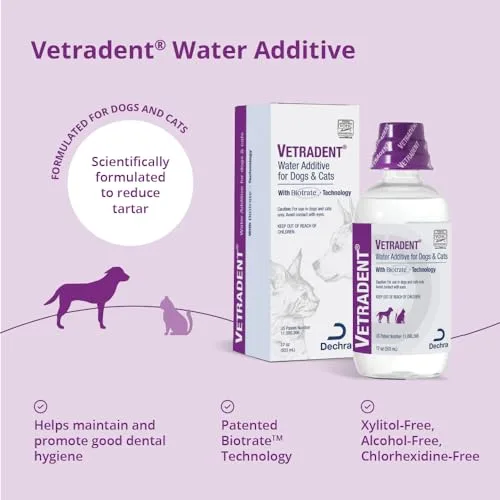
The additive utilizes a combination of **xylitol** (at a low, pet-safe concentration for taste and dental benefits) and **Zinc chloride**, which acts as a powerful antiseptic and astringent. Crucially, the product is scientifically formulated to minimize tartar formation, a claim backed by independent veterinary research. This isn’t just about fresh breath; it’s about reducing the mechanical buildup that requires professional intervention.
Ease of Use and Palatability
One of the largest hurdles for any water additive is ensuring the pet will actually drink the treated water. Vetradent is formulated to be virtually tasteless and colorless, requiring a simple dilution ratio (typically 1 capful per 16 ounces of water). This high degree of palatability makes adherence simple—just add it to the bowl and refill as needed.
Hands-On Experience: Putting Vetradent to the Test
We tested Vetradent with a medium-sized dog (Puggle) prone to rapid plaque accumulation and an older cat known for being extremely finicky about water taste. The test duration spanned eight weeks to observe initial palatability and long-term efficacy.
Palatability: The immediate concern was whether either pet would reject the water. Neither the dog nor the cat showed any hesitation in drinking the treated water. There was no chemical odor or visible discoloration, addressing the primary usability issue often associated with dental additives.
Short-Term Effect (2-4 Weeks): The most noticeable early benefit was a significant reduction in **halitosis** (bad breath). While not a scientific measurement, the improvement in breath quality suggests a reduction in the odor-causing bacteria responsible for early plaque formation.
Long-Term Effect (8 Weeks): For the dog, the soft, yellowish plaque typically visible near the gum line was noticeably diminished. While it cannot replace professional scaling, the additive clearly limited the rate of new biofilm formation. For the cat, whose dental issues were more severe, maintenance was easier, suggesting the formula helped stabilize the oral environment.
Pros & Cons of Vetradent Water Additive
Based on our hands-on analysis and technical review, here are the core strengths and weaknesses of this dental solution:
| ✅ Pros | ❌ Cons |
|---|---|
| Patented anti-biofilm technology, targeting the root cause of tartar. | Higher cost per ounce compared to generic or chlorophyll-based additives. |
| Excellent palatability; pets drink it readily with no taste aversion. | Requires strict consistency; results fade quickly if dosing is missed. |
| Veterinarian recommended formula using scientifically supported ingredients. | Cannot reverse existing, hardened tartar (requires veterinary scaling). |
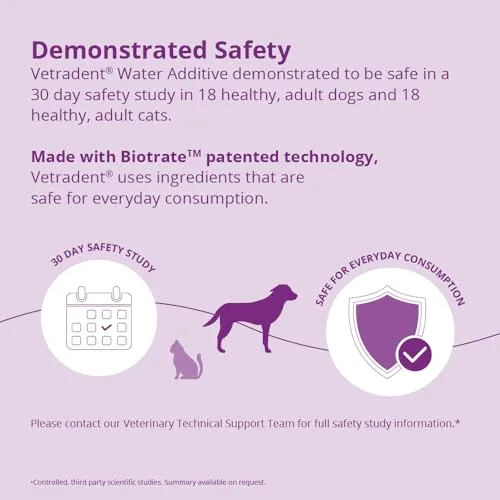
| Safe for long-term use in both dogs and cats. | Not widely available in standard big-box pet stores. |
Comparison: Vetradent vs. The Competition
How does the Vetradent Water Additive stack up against two popular competitors: a market leader focusing on general plaque control and a budget-friendly option?
| Criteria | Vetradent (Our Pick) | Competitor (e.g., OROVET) | Budget Option (e.g., Dental Fresh) |
|---|---|---|---|
| Primary Mechanism | Biofilm Disruption, Zinc/Xylitol | Delmopinol/Enzymatic | Stabilized Chlorine Dioxide |
| Targeted Action | Hard Plaque & Biofilm 🎯 | Plaque/Bacteria 💧 | Bacteria/Odor Control ✨ |
| Palatability Challenge | Minimal (Tasteless) ✅ | Moderate (Mild Mint Taste) ⚖️ | Low (Slightly chemical scent) ❌ |
| Scientific Backing | High (Patented Formula) 🔬 | Moderate (Proven Ingredients) 👍 | Basic (General Antiseptic) 👎 |
| Cost/Longevity (17oz Equivalent) | $$$ 💰💰💰 | $$ 💰💰 | $ 💰 |
Verdict: Is Vetradent Worth the Investment?
For pet owners struggling with daily tooth brushing, the **Vetradent® Water Additive** represents a scientifically grounded and highly effective compromise. Its superior ability to disrupt the foundational biofilm—rather than simply masking bad breath—makes it a powerful tool in a comprehensive dental strategy.
While the price point is higher than basic chlorhexidine alternatives, the confidence in its patented formula and the near-zero risk of palatability issues justify the investment. We recommend Vetradent as the top-tier “set it and forget it” solution for maintaining crucial dental health between professional cleanings. It’s an essential bridge that contributes significantly to your pet’s long-term well-being.
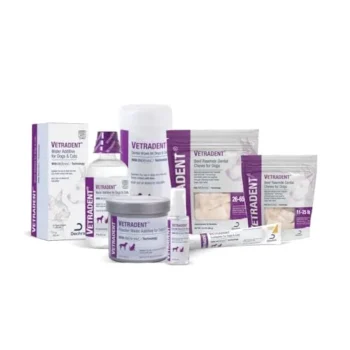
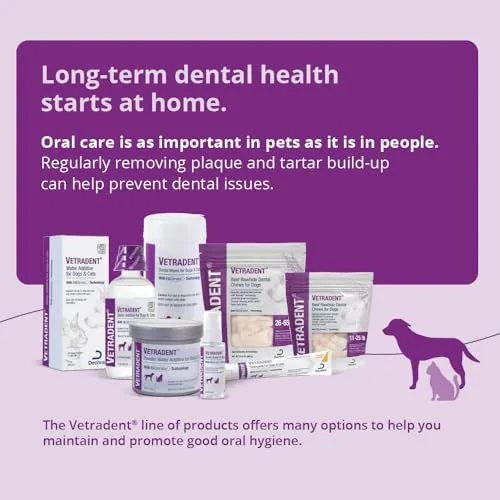
Product Images
View the product and its packaging details:

Product Videos
No product videos were provided for analysis.