Kimberly
At WeLovePetz, we are dedicated to providing you with the best pet care tips.
The Veken Stainless Steel Fountain: A Dog Owner’s 6-Month Reality Check
From stubborn dehydration to happy slurps—my honest, unfiltered journey with a fountain that changed our daily routine.
Let’s be real here: I never thought I’d be the person to write a 2,000-word review about a dog water fountain. But when your best furry friend looks up at you with those “I don’t feel good” eyes, and the vet bill has more digits than your last grocery run, you start paying attention to things like hydration. My dog, a stubborn but lovable terrier mix named Rusty, was the king of ignoring his water bowl. He’d take a courtesy sip, maybe two, and walk away. The water would just sit there, getting warm and collecting dust bunnies. I tried different bowls, locations, even adding a splash of chicken broth. Nothing worked consistently. Then came the health scare that pushed me over the edge. This isn’t a product endorsement; it’s the story of how a stainless steel appliance from Amazon became a quiet, bubbling fixture in our home for the past half-year.
The Breaking Point: Why a Bowl Wasn’t Cutting It
It was a regular Thursday when I noticed Rusty was making more trips to the backyard than usual, but producing very little. He seemed restless. By Friday, he was straining. The emergency vet visit was a blur of anxiety and expensive tests. The diagnosis wasn’t a blockage, thank goodness, but the start of a urinary tract issue. The vet’s advice was simple, almost frustratingly so: “He needs to drink more water. A lot more. It’s the best preventative thing you can do.”
I felt like I’d failed him. Here I was, buying him fancy treats and the best kibble I could afford, but I couldn’t get him to do the most basic thing—drink water. I learned something that weekend that stuck with me. Dogs, like their wild ancestors, often have a low thirst drive. In nature, still water can be risky—it might be contaminated. Moving water from a stream is safer, fresher. That big, stagnant bowl in my kitchen? To Rusty’s instincts, it might as well have been a murky pond. I was fighting biology.
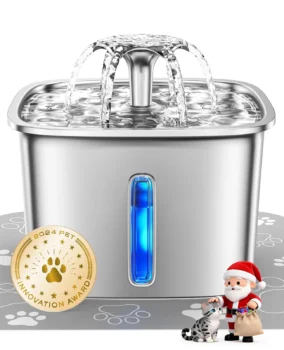
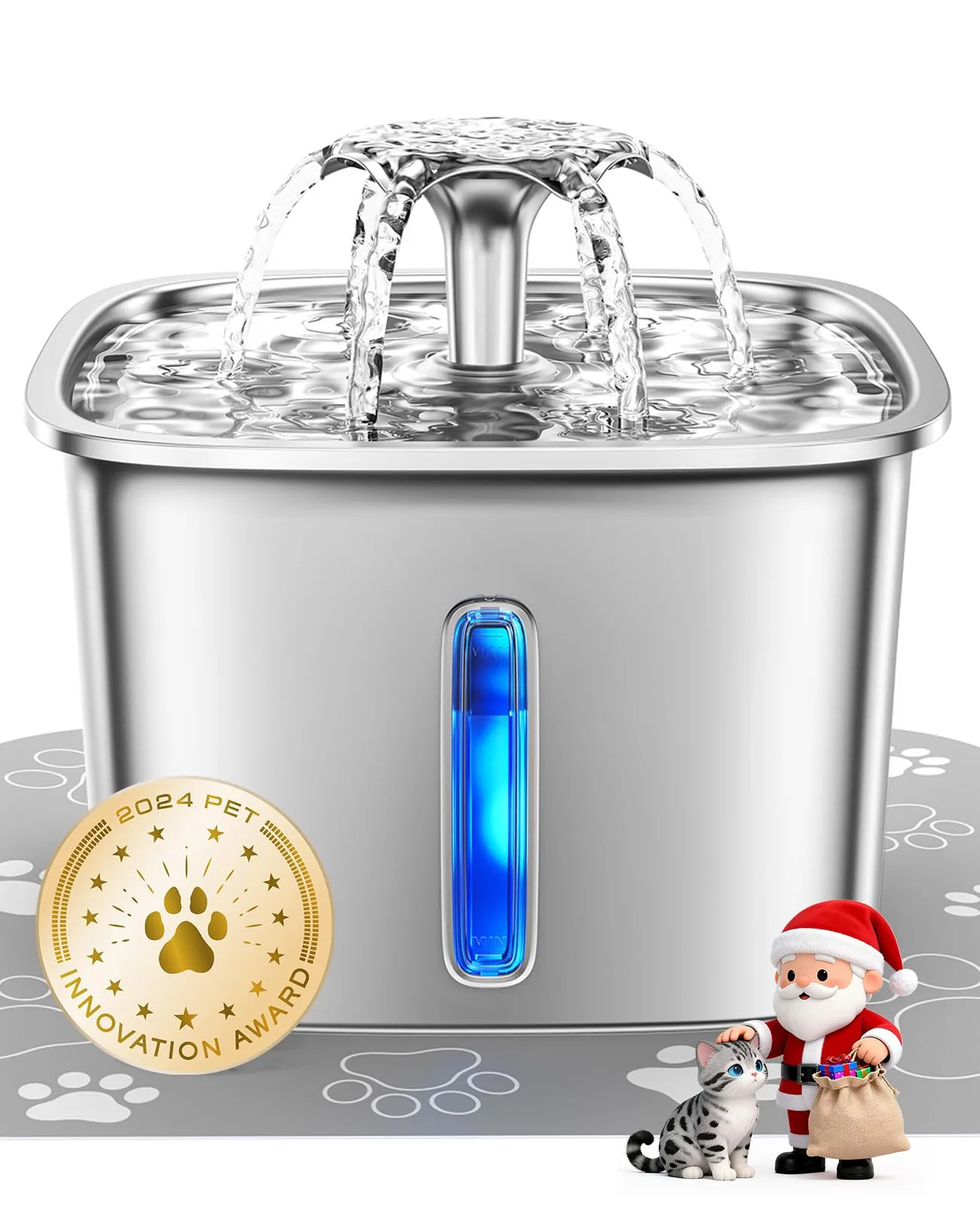
I started researching pet fountains. The plastic ones seemed okay at first, but reviews mentioned they could get slimy and develop a funky smell. A ceramic one looked nice but was reportedly heavy and prone to breaking. Then I saw the Veken Stainless Steel Pet Fountain. The words “stainless steel” and “easy to clean” jumped out at me. I’m not a clean freak, but the idea of not having to scrub mysterious biofilm out of plastic grooves sounded like a win. I was skeptical of the “Innovation Award” sticker—marketing fluff, probably—but desperate enough to give it a shot. I ordered it that night.
Unboxing & First Impressions: The “Heft” Test
The box arrived a couple of days later, and the first thing I noticed was the weight. It had a substantial feel. Inside, everything was packed neatly: the main stainless steel top dish, a large plastic reservoir, a pump already in the base, two replacement filters, and a silicone mat. The instructions were a fold-out sheet with clear diagrams—no novel required.
My first minor hurdle was the filter. You have to soak it in water for about five minutes before first use to “activate” it. It makes sense—you want the carbon inside to start working—but it’s an extra step you need to remember. I gave all the parts a quick rinse (always wash new pet stuff, in my opinion) and started assembling. The pieces fit together intuitively with a satisfying click. No screws, no tools. Filling it up to the max line took what felt like a gallon of water. The 95-ounce capacity is no joke; it’s a serious reservoir.
Then came the moment of truth. I plugged it in, half-expecting a loud mechanical whir or, worse, silence. The pump started with a soft, low hum. Water began to flow smoothly over the stainless steel ramp, creating a gentle, continuous stream that trickled into the basin below. The sound was calming, like a tiny desktop water feature. A soft blue LED light ring around the top dish also lit up. In the daytime, it’s subtle. In our dimly lit kitchen in the evening, it gives the water a slight glow. I wasn’t sure if it was practical or just for show, but I’ll admit, it looked nice.
The Stainless Steel Factor: A Game-Changer for Maintenance
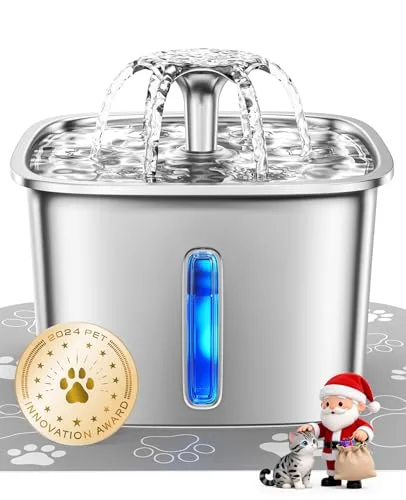
This was the main reason I chose this model over others. I’ve had plastic water bowls before. Over time, no matter how gently you clean them, they develop tiny scratches. Those microscopic grooves are like luxury condos for bacteria and biofilm—that slippery, sometimes smelly film that forms. You can scrub until your arms are sore, but the gunk seems embedded. Stainless steel is non-porous. There’s literally nowhere for that biofilm to hide.
After the first week of use, I took the stainless steel top dish to the sink. A swipe with a sponge and some dish soap, and it looked brand new. No residue, no film, no lingering odor. It felt clean in a way a plastic bowl never has. It’s also solid and has a bit of weight to it, so it doesn’t slide around easily. It doesn’t look like a pet accessory; it looks like a modern kitchen gadget. For someone who values both cleanliness and aesthetics, this feature alone felt worth the price.
Decoding the “5-Stage Filtration” (In Plain English)
The box and marketing materials make a big deal about the “Advanced 5-Stage Filtration System.” It sounds impressive, but as a regular dog owner, I just wanted to know: what does this actually do for my dog’s water? After using it for months and taking the filters apart, here’s my simple breakdown:
- The Foam Sleeves (Stages 1 & 2): These are the workhorses. They catch all the big, visible stuff. I’m talking dog hair (so much hair), dust particles, bits of dirt from paws, even the occasional crumb that finds its way over. When you change the filter, you can actually see all this debris trapped in the foam. This protects the pump’s mechanics from getting clogged.
- The Activated Carbon Core (Stage 3): This is for taste and smell. It acts like a sponge for chemicals like chlorine that are commonly in tap water, and it can absorb other odd tastes or odors. I think this is why the water from the fountain might taste “fresher” or more appealing to pets.
- The Silver Ion Beads (Stage 4): This is the antibacterial line of defense. Tiny beads infused with silver ions are mixed into the filter material. Silver has properties that can inhibit the growth of bacteria and algae. It’s not a sterilizer, but it helps slow down the gunk from growing inside the damp filter itself.
- The Scale Inhibitors (Stage 5): This was a new one for me. If you live in an area with hard water (water with lots of minerals), you know limescale can build up in your kettle or showerhead. The same can happen in a water fountain’s pump, eventually causing it to seize up. These inhibitors help reduce that mineral buildup, which in theory should make the pump last longer.
In practical terms, this system keeps the water looking crystal clear and free of any “stale bowl” smell for a surprisingly long time. The manufacturer suggests changing the filter every 2-4 weeks. With one medium-sized dog, I find the sweet spot is around the 3-week mark.
The 6-Month Timeline: Adoption, Routine, and Reality
Weeks 1-2: The Cautious Investigation
I placed the fountain in its permanent spot and left Rusty’s old bowl nearby for a couple of days. At first, he was suspicious. He’d circle it, sniff the air, watch the water flow. The gentle sound and the moving water clearly piqued his curiosity. It took about 36 hours before he finally approached and took a tentative drink from the stream. That was the first victory.
Month 1-2: Establishing the New Normal
The old bowl was removed. Rusty was now drinking exclusively from the fountain. I noticed he was taking more frequent, smaller drinks throughout the day instead of one big gulp. The proof was in the refills—I was adding water much less often than I had been with his bowl. The blue LED light became an instant water-level gauge. No more sticking a finger in to check.
Month 3-6: Maintenance & Mindfulness
The routine was set. Weekly wipe-down of the stainless steel top, deep clean and filter change every three weeks. I learned the hard way that skipping the pump clean leads to a louder hum. The fountain became a background part of our home. The gentle trickle was white noise. Rusty’s health scare hasn’t repeated itself.
The Honest Breakdown: What Worked & What Didn’t
What I Genuinely Appreciate
- Stainless Steel Cleanability: This is the top feature. It wipes clean in seconds with no lingering smells or stains. It feels hygienic.
- Increased Water Intake: The moving water is a draw. Rusty drinks more frequently and voluntarily now. The anxiety around his hydration has mostly vanished.
- Huge Capacity: The 95oz tank means I only need to refill it once a week for one dog. It’s fantastic for weekends away or just reducing daily chores.
- Useful LED Light: Far from a gimmick. At a glance from across the room, I can see if the water is getting low. It’s a brilliant simple indicator.
- Stable Design: The wide base and grippy silicone mat prevent any sliding or tipping, even from an enthusiastic dog.
The Trade-Offs & Considerations
- It’s an Appliance: It requires electricity, filter changes, and regular cleaning. It’s not a passive bowl you just fill and forget.
- Ongoing Filter Cost: You need to budget for replacement filters. It’s a subscription-style cost for clean water.
- Pump Maintenance Learning Curve: You must learn to disassemble and clean the small pump impeller. Neglect this, and the pump will fail.
- Not Silent: It produces a soft hum and water trickle. In a very small, perfectly quiet space, you’ll hear it. I find it soothing.
- Cord Management: You have a power cord to deal with. It needs to be placed where pets won’t chew on it.
Comparison: What I’ve Tried Before
| Consideration | Veken Stainless Steel Fountain | Ceramic Bowl / Fountain | Standard Plastic Bowl |
|---|---|---|---|
| Material & Cleanliness | Stainless Steel. Non-porous, wipes clean effortlessly, no odor retention. | Glazed Ceramic. Generally easy to clean but can be very heavy and is prone to chipping or cracking if dropped. | Plastic. Develops scratches that harbor bacteria and biofilm, often retains smells. |
| Water Appeal | High. Flowing, filtered, oxygenated water triggers natural drinking instincts. | Medium. Still water unless it’s a ceramic fountain, which are less common. | Low. Stagnant, flat water that pets may instinctively avoid. |
| Convenience | Very High (once set up). Large capacity means infrequent refills. Visual water level indicator. | Medium. Needs daily refilling and washing. Heavy to move when full. | Low. Requires daily, sometimes multiple-times-daily, refilling and frequent washing to stay sanitary. |
| Durability | High. Stainless steel top is virtually indestructible. Pump is serviceable. | Fragile. One accident and it’s a pile of sharp pieces. | Low. Scratches easily, becomes visually unappealing and unsanitary over time. |
| Cost Over Time | Mid-to-high upfront cost + ongoing filter expenses. | Can be high upfront for quality ceramic, no ongoing costs (unless a fountain with filters). | Very low upfront, but frequent replacement costs add up. |
Frequently Pondered Questions (From One Owner to Another)
For a dog who was a reluctant drinker, the difference was night and day. The movement and sound of the water seem to tap into something instinctual. It’s not just about having water available; it’s about making it appealing. A bowl holds water. A fountain offers fresh, circulating, filtered water. It’s the difference between a still pond and a babbling brook.
This is crucial. I do a full disassembly, including cleaning the pump impeller, every time I change the filter—so every three weeks. I tried stretching it to four once, and the pump started making a faint grinding noise. A tiny piece of hair had wrapped around the spindle. It’s a 5-minute task that’s essential for the longevity of the fountain. Consider it non-negotiable.
The pump is a submersible, low-voltage pump specifically designed for this purpose. All the electrical components are sealed within the pump housing. I’ve never had any issue with sparks or shocks. I’m always careful to have dry hands when plugging or unplugging it, and I never submerge the electrical plug. It feels as safe as any other small kitchen appliance that uses water.
Don’t do what I almost did and just swap it out cold turkey. Set the fountain up in its spot but leave the old water bowl nearby for several days. Let your dog investigate the fountain on their own terms with it turned off. You can even put a few treats near it. After a few days, turn it on for short periods while they’re in the room. Patience is key. Forcing it can create a negative association.
The fountain stops. It becomes a large, still water bowl. The water inside is still filtered (until the filter reaches capacity), but it’s not moving. For a short outage of a few hours, it’s perfectly fine. For a longer outage, you might want to offer water from a fresh source or manually stir the water in the fountain. It’s a good reminder to have a backup plan, like keeping a regular bowl handy for emergencies.
I was cynical about it too. After living with it, I think the “innovation” is in the thoughtful combination of practical features for the price: the stainless steel top for hygiene paired with a lighter plastic reservoir, the inclusion of scale inhibitors in the filter for hard water areas, and the genuinely useful LED water-level light. It’s not one earth-shattering feature, but a well-executed package that solves several common pain points.
The Final Take: Was It Worth It?
The Veken Stainless Steel Pet Fountain addressed a genuine point of stress in my life. It transformed hydration from a daily worry into a background, self-managing aspect of Rusty’s care. The stainless steel is everything I hoped for—sanitary, durable, and easy to maintain. The large capacity is a true convenience, and the filtration system gives me peace of mind about water quality.
It’s not a magic, zero-effort solution. It requires a modest investment of time for cleaning and a budget for filters. But when I weigh that against the cost and heartache of another vet visit for a preventable issue, the math is easy. It turned my dog from a polite sipper into an enthusiastic drinker. For that alone, it has earned its permanent spot on our kitchen floor.
My bottom line: If you’re battling with a pet who doesn’t drink enough and you’re willing to put in a little routine maintenance, this fountain is one of the most effective tools I’ve found.
Disclaimer: I am a passionate pet owner, not a veterinarian. The information in this article is based on research and personal experience. Always consult your vet before changing your pet’s diet or medication.
Authors