Jennifer
Welcome to WeLovePetz, your number one source for all things pets.
The Single-Ingredient Revolution
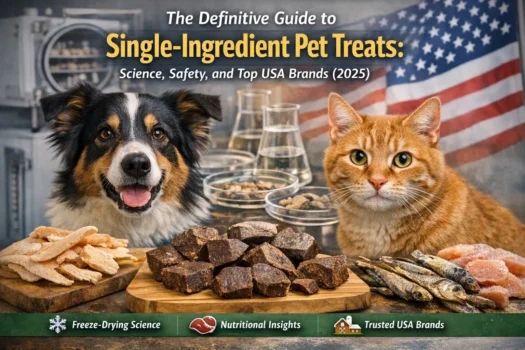
Let me be blunt: if you’re still feeding your dog treats with ingredients you can’t pronounce, you’re operating on 20-year-old information. Over the past decade in my nutrition practice, I’ve watched a fundamental truth emerge from the chaos of pet food marketing: simplicity equals safety, and transparency equals trust.
The US market for single-ingredient pet treats isn’t just growing—it’s exploding. From $850 million in 2020 to a projected $2.3 billion by 2025, this segment represents the most significant shift in pet snacking since the invention of the milk bone. But here’s what the marketing gloss doesn’t tell you: not all “single-ingredient” treats are created equal. The difference between freeze-dried and dehydrated, between USDA-inspected and “sourced globally,” between safe and contaminated—these distinctions matter more than the price tag or the packaging.
This guide isn’t about telling you what to buy. It’s about giving you the clinical framework to evaluate these products yourself. We’ll dissect the science behind preservation methods, analyze the nutritional profiles of everything from beef liver to black soldier fly larvae, examine the very real microbial risks, and break down the economics of what you’re actually paying for.
The Market Landscape: Why America Is Choosing Simplicity
Three converging factors are driving this revolution:
1. The Allergy Epidemic
I see it in my clinic weekly: dogs with chronic ear infections, cats with miliary dermatitis. Up to 15% of canine dermatology cases are food-related. When you’re dealing with cutaneous adverse food reactions (CAFR), the last thing you need is a treat with 30 mystery ingredients. Single-ingredient treats become diagnostic tools, allowing us to identify triggers without introducing new variables.
2. The Humanization of Pet Food
Americans now spend more on pet food than baby food. We’re applying our own dietary trends—clean eating, farm-to-table, ingredient transparency—to our pets. The owner who reads their own food labels now reads their dog’s treat labels too.
3. The Raw Food Movement’s Legacy
The raw diet trend taught millions of pet owners about the nutritional benefits of uncooked, unprocessed meat. But it also scared them with salmonella risks and handling hassles. Single-ingredient treats offer a compromise: the nutritional integrity of raw, with the convenience and (theoretical) safety of commercial processing.
The Science of Preservation: Beyond Marketing Claims
Freeze-Drying (Lyophilization): The Clinical Gold Standard
Here’s what most brands won’t tell you: true freeze-drying isn’t just “cold drying.” It’s a three-phase process of freezing, primary drying (sublimation), and secondary drying (desorption) that removes 95-99% of moisture without ever exceeding 100°F.
The Rehydration Test: Place a freeze-dried liver treat in warm water. If it returns to its original raw texture and appearance within 30 seconds, you have a quality product. If it remains brittle or disintegrates, the cellular structure was damaged by improper processing.
Dehydration vs. Air-Drying: The Temperature Divide
| Processing Method | Temperature Range | Moisture Removal | Nutrient Retention | Texture Outcome |
|---|---|---|---|---|
| Freeze-Drying | -40°F to 100°F | 95-99% | 97-99% of raw nutrients | Light, brittle, rehydrates perfectly |
| Air-Drying (Premium) | 90°F to 140°F | 80-90% | 70-85% of raw nutrients | Chewy, jerky-like, pliable |
| Commercial Dehydration | 160°F to 200°F | 90-95% | 50-70% of raw nutrients | Hard, dark, may be brittle |
Nutritional Profiles: Beyond “Just Meat”
Organ Meats: Nature’s Multivitamins (With Caveats)
Liver isn’t just “a treat”—it’s one of the most nutrient-dense foods on the planet. But there are critical differences:
| Organ Type | Key Nutrients | Clinical Benefits | Dosing Guidelines | Risk Factors |
|---|---|---|---|---|
| Beef Liver | Vitamin A (645% DV/oz), Copper, B12, Iron | Vision health, immune function, red blood cell production | Max 1 oz per 20 lbs body weight weekly | Hypervitaminosis A risk with overfeeding |
| Chicken Liver | Iron (117% DV/oz), Folate, Vitamin A (less than beef) | Anemia prevention, DNA synthesis, energy metabolism | Max 1.5 oz per 20 lbs weekly | Lower vitamin A risk than beef liver |
| Beef Lung | High protein, low fat, connective tissue | Low-calorie chewing satisfaction, joint support | Unlimited within 10% calorie rule | May cause loose stools if overfed |
| Beef Heart | CoQ10, Taurine, B vitamins, Iron | Cardiac support, energy production, antioxidant | 2-3 oz per 20 lbs weekly | High in cholesterol |
Case Study: Copper Storage Disease in a 4-Year-Old Labrador
Presentation: Recurrent hepatitis episodes, elevated liver enzymes.
History: Owner feeding 2 oz of freeze-dried beef liver daily as “healthy treats.”
Diagnosis: Breed-predisposed copper storage disease exacerbated by excessive dietary copper from liver.
Solution: Switched to chicken liver (lower copper) and limited to 1 oz weekly. Liver values normalized in 8 weeks.
Takeaway: Even “natural” foods can be harmful in excess. Know your breed’s predispositions.
Novel Proteins: The Allergy Solution
When I suspect a food allergy, my elimination diet protocol always includes single-ingredient novel protein treats. Why? Because even the most hydrolyzed prescription diet trial can be ruined by a single chicken-flavored biscuit.
Top Novel Proteins for 2025:
- Kangaroo: Ultra-lean (2% fat), novel to virtually all US dogs, high in CLA (conjugated linoleic acid) with anti-inflammatory properties.
- Venison (New Zealand): Not to be confused with US deer. NZ venison is farm-raised, consistent in quality, and free from chronic wasting disease concerns.
- Rabbit: The most hypoallergenic of all mammalian proteins. Also naturally high in phosphorus, which must be balanced with calcium in the main diet.
- Crickets & Black Soldier Fly Larvae: Not just a sustainability story. These insects contain lauric acid (antimicrobial) and chitin (prebiotic fiber for gut health).
Marine Sources: Beyond Omega-3s
Freeze-dried sardines aren’t just fishy treats. They’re complete nutrient packages:
- Whole Sardines/Anchovies: Bones included = natural calcium source. Ideal for raw-fed dogs needing mineral balance.
- Green Lipped Mussel: Contains glycosaminoglycans (GAGs) and ETA (eicosatetraenoic acid) with proven anti-arthritic effects. More effective than glucosamine supplements in my clinical experience.
- Cod Skins: The dental benefits are real. The abrasive texture scrapes plaque, while the omega-3s reduce gingival inflammation.
The Safety Equation: Pathogens, Processing, and Prevention
This is the uncomfortable truth the industry doesn’t want to highlight: freeze-drying preserves pathogens as well as nutrients. Salmonella, Listeria, E. coli—all survive the freeze-drying process in dormant states, ready to reactivate in the gut.
HPP: The Non-Negotiable Safety Step
High Pressure Processing (HPP) subjects sealed packages to 87,000 psi of water pressure. This destroys bacterial cell walls without heat, preserving nutrients while ensuring safety. My rule: If a freeze-dried raw treat doesn’t mention HPP on the label, don’t buy it.
The Sourcing Minefield
“Made in the USA” ≠ “Sourced in the USA.” Here’s what you need to know:
| Label Claim | Legal Definition | What It Really Means | Red Flags |
|---|---|---|---|
| “Made in USA” | Final processing/assembly in USA | Ingredients can be from anywhere. Chinese rabbit processed in California qualifies. | No country of origin for ingredients listed |
| “Sourced and Made in USA” | Ingredients AND processing in USA | Highest standard. Look for specific farm names for ultimate transparency. | Vague terms like “North American sourced” |
| “Product of USA” | All significant parts/processing US | Similar to “Sourced and Made.” Requires USDA oversight for meat products. | Used on non-meat treats to appear higher quality |
Case Study: Listeria Outbreak Linked to “Artisanal” Treats
Incident: 2023 multistate outbreak affecting 7 dogs, 2 humans (immunocompromised).
Source: Small-batch, farm-to-bowl brand skipping HPP for “natural integrity.”
Result: One dog mortality, brand bankruptcy, class-action lawsuit.
Takeaway: “Small batch” doesn’t mean safer. Often, it means less rigorous testing.
Brand Analysis: The 2025 Landscape
The Kleenex of freeze-dried treats. They perfected single-ingredient transparency before it was trendy. What I appreciate as a clinician: consistent sizing (perfect for training), clear sourcing (USA, Canada, New Zealand depending on protein), and widespread availability.
Clinical Strengths
- Consistency: Every bag of beef liver is identical in size and quality.
- Safety Record: 10+ years with no major recalls involving HPP-treated products.
- Portion Control: Calorie counts provided—rare in this category.
- Wide Protein Range: From cheese to shrimp to wild boar.
Limitations
- Price Premium: You pay for the brand recognition.
- Some Imported Proteins: Their lamb is often New Zealand, not USA.
- Basic Processing: They don’t offer air-dried or mixed-organ blends.
- Corporate Ownership: Now owned by a large conglomerate (though quality maintained).
Best For: First-time buyers, training classes (high value but low mess), multi-pet households needing reliability.
If PureBites is the Toyota, Farm Hounds is the Tesla of the category. They’ve built their entire brand on what I call “radical transparency.” Each bag lists the specific farm, sometimes even the farmer’s name. Their regenerative agriculture partnerships mean the treats actually improve soil health.
Clinical Strengths
- Unmatched Transparency: Know exactly where every bite comes from.
- Regenerative Sourcing: Supports farms rebuilding topsoil and biodiversity.
- Unique Cuts: Beef pizzle, pork tendons, lamb trachea—functional chews with benefits.
- Air-Dried Option: Lower-temperature preservation for maximum nutrient retention.
Limitations
- Price Point: Expect to pay 30-50% more than mainstream brands.
- Limited Availability: Mostly DTC (direct-to-consumer) with occasional Chewy drops.
- Not All HPP: Some products are “test and hold” rather than HPP-treated.
- Strong Flavors: Some dogs refuse organ-based chews initially.
Best For: Eco-conscious owners, dogs with sensitive systems needing traceability, owners wanting functional chews beyond treats.
While others offer liver and lung, Vital Essentials sells duck heads, rabbit ears, and whole sardines. They understand the “whole prey” concept: animals in nature eat organs, bones, and cartilage, not just muscle meat. This makes their treats particularly valuable for rotational feeding.
Clinical Strengths
- Whole-Prey Items: Duck feet with nails provide natural glucosamine.
- Dental Benefits: Tough cartilage and bone material clean teeth effectively.
- Novel Protein Range: Quail, pheasant, goat—allergy testing made easy.
- Freeze-Dried Raw Minnows: Perfect cat treat with built-in taurine source.
Limitations
- Choking Hazard: Some items (duck heads) require supervision.
- Strong Odor: Not for indoor-only households sensitive to smells.
- Inconsistent Sizing: Natural products vary in size more than processed ones.
- Premium Price: Whole prey commands whole prices.
Best For: Raw-fed pets needing variety, dogs with dental issues, cats refusing typical treats.
This isn’t just a brand; it’s a feeding philosophy delivered monthly. Each box contains single-ingredient treats from small American farms, often featuring proteins you won’t find elsewhere: wild boar, elk, bison, even yak.
Clinical Strengths
- Protein Rotation: Automatic variety prevents developing new allergies.
- Discovery: Learn what your dog loves through curated monthly boxes.
- Support Small Farms: Direct relationships with niche producers.
- Educational: Each item comes with sourcing and benefit information.
Limitations
- Subscription Model: Not for one-time buyers.
- Hit-or-Miss: Some months your dog might dislike the selections.
- Less Control: You don’t choose specific proteins each month.
- Higher Cost Per Ounce: Curation comes at a price.
Best For: Owners wanting to expand their dog’s palate, supporting small US farms, preventing dietary boredom.
The 10% Rule & Beyond: Integrating Treats Safely
The old “treats should be 10% of calories” rule needs refinement for single-ingredient products. Why? Because 10% of calories from beef liver delivers vastly different nutrients than 10% from sweet potato.
Modified Guidelines for 2025:
- Organ Meats: 5% of daily calories max (due to vitamin/mineral density)
- Muscle Meats: 10% of daily calories (balanced protein/fat)
- Vegetables/Fruits: 15% of daily calories (lower calorie density)
- Fish/Skin: 8% of daily calories (watch iodine levels with thyroid issues)
– Beef Liver: 60 calories = ~0.5 oz (about 6 PureBites pieces)
– Sweet Potato: 60 calories = ~2 oz (a much larger volume)
Adjust based on your dog’s needs: weight loss = fewer treat calories, high activity = can afford more.
The Training Reality
In a 30-minute training session, I might deliver 100+ reinforcers. At 5 calories per treat, that’s 500 calories—a full day’s food for many dogs. Solution: Use a mix of high-value (liver, 5 calories each) and low-value (carrot slivers, 1 calorie each). Break treats into pea-sized pieces. A 1-oz bag of liver should yield 100+ training treats, not 20.
Expert FAQ: Your Questions Answered
A: With modifications. Avoid high-phosphorus organs (liver, kidney) and stick to low-phosphorus options like lung, sweet potato, or egg whites. Always consult your veterinary nutritionist—I’ve had patients where even “healthy” treats needed phosphorus binders added.
A: Two reasons: 1) The high fat content in freeze-dried liver is concentrated (removing water concentrates everything), and 2) The rapid rehydration in the gut can draw water into the intestines. Start with tiny amounts (1-2 pea-sized pieces) and build up gradually.
A: They’re excellent protein sources (higher than beef per ounce) with complete amino acid profiles. They’re particularly rich in lauric acid (antimicrobial) and chitin (prebiotic). However, they’re not “complete and balanced”—they’re treats, not meal replacements.
A: Three rules: 1) Transfer to airtight glass jars (not plastic bags), 2) Add a food-grade silica packet to absorb moisture, 3) Store in pantry, not refrigerator (fridge humidity causes clumping). Consume within 30 days of opening for optimal freshness.
A: Yes. Food neophobia in cats is common but dangerous. If they develop a chicken allergy later, you have no alternatives. Use the “topper” method: sprinkle dust from a novel protein (duck, rabbit) on their regular food to build acceptance gradually over weeks.
Ready to Transform Your Treat Game?
Start with one protein, one brand. Watch how your pet responds—not just with enthusiasm, but with their skin, coat, digestion, and energy levels. Single-ingredient treats aren’t just snacks; they’re information about what fuels your pet best.
The simplest choice is often the smartest one.
Back to TopAuthors