Jessica
Look, I’m just a regular person who shares a home with two opinionated felines. I’ve made plenty of mistakes, wasted plenty of money, and learned through trial and error. This isn’t expert advice—it’s one cat owner’s messy, real experience.
🎣 The Hook
If you’ve ever stood in the pet food aisle, staring at the wall of options with a sinking feeling in your stomach, you’re not alone. I’ve been there more times than I can count. You buy that fancy can—you know, the one with the beautiful photography of real salmon and garden greens, the one that costs more per ounce than your own lunch—full of hope. You crack it open, the smell hits you (not unpleasantly), and you present it to your feline overlord like a humble offering. What happens next? A cursory sniff. A slow blink that feels judgmental. Then they turn and walk away, leaving you with a $3 puddle of wasted hope. The frustration is real, and it’s expensive.
My household features two very different personalities. There’s Luna, my food-motivated garbage disposal who would probably try to eat cardboard if I sprinkled it with enough tuna juice. And then there’s Oliver, my beautiful, intelligent, and impossibly picky tuxedo cat. Oliver likes the *idea* of wet food. Specifically, he likes the gravy. He’ll lap up every drop of that savory liquid and then stare disdainfully at the meaty chunks left behind like they’ve personally offended him. I’ve tried pâtés, shreds, minced, you name it. If it requires chewing, he’s not interested.
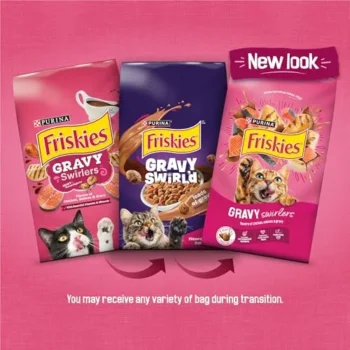
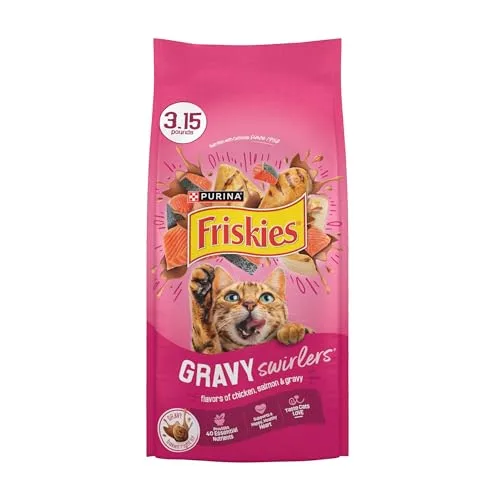
This ongoing battle led me to the Purina Friskies Gravy Swirlers. The promise was tempting: dry food that doesn’t taste or smell like dry food. Kibble coated in something that mimics that irresistible gravy taste. Honestly, I was skeptical. We’ve all seen the flashy marketing. But when I saw the price tag—a fraction of what I was spending on rejected premium wet food—I figured, what’s the harm in trying? For the last month, I’ve been conducting my own little experiment. Is this the healthiest, most natural food on the market? Absolutely not, and I won’t pretend it is. But the real question I needed answered was: Will my infuriatingly selective cat actually eat it without forcing me to take out a second mortgage? Here’s the messy, honest truth from the trenches of my kitchen floor.
🧐 Quick Snapshot
If you’re short on time (maybe you’ve got a cat yowling at your feet right now), here’s the absolute core of what I learned from living with this food for weeks:
Best For Picky Eaters
The number one strength of this food is its palatability. The gravy coating creates an incredibly strong, savory aroma that seems to bypass a cat’s usual skepticism. If you have a cat that snubs their nose at ordinary dry kibble, this might be the trick that works.
Best For Budget Households
Feeding multiple cats high-quality wet food can feel like a part-time job for your wallet. This food provides complete, balanced nutrition at a cost per meal that’s genuinely hard to beat. For multi-cat homes or caregivers on a strict budget, the value is significant.
The Budget King
Let’s call a spade a spade: this is a budget-friendly option. You’re not paying for exotic ingredients or boutique sourcing. You’re paying for a consistent, mass-produced food that gets the job done. If price is your primary concern, this deserves a spot on your shortlist.
🛠️ Deep Dive Features
I didn’t just dump this from bag to bowl. I spent time really looking at it, smelling it, and understanding what makes it different from the sea of other dry foods on the shelf.
Gravy Baked In (The “Cheat Code” for Appetites)
The whole premise rests on those “gravy swirls.” It’s a clever bit of food engineering. Purina takes their standard chicken and salmon flavored kibble base and bakes or coats specific pieces with a concentrated, savory flavor layer. When I first opened the bag, the smell hit me immediately. To my human nose, it’s a potent, processed meaty smell—not unpleasant, but strong. To Oliver and Luna? It was like ringing a dinner bell. They came running from different rooms. The concept here is psychologically smart: it targets cats who are conditioned to expect the intense initial hit of flavor that wet food gravy provides, essentially tricking them into engaging with dry kibble.
A Mix of Textures
Pouring some into my hand, I noticed it’s not a uniform kibble. There are the standard crunchy bits and then these slightly different, ridged pieces that I assume carry more of the gravy coating. Cats are notorious for being texture-sensitive; some love crunch, some prefer mush. I watched closely during feedings, and neither of my cats exhibited any sort of sorting behavior. They just ate, moving from piece to piece without prejudice. The crunch itself is substantial—it makes a definite sound. While no dry food is a substitute for actual dental care, that mechanical action of crunching can provide some mild plaque-scraping benefit, which is a small plus.
Complete Nutrition (It Checks the Boxes)
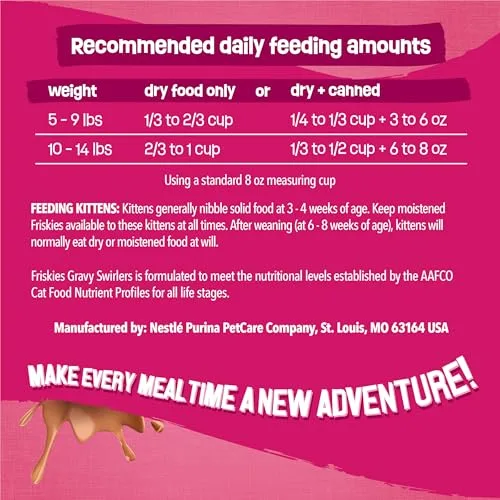
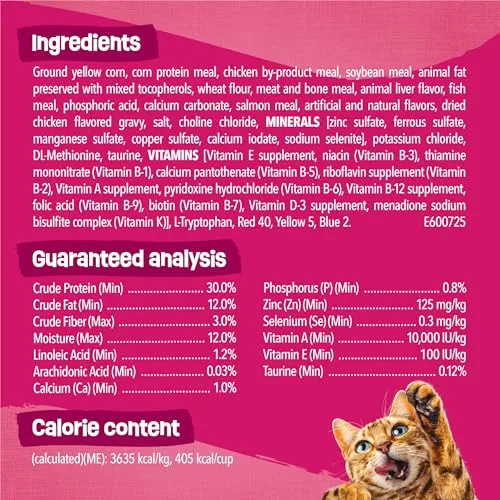
Before we get into the ingredient quality (and we will), it’s crucial to acknowledge that this is formulated as a complete and balanced diet for adult cats. It meets AAFCO standards for maintenance. It contains added taurine (essential for cat heart and eye health), omega-6 fatty acids for skin and coat, and a mix of vitamins and minerals. During the month my cats ate this, their energy levels didn’t dip. Luna’s coat remained soft, and Oliver maintained his sleek figure. So from a purely functional standpoint—keeping a cat alive, healthy, and active—it does the job it claims to do. The nutritional bases are covered, even if the sources aren’t premium.
Note on “Complete Nutrition”: This term means the food contains all the nutrients a cat needs in the right proportions, as defined by regulatory guidelines. It doesn’t speak to the quality or source of those nutrients, just their presence.
📊 Performance Breakdown
Palatability: The Instant Win
This is the undisputed champion category for Gravy Swirlers. To test it, I did a side-by-side comparison. In one bowl, I put a measured portion of a higher-end, grain-free, high-protein dry food I sometimes buy. In the other, I put the Friskies. I placed them a few feet apart. Both cats investigated the “fancy” food first, gave it a sniff, and then made a beeline for the Friskies bowl. They started eating immediately and with noticeable enthusiasm. It’s what I’d call the “junk food effect.” The combination of fat, salt, and potent flavor enhancers makes it highly appealing in a primal way. If you have a cat that’s underweight, recovering from illness, or just a chronic meal-skipper, this food’s palatability is a powerful tool to get crucial calories into them.
Ingredient Quality: The Trade-Off
Now we get to the less shiny part. When you turn the bag over and read the ingredient list, the first few items tell a clear story: Ground Yellow Corn, Corn Gluten Meal, Poultry By-Product Meal, Soybean Meal. This is a food built on a foundation of inexpensive plant-based proteins and fillers. Cats are obligate carnivores. Their bodies are designed to derive nutrition most efficiently from animal tissue. Corn and soy provide calories and protein, but they’re not a cat’s ideal fuel source. Think of it this way: you could survive on a diet of potato chips and soda—you’d get calories and some nutrients—but you wouldn’t be thriving. This is “feed” in the agricultural sense: it sustains. It’s not “cuisine” designed for optimal species-specific health.
Digestion & Practicality
I transitioned my cats slowly over a week, mixing it with their old food. Luna, with her iron stomach, showed no issues. Oliver, who has a slightly more sensitive system, had a bit of extra gas for the first two days. It wasn’t extreme, but it was noticeable. After that initial adjustment period, digestion seemed normal. The kibble size is small and manageable for average adult cats. I will say, however, that if you have an older cat with dental issues or missing teeth, the hardness of the kibble might be a challenge compared to a soft wet food or a semi-moist alternative.
🚫 Limitations: What They Don’t Tell You
Marketing focuses on the “gravy” and the “swirls.” As an owner who’s now been through a whole bag, here are the realities you should know that don’t make it to the front of the packaging.
1. The Carb Load & Weight Gain: This food is high in carbohydrates. Corn is the first ingredient, after all. For an indoor, sedentary cat (like most of our beloved couch potatoes), those carbs can convert to fat very efficiently. If your cat is already overweight or has a tendency to pack on pounds, you will need to be meticulous with portion control. Free-feeding this could lead to a chunky kitty surprisingly fast.
2. Artificial Colors for Whom? Look at the kibble. See the distinct red and brown pieces? Cats are dichromats; they see a more limited color spectrum than we do. They don’t care if their food is red or brown or green. Those artificial dyes (like Red 40, Yellow 5) are there for one reason: to make the food look more like “meat” and “gravy” to you, the human buyer. I have a personal aversion to paying for, and feeding, unnecessary artificial coloring that offers zero nutritional benefit and has potential, albeit debated, links to sensitivities.
3. “Flavor” vs. Substance: The bag prominently features “Salmon & Chicken.” This creates a mental image of flakes of salmon and chunks of chicken. The reality is that “Salmon Flavor” is a technical term. The primary proteins come from the corn gluten meal and poultry by-product meal. The actual named meat ingredients are much further down the list. You’re not feeding filet mignon; you’re feeding a nutritionally complete cereal that’s been flavored.
🆚 Comparison Table
To make sense of where Gravy Swirlers fits in the grand scheme of supermarket cat food, I compared it directly with two of its most obvious shelf-mates.
| Feature | Friskies Gravy Swirlers (The Subject) | Meow Mix Original (The Budget Rival) | Purina ONE Tender Selects (The Mid-Range Upgrade) |
|---|---|---|---|
| Primary Ingredient | Ground Yellow Corn (a carbohydrate filler) | Ground Whole Grain Corn (similar filler base) | Real Chicken (an actual named meat source) |
| Price Point | Very Affordable ($) – Best for tight budgets | Very Affordable ($) – Similar budget tier | Moderate ($$) – Costs more, but you see why |
| Palatability | Exceptionally High – The gravy coating is a powerful attractant | High – Also designed for taste appeal | Moderately High – Tastes good but less “addictive” |
| Artificial Colors | Yes – Uses dyes to mimic meat appearance | Yes – Known for colorful kibble | No – Kibble is a natural color |
| Best Use Case | Picking a picky eater off a hunger strike; strict budget feeding | General budget-conscious feeding where palatability is key | Everyday nutrition for owners wanting better ingredients |
❓ User FAQ
No, I wouldn’t recommend it. This formula is for adult maintenance. Kittens are little growing machines that need significantly more protein, fat, and specific minerals like calcium and phosphorus in precise ratios to support their rapid development. Always choose a food specifically labeled for “kittens” or “all life stages” that has been formulated for growth.
I tried this out of curiosity. If you add warm water, the gravy coating does dissolve somewhat and creates a murky, savory broth. However, the underlying kibble becomes soggy and mushy within minutes. Most cats I know (including mine) dislike soggy kibble texture. It also spoils much faster if left out. My advice? Feed it dry and ensure your cat has constant access to fresh, clean water separately.
Almost certainly not, and it might do the opposite. Weight loss in cats typically requires a high-protein, low-carbohydrate diet to promote lean muscle mass and satiety. Because this food is corn-based and carb-heavy, it’s not metabolically ideal for weight loss. Your cat might feel full on fewer calories of a protein-rich diet versus this one. For weight management, consult your vet for a proper plan.
That’s a smart observation! Dry food like this contains only about 10% moisture. Canned wet food can be 75-80% water. If you’ve switched from wet to dry, or even from a different dry food, your cat is naturally compensating by drinking more from their bowl to meet their hydration needs. This is normal, but it underscores how critical it is to always have multiple fresh water sources available when feeding a dry diet.
The 3.15 lb bag I purchased did not have a built-in zipper or resealable strip. This is a minor but real annoyance. To keep the food fresh (and to deter any opportunistic ants or pests), I had to transfer it to a dedicated airtight storage container. It’s a small extra step and cost to factor in.
🏁 Verdict: Buy or Pass?
• Your budget is the #1 priority. For feeding multiple cats or community cats, the cost-effectiveness is undeniable.
• You have a picky eater on a hunger strike. Its palatability can be a lifesaver to get a cat eating again.
• You need a reliable “mix-in” or topper to entice your cat to eat a healthier primary food.
• The choice is literally between your cat eating this or eating nothing. Nutrition is always better than starvation.
• You can afford to spend a bit more on a brand where a named meat (like chicken, salmon) is the first ingredient.
• Your cat has health issues like diabetes, obesity, or known grain allergies/sensitivities. The high carb content is problematic here.
• You’re philosophically opposed to artificial colors, by-products, or corn-based diets for carnivores.
• You’re seeking optimal, species-appropriate nutrition as the sole foundation of your cat’s diet.
In my house, Gravy Swirlers have earned a place in the pantry—not as the star of the show, but as a reliable supporting actor. They’re the food I use when Oliver is being particularly obstinate, or when finances are tight at the end of the month. They solved the immediate problem of food rejection. But understanding what’s in them means I can’t, in good conscience, feed them exclusively long-term. It’s the fast food of the cat world: incredibly effective at what it does (tasting good and being cheap), but not something you’d want to build your entire health regimen around.
Disclaimer: I am a passionate pet owner, not a veterinarian. The information in this article is based on research and personal experience. Always consult your vet before changing your pet’s diet or medication.