Jennifer
Looking for expert pet advice? WeLovePetz is here to help you.
The ‘Truth’ Test: Does It Finally Stop Overfeeding?
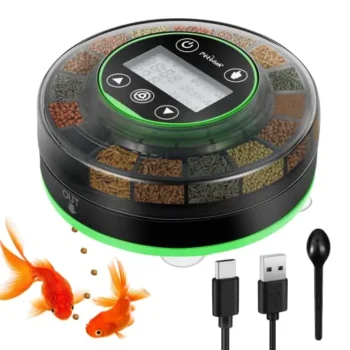
If you own a Betta or a nano tank, you know the nightmare of standard “drum” auto-feeders. You set them to the smallest opening, but they still dump enough pellets to pollute your 5-gallon tank in one go. I bought this Petbank (often sold under generic names) specific “16-grid” feeder hoping it would solve that exact problem.
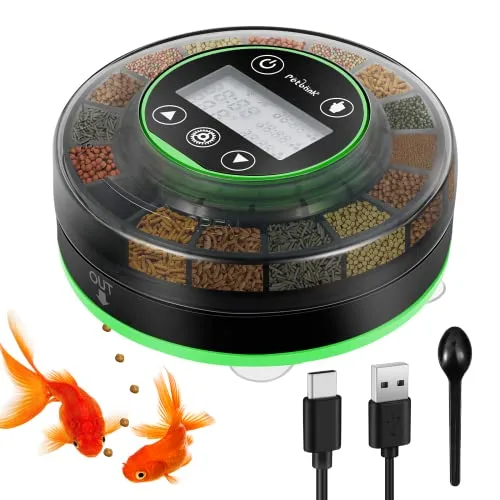
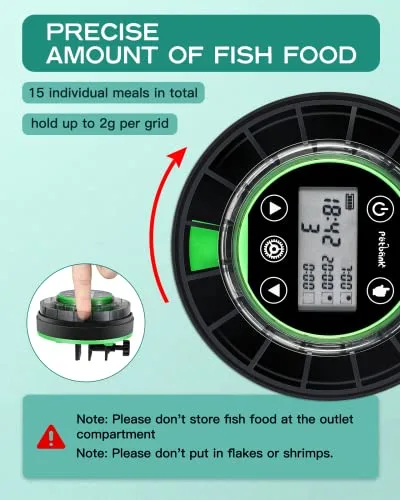
I didn’t mount it immediately. Instead, I charged it up and ran a dry test on my desk. The concept is completely different from the usual tumbling drums. It works like a pill organizer. You physically place the exact number of pellets you want into 15 small slots (one slot is the drop hole).
The result? It is 100% precise. If I put 3 pellets in a slot, exactly 3 pellets dropped. There was no accidental “dumping.” For single-fish owners who need strict portion control, this mechanism is vastly superior to the rotating drums I’ve used in the past.
🏗️ Build & Design Audit
The Mechanism:
The unit is flat and round, about the size of a hockey puck but thicker. It feels solid enough, though the plastic cover that protects the food slots is a bit tricky to snap back on once you take it off. You have to align it perfectly, or it won’t seal.
The Seal:
The manufacturer claims it is “moisture-proof.” I examined the underside, and there is indeed a mechanism that rotates the tray and only exposes the drop hole when it’s feeding time. The rest of the time, the food slots are covered. This is a smart design to keep humidity out, which is usually the killer of fish food.
Mounting:
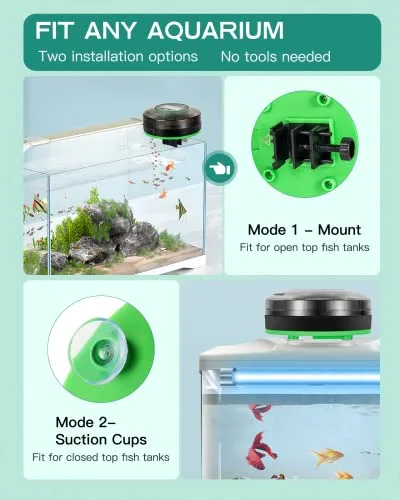
It comes with a clamp and a suction cup option. I used the clamp on my rimless tank. It screws down tightly and didn’t wobble. The arm extends the feeder out about 2 inches over the water, which is plenty of clearance.
⚙️ Real-World Performance
I used this on a 10-gallon planted tank with a Betta and some shrimp for two weeks. Here is how it handled the job.
Battery Life
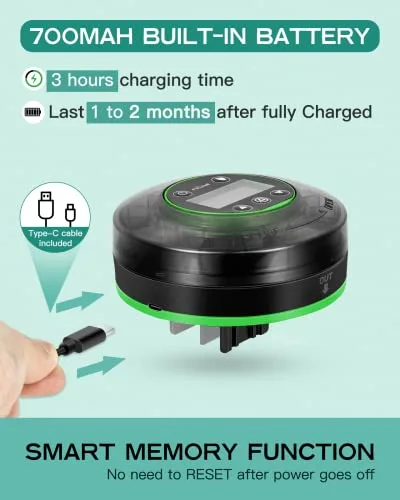
This is a USB rechargeable unit, which I prefer over AA batteries. I charged it fully before the test (took about 3 hours). It has been running for 14 days straight, and the battery indicator hasn’t budged. The claim of “1 to 2 months” seems realistic. It removes the anxiety of “Did I buy batteries?” before a trip.
The “Vacation” Limit
Here is where the math gets tricky. There are 16 slots, but one is always the “open” slot over the tank, so you essentially have 15 meals of storage.
If you feed your fish once a day, this lasts 15 days. Perfect for a standard vacation.
If you feed twice a day, it only lasts 7.5 days.
Compared to a drum feeder that can hold a month’s worth of food, this is a limitation you need to plan for.
Food Compatibility
I tested it with three types of food:
- Micro Pellets (Vibra Bites): Worked perfectly. No sticking.
- Granules: Worked perfectly.
- Flakes: Failure. Large flakes don’t fit well into the small wedge-shaped slots. You have to crush them, and even then, the static electricity makes them stick to the plastic walls rather than falling out. This machine is definitely for pellets/granules only.
⚠️ The Downsides (Critical)
It’s precise, but it’s high-maintenance.
1. Tedious Refilling
With a standard feeder, you just pour a bag of food into the drum and walk away. With this, you have to sit there and manually drop a pinch of food into 15 tiny individual compartments. It takes time and steady hands. If you spill, you have to pick pellets out of the gears.
2. Limited Capacity for Community Tanks
Each slot holds about 2 grams of food. That is plenty for a Betta or a few Tetras, but if you have a stocked 55-gallon tank with Cichlids or Goldfish, one slot is simply not enough food for a meal. This is strictly a small-fish device.
3. Confusing Interface
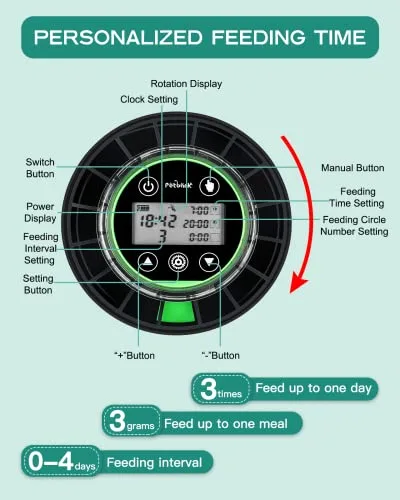
The LCD screen is small, and setting the time requires a lot of button pressing. It’s not intuitive. You have to set the “current time” first, then the “feeding times.” If you accidentally hold the button too long, it resets. Keep the manual safe; you will need it.
📊 Pros/Cons Table
| 👍 What I Liked | 👎 What I Didn’t Like |
|---|---|
| Extreme Precision: You control exactly how many pellets drop. | Low Capacity: Only holds 15 meals max. Not for long trips with multiple feeds. |
| USB Rechargeable: No need to buy or swap batteries. | Refilling is Slow: You must fill each tiny slot individually. |
| Moisture Seal: Food stayed crunchy and dry for 2 weeks. | Not for Flakes: Flake food sticks to the compartments and won’t drop. |
| Silent: The motor is quiet enough to use in a bedroom. | Small Portions: Not suitable for large tanks with big eaters. |
⚔️ Head-to-Head: Petbank 16-Grid vs. Eheim Everyday Feeder
The Eheim Everyday Feeder is the gold standard, but it operates differently.
Precision: 🏆 Petbank wins. For small amounts (like 5 pellets), the Petbank is 100% accurate. The Eheim relies on a slider gate that often dumps too much or gets clogged with small pellets.
Capacity: 🏆 Eheim wins. The Eheim drum holds 100ml of food, enough for months. The Petbank runs out in 15 days (at 1 feed/day).
Power: 🏆 Petbank wins. USB rechargeable is modern and convenient. Eheim is stuck in the past with AA batteries.
Versatility: 🏆 Eheim wins. Eheim handles flakes and pellets of all sizes. Petbank really only works well with pellets.
👨⚖️ Expert Verdict
This Petbank Rechargeable Feeder solves a very specific problem: overfeeding small fish.
Buy this if:
You have a Betta, a nano tank, or a shrimp tank. If you are terrified of coming home to a polluted tank because your auto-feeder dumped a pile of food, this is the safest device on the market. It gives you absolute control over every single meal.
Skip this if:
You have a large community tank, goldfish, or you exclusively feed flakes. The compartments are too small to feed big fish, and the tedious refilling process isn’t worth it if you don’t need micro-precision.