Jessica
Let me be perfectly clear from the start: I’m not an electrician, an engineer, or a wildlife expert. I’m just a person who cares for a small colony of neighborhood strays and barn cats. Winters where I live are harsh—the kind of cold that freezes water solid in under an hour and turns wet cat food into inedible bricks. This review comes from that place of practical, cold-fingered desperation.
🧪 The “Truth” Test
My winters are defined by one relentless chore: the water bowl shuffle. When temperatures plunge into the single digits (Fahrenheit) and stay there for weeks, providing liquid water for outdoor cats becomes a Sisyphean task. Every few hours, I’d trudge outside in multiple layers, pry a frozen hockey puck of ice out of a plastic bowl, refill it with lukewarm water, and know it would be solid again before I finished my next cup of coffee. It was exhausting and felt hopeless.
The real tragedy, though, was the food. In bitter cold, canned wet food—the best source of hydration and fat for cats who won’t drink enough—freezes within 30 minutes. I’d put down a fresh meal at dusk, and by the time the cats came to eat, they’d be staring at a rock-hard, icy pâté. They’d lick at it fruitlessly and walk away hungry. I knew I was wasting food and failing them.
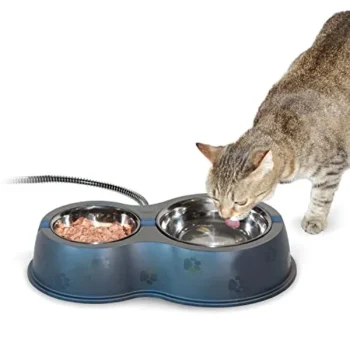
That’s what led me to the K&H Thermo-Kitty Café. The promise was simple: a heated feeding station that would keep both water and wet food from freezing. I was skeptical but desperate enough to try. I set it up on a particularly brutal night when the weather app proudly displayed 18°F (-7°C). My expectations were low, but my hope was high.
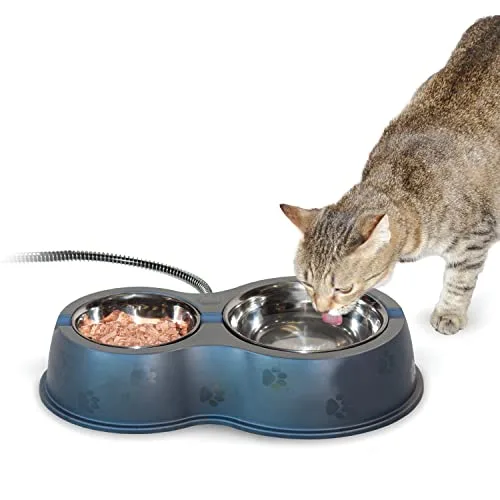
The immediate result? It works. But understanding what “works” means is crucial. This isn’t a magical appliance that creates a tropical microclimate for your pets. When I checked the unit after two hours of operation, sticking my finger in the water bowl, it was… tepid. Not warm. Not hot. Just noticeably not frozen. That’s the key distinction.
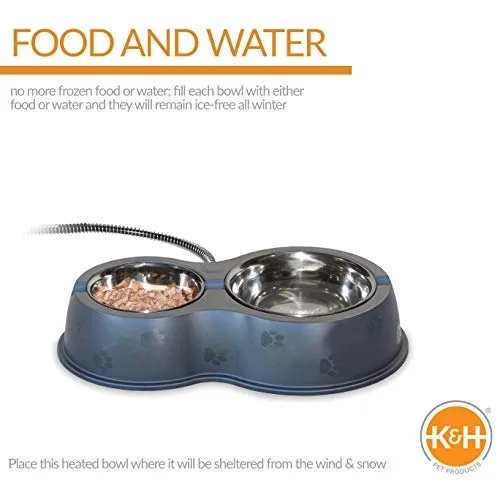
The true test was the wet food. In a regular bowl on that same night, a scoop of pâté would have been an unbreakable slab. In the Thermo-Kitty Café, it remained soft, pliable, and completely edible. I reached under and touched the heating plate (it sits beneath the removable stainless steel bowls), and it felt like the warmth of a laptop that’s been on for a while—a gentle, consistent heat. The product does exactly what it claims: it prevents freezing. It does not, and should not, cook or overheat the food. That safety aspect is actually a design feature, not a flaw.
(It’s often on sale during colder months)
🏗️ Build & Design Audit
Unboxing the Thermo-Kitty Café gave me mixed feelings. It wasn’t the heavy, industrial piece of equipment I’d vaguely imagined. Here’s my breakdown after handling every component:
The Base Unit
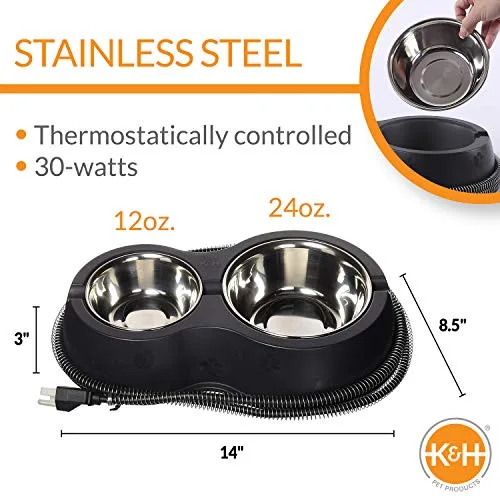
The main housing is made from a tough, rigid ABS plastic in a utilitarian grey. It feels durable enough to handle sun, rain, and snow without cracking. However, I was surprised by how lightweight it is. The electronics inside are fully sealed, which gave me confidence about leaving it outside in wet conditions. K&H states it’s safety certified by MET Labs, and the seals around the cord entry point look substantial. It’s clearly built for outdoor life, but the weight (or lack thereof) would become a recurring issue.
The Stainless Bowls
This is where the design shines. You get two bowls: one 12oz and one 24oz, both made from sturdy, polished stainless steel. This is a massive win for hygiene. Plastic bowls, especially when heated, can develop micro-scratches that harbor bacteria and often cause feline acne (those little black specks on a cat’s chin). Stainless steel is non-porous, easy to clean, and dishwasher safe. The fact they’re removable makes daily cleaning a 30-second task instead of a chore.
The Armored Cord
Hands down, the most impressive feature. The 5.5-foot power cord is wrapped in a flexible steel coil, like a heavy-duty spring. This isn’t just for looks—it’s a functional barrier. If you care for outdoor animals, you know that raccoons, squirrels, and even curious cats will chew on anything. During my testing, I found clear gnaw marks on the steel coating where a night visitor had tried its luck. The internal wires were completely protected. This single feature justifies the price difference from cheaper, all-plastic heated bowls.
⚙️ Real-World Performance
I ran this station continuously for over two weeks, through snow, sleet, and a few surprise warm spells. Here’s how it held up in daily use:
“The consistency of the heat was its greatest strength. On a 40°F day, I worried it might overheat the food, but it just kept it at a safe, cool temperature. On the 15°F nights, it maintained just enough warmth to keep the water liquid. It found a balance without any input from me.”
Heating Behavior & Efficiency
The unit uses a 30-watt thermostatically controlled heater. This means it turns on when the ambient temperature drops below a certain point (likely around 35°F/2°C) and cycles off when it’s warm enough. I never saw it get hot to the touch—just consistently warm. This is energy efficient; running 24/7 for two weeks didn’t make a noticeable dent in my electricity bill. More importantly, it prevented the common issue with some heating pads where dry kibble touching the hot surface can scorch or develop a hard crust.
The Wet Food Conundrum
This is the trickiest part of using any heated feeder. While the Thermo-Kitty Café successfully stops freezing, the gentle heat does accelerate evaporation. I learned this the hard way. Leaving a portion of wet food out overnight resulted in a dried-out, rubbery disc by morning—edible, but not appetizing. My solution, which worked well, was to mix the canned pâté with a splash of warm water to create a gravy-like soup. This extra moisture compensated for evaporation, and the cats actually seemed to prefer it. It’s a small extra step for a much better result.
Maintenance & Cleaning
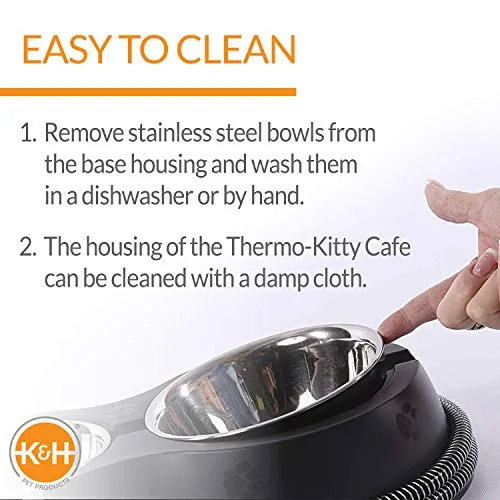
The removable bowls are a dream to clean—toss them in the dishwasher or give them a quick scrub. The plastic base, however, is a crumb magnet. Food bits and debris inevitably fall into the circular recesses where the bowls sit. Since you can’t submerge the electronic base, cleaning requires wiping it down with a damp cloth and using an old toothbrush to get into the grooves. It’s not difficult, but it’s a necessary weekly task to prevent mold or ant attraction.
📉 The Downsides (Critical Flaws)
For all its strengths, the Thermo-Kitty Café has some genuine design shortcomings that you need to be prepared for. These aren’t deal-breakers for everyone, but they nearly were for me.
1. The Tipping Point (Literally): The most significant flaw is the lack of weight or anchoring. The entire unit is surprisingly light. An empty bowl plus a curious raccoon or a stiff wind is enough to flip the whole thing over. I woke up one morning to find it upside down in a snowdrift, bowls scattered. There are no rubber feet, no weight in the base, and no mounting holes. My fix was to place it inside a heavy, low-sided plastic tub and weigh that down with bricks. K&H should absolutely add a weighted plate or anchor points in future models.
2. The Mystery of Operation: There is no power switch and no indicator light. Is it on? Is it working? The only way to know is to touch it or (in freezing temps) see that your water isn’t ice. This is annoying. To turn it off on a warm day, you have to unplug it from the outlet. My strong recommendation is to plug it into an external thermo-cube outlet (a plug that turns on at a set temperature) or a smart plug. This solves both the on/off problem and lets you control it remotely.
3. Capacity for a Crowd: The bowls, while fine for 1-2 cats, are shallow. The larger water bowl holds 24oz. If you’re feeding a colony of 4 or more cats, or if a thirsty possum or raccoon visits, that water will be gone quickly. I was refilling it twice a day during active periods. It’s designed for modest needs, not for sustaining a large animal group through a deep freeze.
📊 Pros & Cons At a Glance
What Works Brilliantly
- Chew-Proof Cord: The steel-wrapped cable is virtually indestructible against wildlife.
- Hygienic Bowls: Removable stainless steel prevents bacteria buildup and is easy to clean.
- Precise Heating: Thermostatically controlled to prevent freezing without overheating.
- Weatherproof Build: Sealed electronics can handle rain, snow, and moisture.
- Dual Purpose: Effectively keeps both wet food and water from freezing in one unit.
What Needs Improvement
- Too Lightweight: Easily tipped over by animals or wind; needs securing.
- No Status Indicator: No light or switch to confirm it’s operating.
- Evaporates Wet Food: Can dry out canned food if not prepared properly.
- Limited Capacity: Bowls are shallow, requiring frequent refills for multiple animals.
- Base is Hard to Clean: Food debris gets stuck in crevices around the bowl slots.
🥊 Head-to-Head: K&H vs. The Competition
I also tested the popular Farm Innovators Model D-19 heated waterer to see how the Thermo-Kitty Café stacks up for different needs.
| Feature | K&H Thermo-Kitty Café | Farm Innovators D-19 | Winner For… |
|---|---|---|---|
| Primary Design | Dual-bowl feeder for food & water | Single large bucket for water only | K&H for feeding; Farm Innovators for water volume |
| Capacity | 24oz water, 12oz food (approx) | 1.25 gallons (160oz) of water | Farm Innovators by a landslide for large animals/long intervals |
| Material & Hygiene | Stainless steel removable bowls | Plastic basin (can scratch and harbor bacteria) | K&H – far superior for pet health |
| Stability | Lightweight, tips easily | Heavier plastic, more stable | Farm Innovators – less likely to be knocked over |
| Cord Protection | Steel coil armor | Standard vinyl/rubber coating | K&H – essential for areas with chewing pests |
| Best Use Case | Outdoor cats needing unfrozen wet food & water | Large dogs, livestock, or pure water needs for many animals | Depends entirely on your specific animals and needs |
🎯 Expert Verdict
Buy It If…
• You care for feral, barn, or stray cats in a climate with freezing winters.
• Providing unfrozen wet food is a priority for hydration and nutrition.
• You need a hygienic, easy-to-clean solution (stainless steel bowls).
• Your outdoor area has rodents or wildlife that chew cords (the armored cord is a lifesaver).
• You’re willing to secure it (put it in a weighted container) to prevent tipping.
Look Elsewhere If…
• You need to provide water for multiple large dogs or many animals (capacity is too small).
• Your area has very aggressive wildlife (raccoons) that will constantly flip it unless it’s bolted down.
• You only need a heated water source and don’t feed wet food (a larger, cheaper waterer may suffice).
• You want a “set it and forget it” solution with no daily maintenance or adjustments.
• Your budget is extremely tight and you can accept the risks of plastic bowls and unarmored cords.
My bottom line: The K&H Thermo-Kitty Café solved my core problem. It stopped the freezing. It saved me hours of daily chore time. It ensured the cats actually ate the food I put out. The flaws are real and annoying, but they’re workable with a little ingenuity. For the specific niche of winter wet food feeding for cats, it’s currently the best tool I’ve found. It’s not perfect, but in the middle of a cold snap, with hungry animals depending on you, “imperfect but functional” beats “perfect but nonexistent” every single time.
(Affiliate link – your purchase supports our testing)
Disclaimer: I am a passionate pet owner, not a veterinarian. The information in this article is based on research and personal experience. Always consult your vet before changing your pet’s diet or medication.