Jennifer
Looking for expert pet advice? WeLovePetz is here to help you.
The Day I Dropped Live Larvae (in a Bag) Into My 40-Gallon Tank
A skeptic’s two-week journey into the world of insect-based fish food—and the feeding frenzy that changed my mind
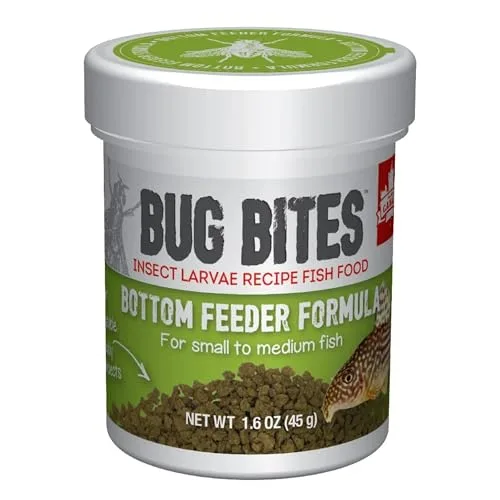
“I’ll believe it when I see it” — and then I saw it.
Check Price & Availability(Spoiler: I’ve already bought a second bag.)
The Moment of Truth: A Feeding Frenzy Unfolds
My 40-gallon breeder is a carefully balanced community: six peppered Corydoras, three khuli loaches who treat invisibility as an art form, one bristlenose pleco who thinks he’s the tank boss, and a rotating cast of tetras who mostly stay out of the bottom-feeders’ business. After 24 hours without food, the tank was calm—that pre-storm stillness where everyone’s just waiting.
I opened the bag and the smell hit me. Not fishy, not like standard flakes. It was earthy, deep, almost like damp soil mixed with dried shrimp. Potent. I pinched a small amount and let them drift down toward the substrate. What happened next was genuinely startling.
Feeding Frenzy: 0-30 Seconds
The granules hadn’t even touched the sand before the Corydoras went into a state I can only describe as controlled panic. They abandoned their lazy sifting and began darting, whiskers twitching, vacuuming up granules with an intensity I reserve for my own coffee on Monday mornings. The khuli loaches—those notoriously shy noodles who usually wait until complete darkness to emerge—actually poked their heads out from under the driftwood within ten seconds. I counted three of them, which is rare enough to note in my tank journal.
The bristlenose pleco, a creature of habit who usually waits for wafers to soften, attached himself to a rock near a cluster of granules and began scraping with unusual urgency. Even the tetras, normally indifferent to sinking foods, darted down to snatch a few floating bits before they descended. The entire water column was active. This wasn’t feeding; this was a response. Something in these granules triggers a deep, instinctual recognition that this is real food, not just filler.
Deconstructing the Formula: What’s Actually Inside
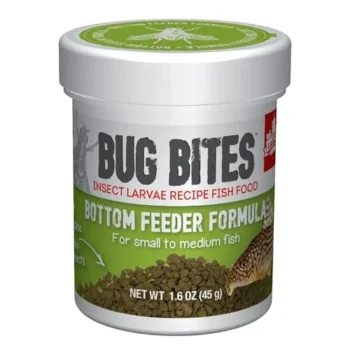
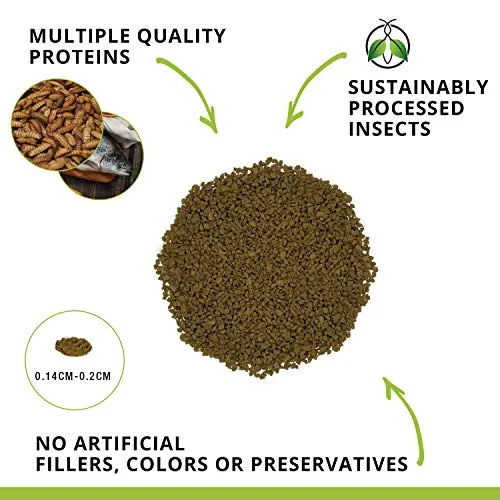
After the feeding frenzy subsided, I did what any responsible fishkeeper should do: I flipped the bag over and read the ingredients with a critical eye. Most commercial fish foods bury “fish meal” and “wheat flour” at the top—cheap fillers that provide bulk without much nutritional punch. The Bug Bites label tells a different story.
🔍 Ingredient Audit: What the Label Reveals
Primary Ingredients:
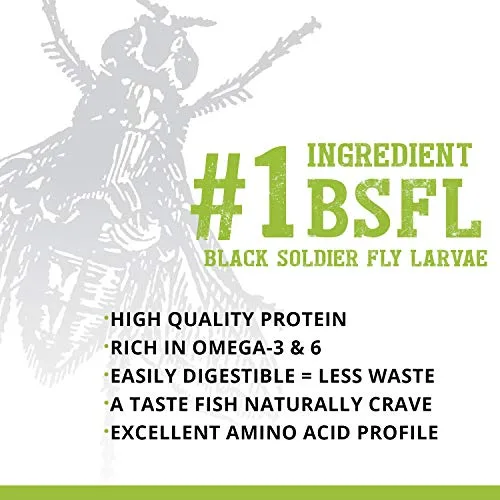
- Black Soldier Fly Larvae (40%): The headline act. BSFL are naturally high in protein (around 40-45%) and contain lauric acid, which has antimicrobial properties. It’s not just a protein source; it’s a functional ingredient.
- Whole Salmon: Not “salmon meal,” but whole salmon. This distinction matters—whole fish includes the oils and micronutrients that get processed out of meals.
- Concentrated Fish Protein: A highly digestible protein source that reduces waste compared to less-processed meals.
Notably absent: wheat, soy, and corn fillers. This is a protein-dense formula designed to mimic what bottom feeders would naturally encounter—insect larvae and small aquatic organisms.
The guaranteed analysis backs this up: 41% crude protein, 9% crude fat. For comparison, many standard sinking wafers hover around 30-35% protein with higher ash content. The Bug Bites are essentially a protein bomb for your cleanup crew. The question becomes not whether this is good food—it clearly is—but whether the delivery method works for real-world aquarium conditions.
Omega-3 Richness
The whole salmon content provides natural omega-3 and omega-6 fatty acids that support fin health, coloration, and immune function. You can see it in the sheen on the Corydoras after two weeks—they genuinely look healthier.
Complete Amino Profile
Insect protein contains all ten essential amino acids that fish cannot synthesize themselves. This makes it a complete protein source, unlike many plant-based fillers used in budget foods.
Sustainability Factor
Black soldier fly larvae require a fraction of the land, water, and feed compared to traditional livestock. It’s not just good for your fish; it’s easier on the planet—a fact that matters more to me with every passing year.
Two Weeks of Real-World Testing: What Worked and What Didn’t
Sinking Behavior: The Make-or-Break Factor
For bottom feeders, sinking speed isn’t a minor detail—it’s survival. If food floats or drifts too slowly, mid-water fish intercept it, and the intended recipients go hungry. The Bug Bites granules sink fast. About 90% hit the substrate within three seconds of hitting the water. The remaining 10% float for maybe ten to fifteen seconds before descending, which actually works well in a community tank—it gives the tetras and other mid-water fish a chance at a protein boost without starving the bottom-dwellers. This is surprisingly thoughtful design.
Water Quality Impact: The Protein Paradox
High-protein foods come with a warning: uneaten protein decomposes into ammonia, and ammonia kills fish. It’s the fundamental trade-off. I watched my parameters closely during this test. The good news: because the fish find this food so palatable, almost nothing is left to rot. The Corydoras hunt every last granule. The bad news: if you overfeed, you will absolutely pay for it. These granules break apart into fine particles when chewed, and if you dump in too much, that dust can contribute to bioload. Feed sparingly—a pinch, not a handful—and you’ll see growth, not algae blooms.
The Sand Substrate Warning
This is critical: if you have pristine white sand and you’re obsessive about it staying white, you will hate this food. The dark granules break apart into a fine, dark dust as the fish chew. For about an hour after feeding, your sand will look like someone spilled coffee grounds. It settles, it gets filtered, and by the next day it’s gone—but if you photograph your tank for Instagram, schedule your feeding after your photo session.
The Size Problem: Not All Bottom Feeders Are Created Equal
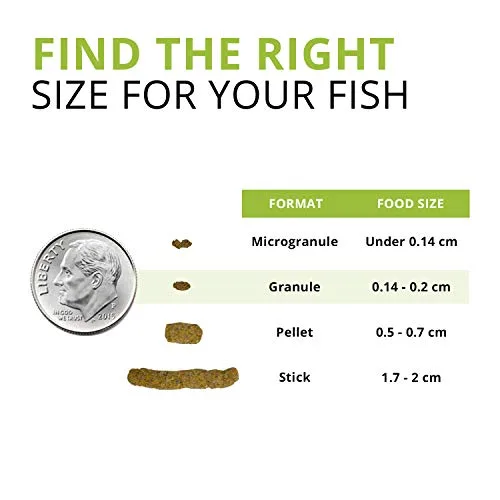
My bristlenose pleco is about four inches long, with a mouth designed for scraping algae and sucking wafers. The Bug Bites granules are roughly 1.4-1.6mm—perfect for Corydoras and loaches, but comically small for a pleco. He spent the first few feedings vacuuming the substrate and missing half the granules. He’d suck, miss, reposition, miss again. It was mildly tragic to watch. He eventually figured out a technique (hovering directly over clusters and inhaling), but this food is clearly optimized for small-mouthed fish. If your tank is dominated by large plecos or catfish, stick with wafers. This is for the cleanup crew, not the heavy machinery.
The Palatability Question: Why Do They Go So Crazy?
I’ve been keeping fish long enough to know that they’ll eat when they’re hungry, but the response to Bug Bites goes beyond hunger. There’s something in the scent profile—likely the combination of insect-derived amino acids and the whole salmon oils—that triggers a recognition response. This smells like food in a way that processed pellets don’t. The khuli loaches emerging during daylight is not normal behavior. The Corydoras abandoning their leisurely sifting for frantic hunting is not normal behavior. This food activates something instinctual.
Head-to-Head: Fluval Bug Bites vs. Hikari Sinking Wafers
If you keep bottom feeders, you know the Hikari orange bag. It’s the industry standard for a reason. But how does the newcomer stack up against the veteran? I ran a side-by-side comparison over two weeks, alternating foods nightly and observing the differences.
| Metric | Fluval Bug Bites | Hikari Sinking Wafers |
|---|---|---|
| Protein Content | 41% (insect & salmon based) | 35% (fish meal & wheat germ based) |
| Feeding Response | Explosive – triggers hunting behavior | Reliable – fish eat it, but without frenzy |
| Water Clarity | Moderate dust during feeding | Excellent – wafers stay solid |
| Sinking Speed | Fast (90% immediate sink) | Fast (wafers sink instantly) |
| Ingredient Quality | Superior – whole foods, no fillers | Good – but includes wheat and soy |
| Best For | Corydoras, loaches, shrimp, small catfish | Plecos, large catfish, mixed communities |
The verdict? They serve different niches. Hikari remains the king of large-bottom-dweller feeding—those wafers stay intact, they’re easy for plecos to latch onto, and they don’t cloud the water. But for small-mouthed fish, for breeding conditioning, for the sheer nutritional quality, Fluval Bug Bites are superior. The protein profile is better, the ingredients are cleaner, and the feeding response is unmatched. In an ideal world, you’d have both in your cabinet.
The Honest Critique: Where This Food Frustrates
✅ What I Genuinely Love
- Ingredient Transparency: 40% black soldier fly larvae, whole salmon, no mystery meals. This is as clean as commercial fish food gets.
- Nutritional Density: 41% protein with complete amino profile. My fish look visibly healthier after two weeks—better color, more activity.
- Sinking Performance: Fast descent means bottom feeders actually get their share. The 10% float delay is perfect for community tanks.
- Environmental Footprint: Insect protein is genuinely sustainable. I feel better about the ecological cost of feeding my fish.
- Palatability: The feeding response speaks for itself. Fish that normally hide come out. Fish that normally sift start hunting.
❌ What Drives Me Crazy
- The Packaging: The resealable zipper is an insult. It broke within three days. I now use a binder clip. For a premium food, this is unacceptable.
- Size Inconsistency: One pinch might be mostly dust, the next mostly chunks. Portion control becomes guesswork.
- Sand Substrate Mess: The dark dust on white sand will test your patience. It clears, but it’s annoying.
- Pleco Incompatibility: If your tank is built around large bottom-feeders, this food is too small. You’ll need wafers anyway.
- Overfeeding Risk: Because fish love it, you’ll want to feed more. Don’t. The protein load will spike your ammonia.
The packaging issue deserves emphasis. Fluval, if you’re reading this: your food is excellent. Your bag is terrible. The zipper seal fails within a week, and once it breaks, you’re left wrestling with a bag that won’t stay closed. For a product positioned as premium, this feels like an oversight. I’ve transferred my supply to a glass jar with a tight lid—a solution that works but shouldn’t be necessary.
Questions From Fellow Fishkeepers
Absolutely—with caveats. Neocaridina and Caridina shrimp will go absolutely crazy for these granules. The high protein content is excellent for molting and breeding. However, the granules are large enough that smaller shrimp might struggle to break them down. I recommend crushing a small pinch between your fingers before feeding to create a range of particle sizes. The shrimp will thank you by breeding.
I tested ammonia, nitrite, and nitrate daily during this trial. With responsible feeding (one small pinch per day for a 40-gallon), I saw no ammonia spikes. The fish consume the food so thoroughly that waste is minimal. However, when I deliberately overfed on day five to test the limits, ammonia hit 0.5ppm within 24 hours. This food is potent—treat it with respect, feed sparingly, and you’ll be fine.
Let’s do the math. A bag costs roughly $8-10 and lasts my 40-gallon about two months with daily feeding. That’s $0.15 per day. For that fifteen cents, I get 41% insect protein, whole salmon, and a feeding response that actually excites me to watch. Generic pellets might cost half as much, but they’re mostly wheat and soy—your fish get full, but are they getting nourished? For me, the extra nickel a day is worth it for visibly healthier fish.
Fluval formulates this as a complete diet, and the nutritional analysis supports that claim. The protein, fat, and fiber levels are balanced for omnivorous bottom feeders. I’ve fed it exclusively for two weeks with no issues. That said, I personally believe in variety—I’ll continue rotating with frozen foods and occasional wafers to ensure my fish get a range of textures and nutrients. But if you wanted to feed only Bug Bites, your fish would thrive.
Very normal. The earthy, almost funky odor comes from the black soldier fly larvae. It’s not a sign of spoilage; it’s a sign of quality. If your fish food smells like nothing, it probably is nothing. The strong scent is what triggers that instinctual feeding response. Keep the bag sealed (or in a glass jar) and you’ll get used to it. Your fish already love it.
Ready to see your bottom feeders truly thrive?
Check Current PricePro tip: Buy a glass jar with a tight lid to store it. The bag will betray you.
The Bottom Line (Pun Intended)
After two weeks of exclusive feeding, after watching khuli loaches emerge in daylight, after seeing Corydoras develop a richer color and more active behavior, I’m convinced: the Fluval Bug Bites Bottom Feeder Granules are not marketing hype. They’re genuinely superior nutrition wrapped in frustrating packaging.
This food understands what bottom feeders actually need—high-quality protein from recognizable sources, delivered in a size that matches their mouths, with a scent profile that triggers natural hunting behavior. It’s not perfect. The bag is infuriating. The dust on sand is annoying. Large plecos will look at you with disappointment. But for the fish this food is designed for—the Corydoras, the loaches, the shrimp, the small catfish—it’s arguably the best commercially available option on the market.
My fish don’t care about the bad zipper. They care that dinner smells like the real thing. And honestly? So do I.
Disclaimer: I am a passionate aquarium hobbyist with over fifteen years of experience, not a veterinarian or marine biologist. The information in this article is based on personal observation and research. Always monitor your water parameters when introducing new foods, and adjust feeding amounts based on your specific tank’s needs.
Authors