Jessica
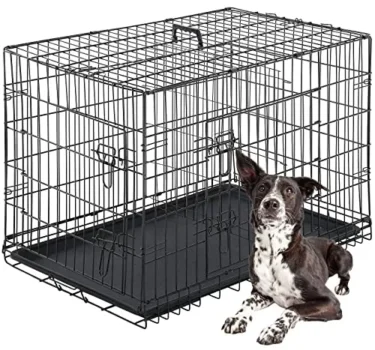
The FDW 42-Inch Crate: My Year-Long Test with a Rowdy Rescue Dog
Introduction: The Panic Purchase
I had 48 hours’ notice before Duke, a 65-pound mystery mix with “some shepherd and maybe a little horse,” was coming home. The rescue said he was crate-trained. I believed them. My previous dog had a nice, hand-me-down crate, but it was too small. Facing a looming deadline and a tight budget, I did what any sane person would do: I panicked-scrolled Amazon. The world of dog crates is overwhelming. Heavy-duty ones cost as much as a car payment. The super cheap ones looked like they’d fold if a squirrel leaned on them. I needed something in the middle—something that felt secure but wouldn’t bankrupt me before I even bought his first bag of food.
That’s how I landed on the FDW 42-Inch Folding Metal Dog Crate. The pictures showed a simple black wire crate. It had two doors and came with a divider. The reviews were a mixed bag, like they always are. Some people swore by it; others said their Houdini dog escaped in minutes. I took a deep breath, clicked “buy now,” and hoped for the best. This isn’t a lab test of tensile strength. It’s the raw, unfiltered account of what happened when a nervous new dog owner and an anxious rescue dog met this metal box.
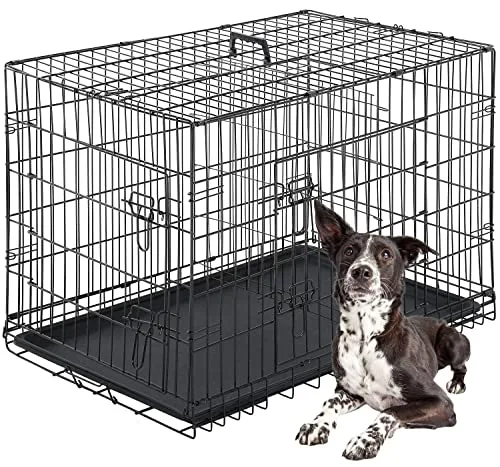
Out of the Box: First Impressions and That “New Crate” Sound
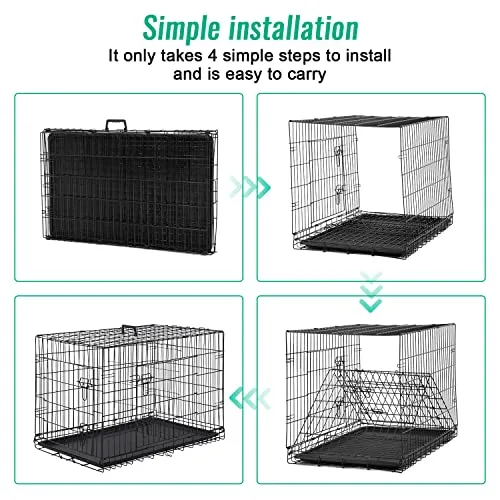
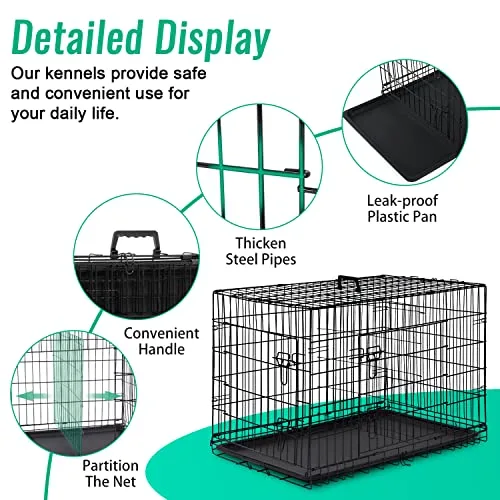
The box was heavy, but manageable. Pulling it out, the crate was folded flat, which was already a win for my tiny apartment storage. I carried it to the living room, laid it down, and followed the simple diagram. You just unhook a few latches, lift the top, and the sides pop out. You then hook the side panels into place. It took me about three minutes, and I am famously bad at assembling anything. No tools, no swearing. It clicked together with a series of metallic *snaps* that echoed in my quiet apartment. That sound—the sound of wire on wire—immediately made me worry. It sounded… tinny. Not flimsy, exactly, but not like a bank vault either. It felt substantial when I tried to wiggle it, but I couldn’t shake the mental image of Duke simply walking through the bars.
The Doors: A Lifesaver for Awkward Spaces
The double doors were the first feature I was truly grateful for. My apartment layout is weird. The only logical place for the crate was in a corner, but having just a front door would have meant I’d have to crawl inside to get him out. The side door changed everything. I could place it flush against the wall and still have easy access. The latches are simple slide bolts. They feel okay—not super high-end, but they slide smoothly and make a solid *clunk* when they lock. My first test was to see if I could jiggle them open from the inside without pulling the bolt. I couldn’t. That gave me a sliver of confidence.
The Divider Panel: The Puppy Saver I Didn’t Know I Needed
Duke wasn’t a puppy, but he was a full-grown dog with zero bladder control in a new environment. The divider panel felt like a cheat code. I could make the crate just big enough for him to stand up, turn around, and lie down comfortably, but not so big that he could pee in one corner and sleep in another. It’s a simple sheet of wire that clips into place with these little J-hooks. Adjusting it is a bit fiddly—you have to squeeze the hooks to get them in and out—but once it’s set, it’s solid. This one feature probably saved my security deposit during those first chaotic weeks of potty training.
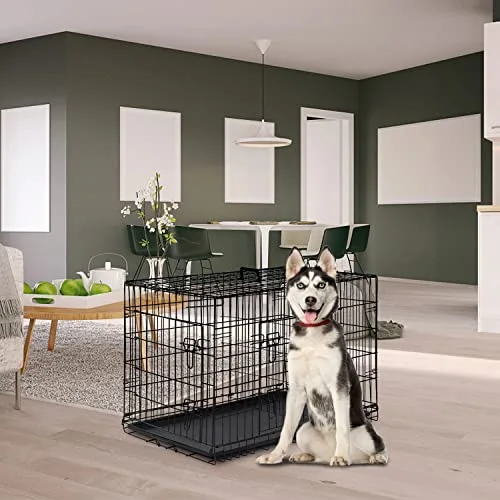
The Real-World Test: Duke vs. The Metal Box
The first night was awful. Duke cried, whined, and threw himself against the side of the crate. The entire structure shook and rattled. My heart broke with every thud. But here’s the thing: it held. The wires didn’t bend. The joints didn’t come unhooked. The plastic tray underneath slid around a bit from the force, but the crate itself stayed square and intact. It was incredibly loud, but it was secure. That was the moment I stopped seeing it as a flimsy budget buy and started seeing it as a resilient tool. It was containing a very strong, very scared dog who was doing his absolute worst to it.
Daily Life: Cleaning and Moving It Around
The plastic tray is a love-hate thing. I love that it’s lightweight and easy to pull out. A midnight accident? Slide out the tray, dump it in the toilet, rinse it in the tub, wipe it down, and you’re back in business in five minutes. It’s also quiet—no loud, metallic *clang* when Duke lies down. What I don’t love is that it feels brittle. I’m always careful not to step on it or drop it. It has a lip that’s supposed to contain messes, and it mostly does, unless the mess is very… liquid. Then it can seep under the edge a little. For normal use, it’s perfectly fine. You just can’t treat it like a military-grade piece of equipment.
Moving the crate is… a thing. It has a plastic handle on top. You can fold it down (which is brilliantly easy—just reverse the setup process) and carry it like a very heavy, awkward suitcase. The handle works, but it digs into your hand after a while. I’ve moved it from the living room to the bedroom a few times, and it’s doable for short distances. For a true trip, you’d want two people or to just take it apart and put it in the car folded flat.
The Wear and Tear After a Year
After 12 months, the crate looks… used. The black epoxy coating has chipped in a few spots, mostly on the corners from where I’ve bumped it against doorframes. There’s no rust, though. The slide bolts on the doors have developed a little patina and aren’t quite as smooth as they were, but they still lock securely. The biggest sign of wear is on the plastic tray. It’s scuffed and has a few shallow scratches from Duke’s nails. But it hasn’t cracked. The crate itself is still perfectly square, doesn’t wobble, and feels just as sturdy as day one. Duke has long since accepted it as his den and no longer tests its limits, but it survived the testing phase admirably.
My Honest, No-Frills Pros and Cons
| ✅ What Worked Surprisingly Well | ❌ What Drove Me a Little Nuts |
|---|---|
| Survivalist Durability: It withstood the full-force panic of a large, scared dog. The wires didn’t bend, and the structure never compromised. | The “Rattle and Hum”: When Duke was anxious, the whole crate shook and made an unbelievable racket. It’s secure, but it is NOT quiet during a meltdown. |
| Door Flexibility is Key: The double doors saved my back and made crate placement in my awkward apartment possible. This is a huge, practical win. | Plastic Tray Anxiety: I’m always worried I’m going to crack it when I clean it. It feels like the most fragile part of the whole system. |
| Divider is a Training Hero: This single accessory made potty training a large dog manageable and is probably why we succeeded. | Handle is an Afterthought: The carrying handle is cheap plastic and uncomfortable. It’s fine for shuffling it from room to room, but that’s it. |
| Sets Up & Stores in Minutes: The folding mechanism is genius. Going from flat to fully set up is incredibly fast, and storing it is no hassle at all. | It’s a Finger-Pincher: If you’re not careful during setup or folding, you can easily pinch your fingers in the hinging mechanism. I’ve done it. It hurts. |
How It Stacks Up in the Real World
| What You’re Really Worried About | FDW 42″ Crate (My Daily Driver) | A “Premium” Brand Crate | The Cheapest Option |
|---|---|---|---|
| Will it contain my dog? | For most dogs, yes. It held my strong, anxious rescue. It won’t hold a dedicated, smart escape artist or a powerful chewer. | Almost certainly. Built with heavier gauge wire and often better latches specifically for escape artists. | Maybe, maybe not. A panicked dog or a determined chewer could likely compromise it. |
| Is it easy to live with? | Very. Easy cleaning, easy setup, double-door convenience. It fits into daily life seamlessly. | Yes. Similar features, often with a sturdier (but heavier) tray. | Barely. Flimsy tray, annoying latches, harder to assemble. |
| Long-Term Value | High. For the price, it’s provided a year of solid service and shows no signs of failing. | High. You pay more upfront for something that might last the dog’s entire life. | Low. You might end up buying two when the first one fails or frustrates you. |
| The “I Just Need a Crate” Factor | Perfect. It does everything a basic crate needs to do, and does it well, without extra cost. | Overkill. For a calm dog, you’re paying for peace of mind you might not need. | Risky. You might get lucky, or you might get a crate that fails when you need it most. |
My Final Take: Who This Crate Is For
The FDW 42-Inch Crate isn’t fancy. It won’t win beauty contests. But after a year of constant use, I can say with conviction: it’s a workhorse. It’s the Toyota Corolla of dog crates—reliable, affordable, and gets the job done without drama.
You should buy this crate if: you have a dog who needs a safe space for sleeping, potty training, or travel, but isn’t a known crate-destroyer or master escape artist. If you’re on a budget but don’t want to buy total junk. If you need the flexibility of double doors. If you value easy cleanup and storage.
You should look elsewhere if: your dog has severe separation anxiety and has bent bars in the past, is a powerful chewer who focuses on metal, or is a clever Houdini who picks locks. In those cases, the extra investment in a true heavy-duty crate is not a luxury; it’s a necessity.
For Duke and me, this crate was the perfect bridge. It gave us the structure we needed during a chaotic time without adding financial stress. It’s now just a piece of furniture—his bedroom. And for that purpose, it has been worth every penny.
Questions I Had That You Might Too
Can a strong dog really bend the bars?
Duke is strong, and in his panic, he threw his shoulder against the side many times. The bars didn’t bend. However, he’s not a “chewer.” A dog that systematically bites and works on a single bar could probably damage it over time. This crate is for containment, not for defeating determined destruction.
Is the plastic tray really leak-proof?
It’s leak-*resistant*. The lip around the edge will contain a typical puddle. But if your dog has diarrhea or an enormous pee, liquid can find its way underneath the edges where the tray sits in the frame. I put an old towel under the crate just in case, which also helps with noise.
How do you clean the wire?
I just use a damp cloth with a little vinegar or pet-safe cleaner. The epoxy coating wipes clean easily. The hard part is the little nooks where the wires cross; a small brush helps.
Is it okay for a car?
It’s fine for securing a dog in the back of an SUV or wagon. It’s not crash-tested like some travel-specific crates. The folding design means it’s not quite as rigid as a permanently assembled crate, but for normal travel, it’s been perfectly secure for us.
My dog hates the metal sound. Any tips?
Duke did too. I put a heavy, rubber-backed bath mat under the entire crate. It dampened the sound and vibration dramatically. Also, putting a cozy blanket or crate pad inside helps muffle noise from within.
What’s the biggest dog that can fit?
The 42-inch size is generally for large breeds like German Shepherds, Labradors, and Goldens. Duke is 65 lbs and has plenty of room to stand, turn, and stretch out. Use the breed size guide, but when in doubt, measure your dog and go a size up if you can.
Does the divider work for potty training?
It was essential. It takes the guesswork out of sizing. You make the space just big enough for them to be comfortable, and it instinctively encourages them to hold it. As they succeed, you give them a little more space.