Jennifer
Looking for expert pet advice? WeLovePetz is here to help you.
My Honest Take on the Petcove PurrTek Max: An Open-Top Litter Box for Nervous Felines
Hey there. I’ve been sharing my home with furry companions for over fifteen years now. My journey started with a scrappy terrier mix named Benny, and these days, the household is run by a majestic, slightly neurotic Maine Coon cat named Gus. This isn’t a tech review from a lab. It’s a story from my laundry room, covered in a fine layer of litter dust, about finding a solution that actually works for a real, complicated pet.
The “Nope, Not Going In There” Dilemma: When Your Cat Fears the Box
For the longest time, I thought an automatic litter box was a distant dream for me and Gus. See, Gus is a big boy—pushing eighteen pounds of fluff and anxiety—and he has this deep-seated suspicion of enclosed spaces. The classic automatic litter boxes, the ones that look like little space pods or futuristic igloos? Total non-starters. I made the mistake of buying one a few years back. I set it up proudly, only to watch Gus approach it like it was a ticking bomb. He’d stretch his neck, peer into the dark entrance, and then slowly back away, giving me a look of profound betrayal. He’d then promptly do his business on the bath mat. Message received.
The problem wasn’t just the smell or the chore of scooping. It was watching my buddy feel stressed about a basic need. Cats are vulnerable when they go; they want to see what’s coming. Sticking them in a dark, plastic cave feels wrong to a lot of them, especially the big guys, the older cats with creaky joints, or rescue pets with a shaky past. I went back to the old, trusty, open litter pan. And twice a day, I’d sigh, grab the scooper, and wonder if there was a better way.
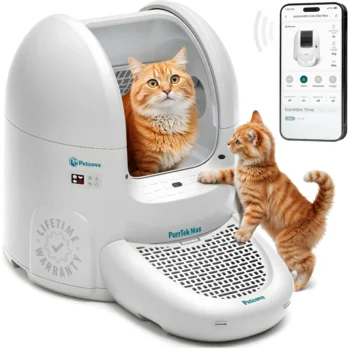
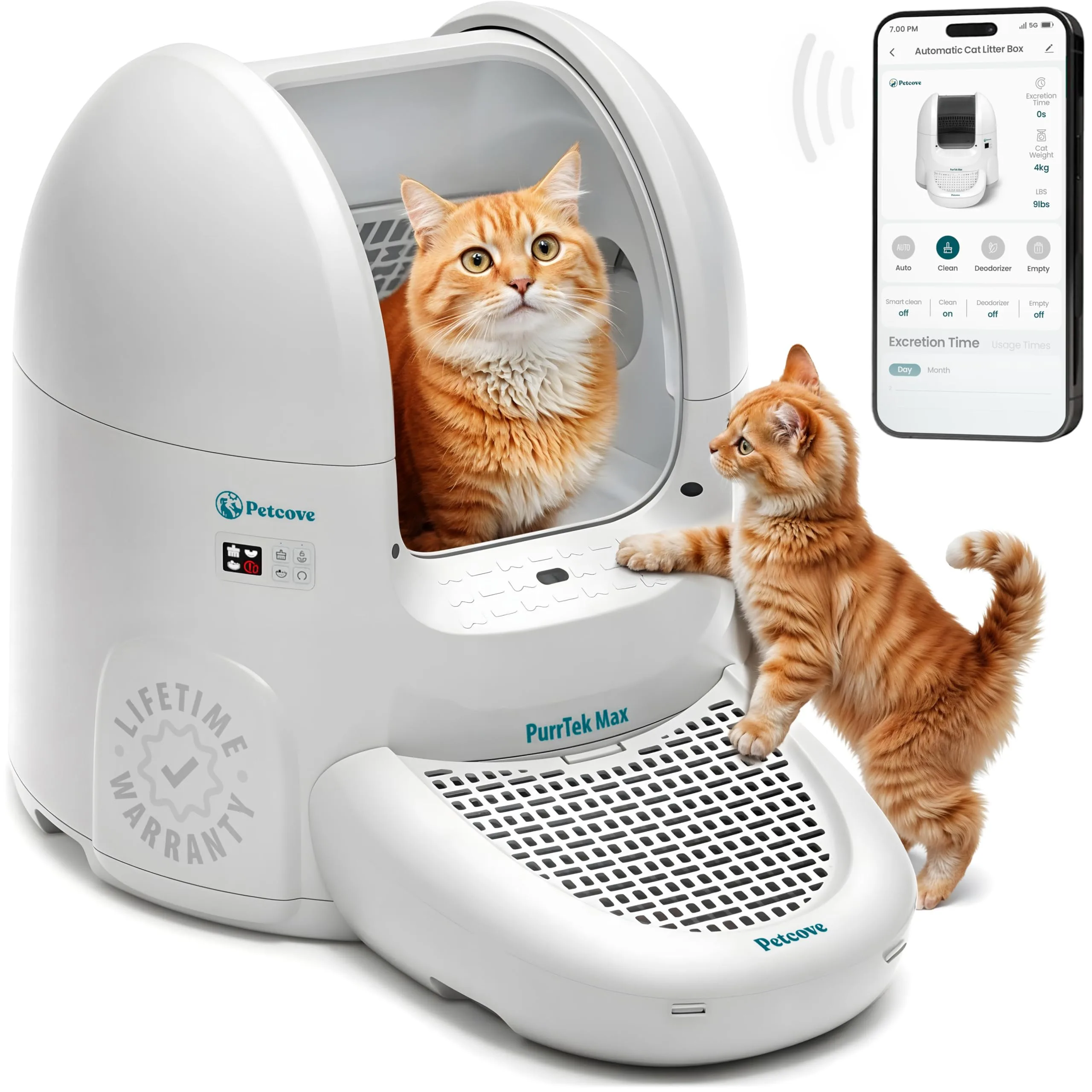
Then I stumbled across the Petcove PurrTek Max Self-Cleaning Litter Box. The first thing I noticed in the pictures was the top—or rather, the lack of one. It was just an open, welcoming basin. No roof. No creepy dark tunnel entrance. This, I thought, might be the thing that finally gets Gus on board with the 21st century. But I’m a skeptic. An open top sounds great for the cat, but does it mean litter gets flung all over my house? And after my past tech headaches, could I even get the thing connected to my Wi-Fi? I decided to give it a real, long-term try, mess and all.
Living With It: A Feature Breakdown From a Pet Owner’s View
Let’s get into the nitty-gritty of what this box is like to live with, day in and day out. I’m not an engineer, but I’ve become an unwilling expert in litter box mechanics through sheer trial and error.
1. That Open-Top Design: A Game-Changer for Confidence
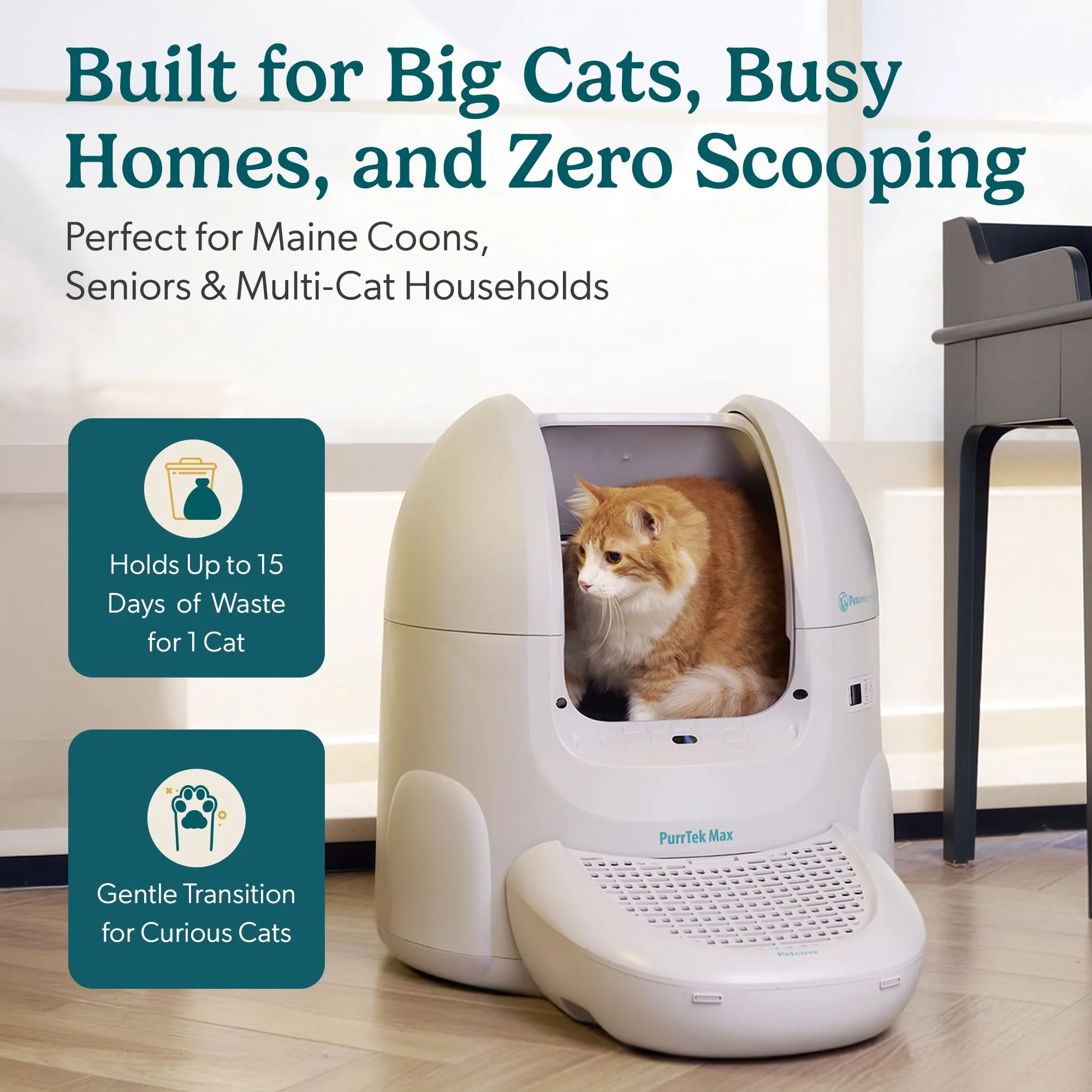
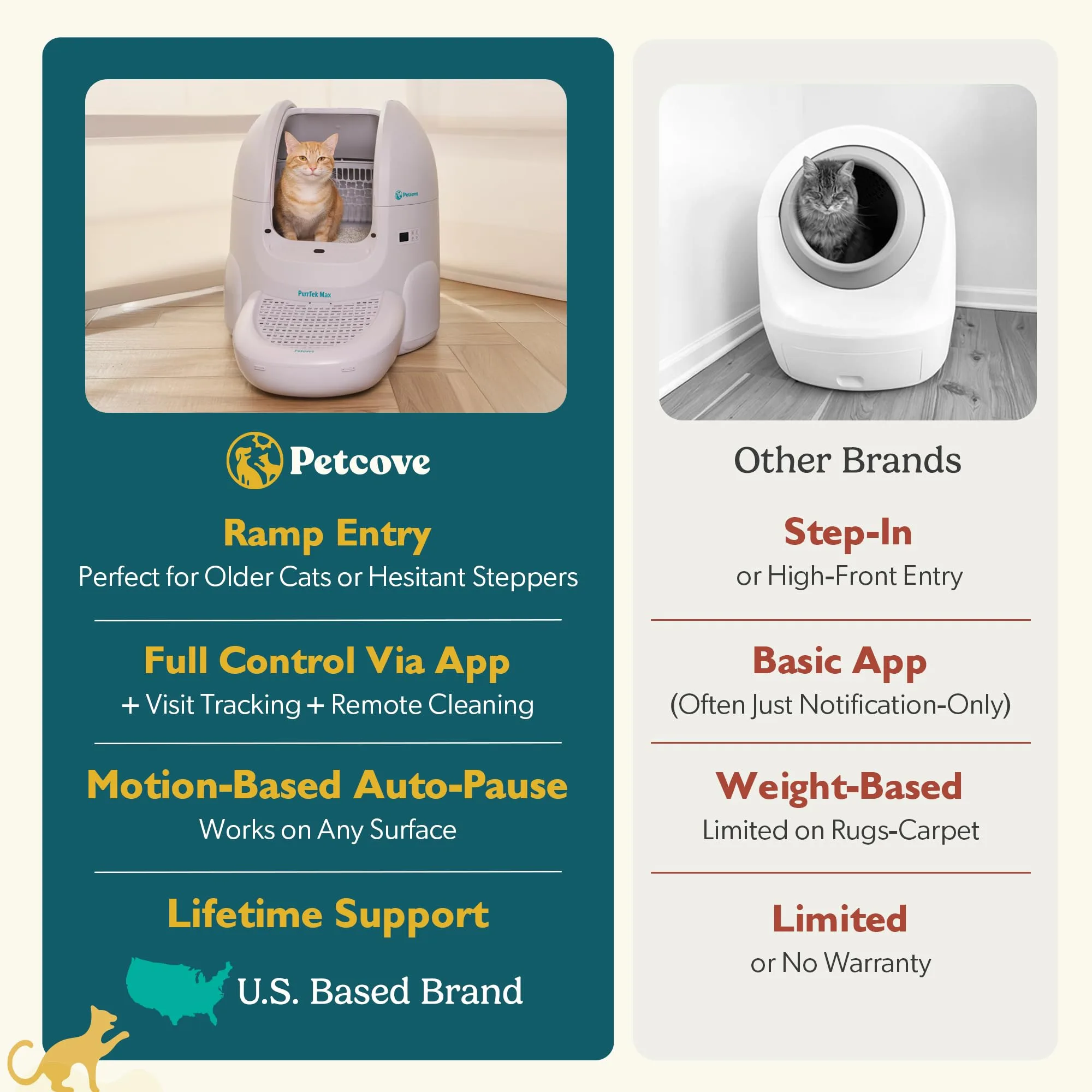
This is the heart of it. The PurrTek Max isn’t a cave; it’s more like a deep, high-walled sink. The opening is wide and inviting. For Gus, this made all the difference. The first time he approached it, he didn’t hesitate. He could step in, keep his head up, and glance around the room while he did his thing. That biological need for security was met. He wasn’t trapped. For a large cat, the space to turn around without his back brushing against a plastic ceiling is a luxury he never had in those enclosed globes. It just feels more normal, more like the open pan he was used to, but with the magic cleaning happening underneath.
2. The 5GHz Wi-Fi: A Surprisingly Big Deal for Setup
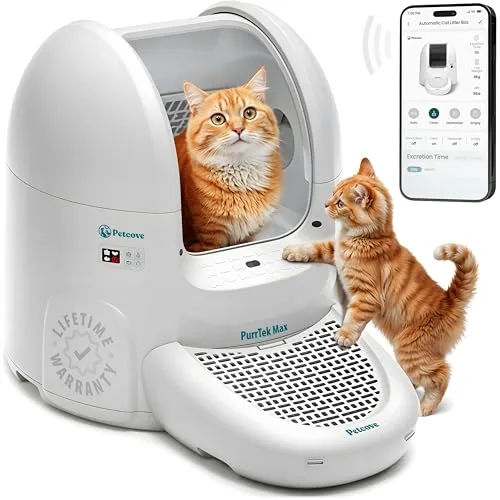
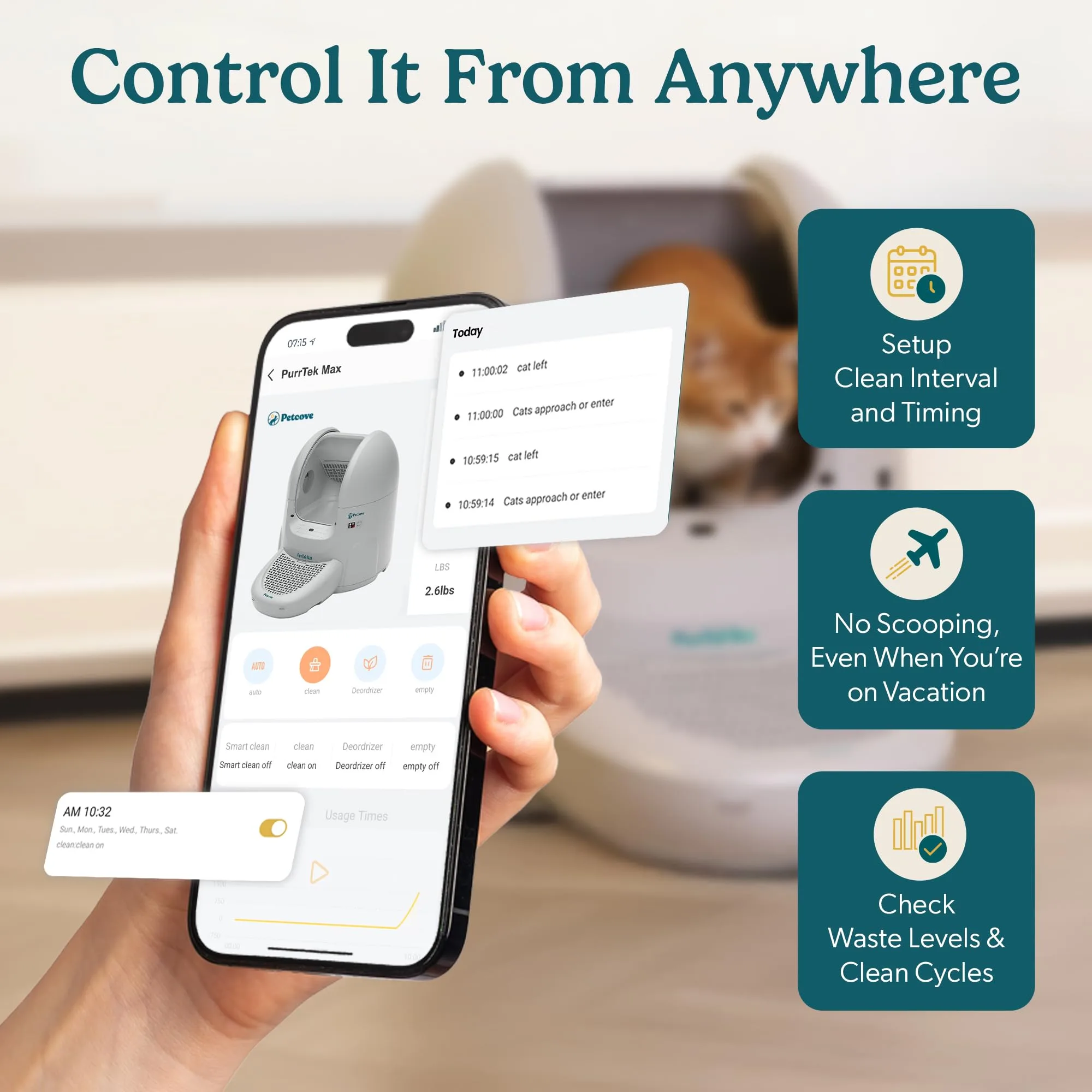
Here’s where my past frustrations screamed. I have a modern mesh router system. Getting most smart pet gadgets to connect is a nightmarish dance of disabling 5GHz, creating a guest network, and praying. I was braced for a fight. The Petcove’s support for 5GHz Wi-Fi changed everything. I downloaded the app, plugged in the box, and it found my home network instantly. I didn’t have to fiddle with a single router setting. It was, without exaggeration, the easiest device setup I’ve ever done for my pets. This isn’t a flashy feature; it’s a quality-of-life miracle that removes the single biggest point of failure for tech like this.
3. The Big Drum and the Sealed Waste Drawer
The inside drum is huge—they say 65 liters. For Gus, it means plenty of clean litter area. The waste gets sifted down into a drawer at the bottom. Now, the “sealed” part is clever. When the cleaning cycle finishes, a little trap door closes over the collected waste, and there’s a carbon filter to tackle odors. In practice, this means if life gets busy and I forget to empty the drawer for a few days (let’s be real, it happens), the smell is genuinely contained. For a multi-cat home, this capacity and sealing would be a lifesaver. I empty Gus’s about once a week, and it’s never been overwhelming.
4. Safety Sensors: Peace of Mind is Priceless
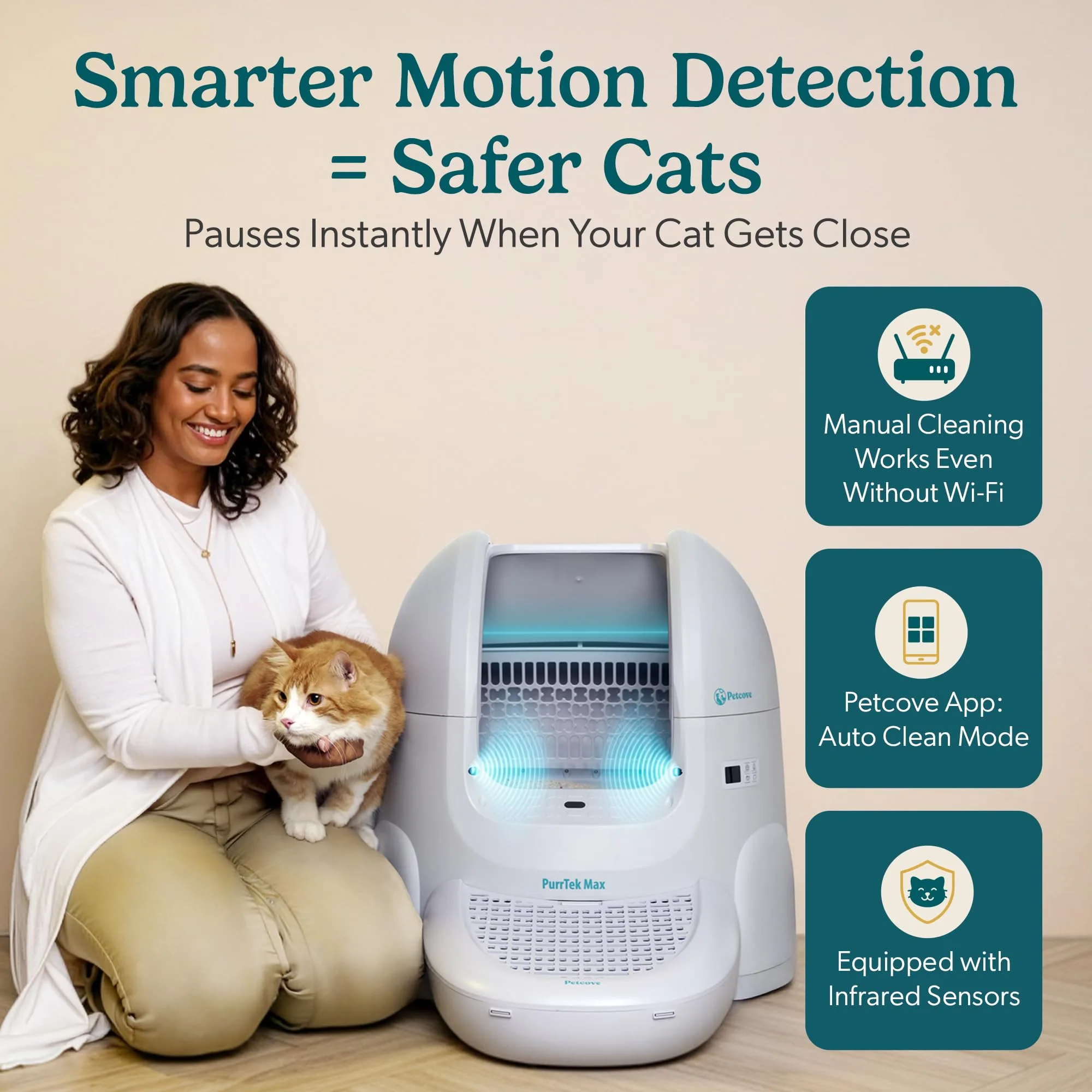
This was my biggest fear with any automatic box: what if it starts while Gus is still in there, or curious and poking his head in? The Petcove has a suite of infrared sensors that act like a security system. If the drum is rotating and it detects any motion near the entrance, it stops immediately. Dead stop. It waits until the coast is completely clear before finishing the job. I’ve tested this by waving my hand near it during a cycle, and the reaction is instant. Knowing there’s that layer of protection lets me sleep soundly, even if the box is running in the middle of the night.
The Real-World Experience: The Good, The Messy, The Maintenance
Specs on a box are one thing. How does it actually function in the chaos of a home with pets, kids, and general life? Here’s the unfiltered report.
Getting Started and Syncing Up
Out of the box, it’s mostly assembled. You click the drum into place, slide in the waste drawer, add litter, and plug it in. The 5GHz Wi-Fi setup, as I gushed about, was a two-minute affair. The app is straightforward. You can set a delay timer—this is important. I learned that if you use a clumping litter that needs a minute to fully harden, setting the wait time to 10 or 15 minutes prevents any messy smearing. It’s a small setting that makes a big difference in keeping the internals clean.

How Loud Is It Really?
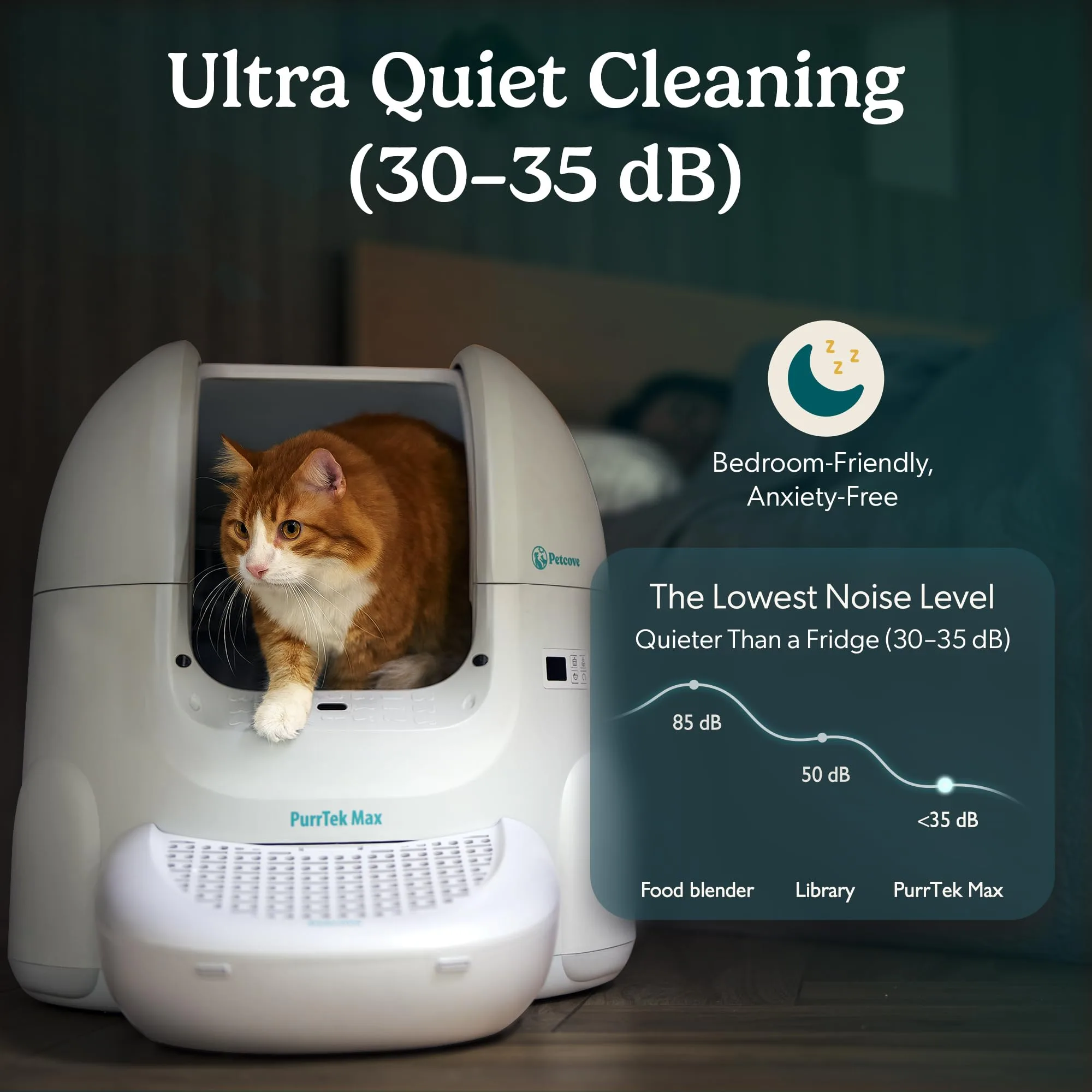
The claim is 30-35 decibels. In a quiet room, you can hear it—a low, gentle hum and the soft sound of litter tumbling. It’s quieter than my fridge kicking on. It’s not silent, but it’s not jarring. The first few times, Gus would lift his head from his nap across the room, then immediately put it back down. It’s never startled him. You could absolutely have this in a bedroom or living area without it being a nuisance.
The Litter Tracking Situation (Let’s Be Honest)
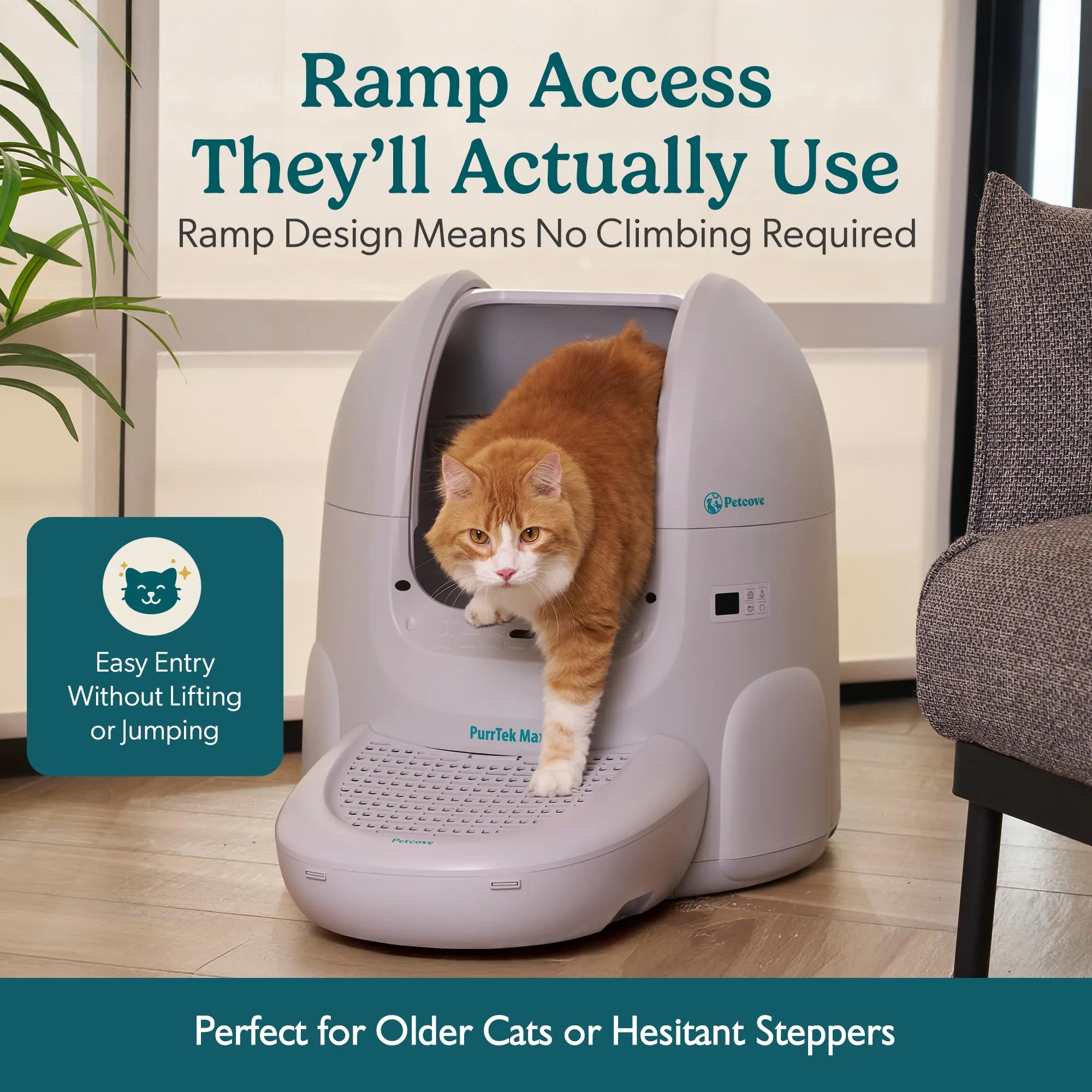
Okay, here’s the trade-off for the open-top design. Gus is an enthusiastic digger. He likes to excavate to China before he goes. With an open top, some of that litter is going to fly out. The included ramp catches a good amount, but it’s not a perfect shield. He also tends to jump out, which sends granules flying. This isn’t a flaw of the box, really; it’s physics. My solution was to buy a large, textured litter mat to go under the entire ramp assembly. It catches probably 90% of the escapees. You will need a good mat. Accept this going in, and you won’t be disappointed.
The Deep Clean: No Machine is Truly Maintenance-Free
Let’s bust a myth: every automatic litter box needs a hands-on scrub eventually. Urine dust and litter residue build up. What I love about the Petcove is how easy it is to take apart. The entire plastic drum lifts out with no tools. There are no wires or electronics attached to it. Once a month, I carry it outside, hose it down, give it a scrub with a mild, pet-safe cleaner, and let it dry. This modularity is huge. It prevents that permanent, baked-in ammonia smell that plastic can get, and it makes the whole process feel manageable, not like a dreaded chore.
What Kind of Litter Can You Use?
This is crucial, and where a lot of people go wrong. You must use a clumping litter. The machine works by sifting the clumps away from the clean granules. I’ve had the best luck with a standard, medium-grain clumping clay. I tried a finer, dust-free clumping litter, and it worked okay but seemed to cake a bit more on the sides. I also experimented with a clumping tofu litter; it worked, but only the kinds with very small granules. The big, pellet-style litters (like pine or paper) or non-clumping crystals will not work at all. They’ll either fall right through the sifter or just swirl around uselessly.
A Closer Look at the Details
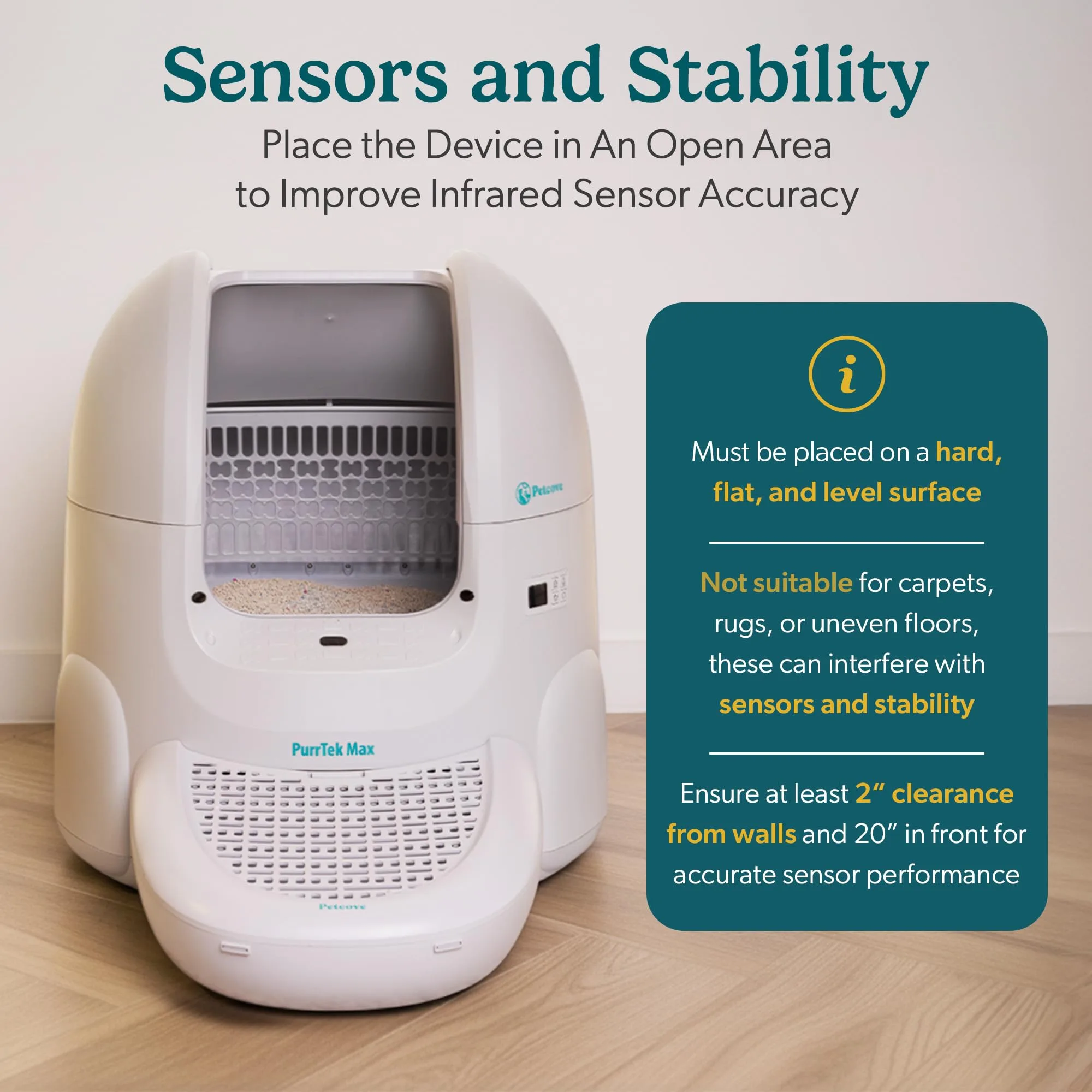
Some closer shots of the parts that matter during daily life.

My Pros & Cons List After Months of Use
| What I Absolutely Love | The Things to Consider |
|---|---|
|
The Open Design: Finally, an auto box my skittish, big cat will actually use without fear. This is the main event.
|
It’s a Space Hog: This thing isn’t small. It needs a dedicated corner. Measure your space first.
|
|
5GHz Wi-Fi: Such a simple thing that makes setup blissfully easy compared to other smart gadgets.
|
Litter Gets Out: The open design means scatter. A high-quality litter mat is not optional; it’s a required accessory.
|
|
Easy to Clean Deeply: The fact I can take the whole drum out and hose it down is a massive win for long-term hygiene.
|
Litter Choice is Limited: You’re locked into clumping litter. If you’re a die-hard pine pellet fan, this isn’t your box.
|
|
Quiet and Unobtrusive: It does its job in the background without causing a ruckus, day or night.
|
The App is Key: While there’s a manual button, to really tweak settings like the delay timer, you need the app on your phone.
|
|
Huge Waste Capacity: For one cat, I only empty it weekly. The sealed drawer really does control odors in between.
|
The Entry is High: The ramp helps, but very elderly or mobility-impaired cats might still find the step up a challenge.
|
How It Stacks Up Against Other Options
| Feature | Petcove PurrTek Max (My Pick) | Litter-Robot 4 | Generic Rotating Drum Box |
|---|---|---|---|
| Overall Design | Open Top / Like a Deep Tray | Enclosed Globe (“Spaceship”) | Enclosed Globe |
| Wi-Fi Connectivity | 2.4GHz & 5GHz (Easy Setup) | 2.4GHz Only (Can Be Tricky) | 2.4GHz Only (or None) |
| Ideal Cat Size | XL & Anxious Cats (Up to 22lbs) | Large Cats | Small/Medium Only |
| Safety Features | 5 Infrared Motion Sensors | Laser & Weight Sensors | Basic Timer or Weight (Less Safe) |
| Price Point | Mid-Range Investment | Premium Price | Budget Friendly (Often Compromises) |
Final Thoughts: Who This Box Is For (And Who Should Pass)
After living with the Petcove PurrTek Max for a good while, I feel like it finally solves the puzzle for a specific group of cat owners that were left out before. It’s not just about automation; it’s about design that respects a cat’s instincts. By ditching the enclosed spaceship look, they’ve opened the door (literally) for cats who were too big, too anxious, or too proud to enter a plastic cave.
The smart tech, especially the 5GHz Wi-Fi, feels thoughtfully integrated instead of being a tacked-on headache. Yes, you need to manage the litter scatter with a mat, and yes, you’re committed to clumping litter. But the trade-off—a consistently clean box for a happy, unstressed cat without daily scooping—is absolutely worth it for me. The peace of mind from the safety sensors and the ease of a deep clean seal the deal.
This might be your solution if:
- You have a large or giant breed cat like a Maine Coon, Ragdoll, or Norwegian Forest Cat.
- Your cat is skittish, elderly, or has had bad experiences with enclosed litter boxes in the past.
- You value easy tech setup and have a modern home Wi-Fi network.
- You want the convenience of an automatic box but need one that’s straightforward to maintain and clean thoroughly.
You might want to look elsewhere if:
- Your space is very limited. This unit needs a real footprint; it’s not for a tiny apartment bathroom.
- You are devoted to non-clumping litter types like pine pellets or silica crystals.
- Your budget is very strict and you need the absolute cheapest option, understanding you may compromise on safety, size, and connectivity.
- Your cat has severe mobility issues and cannot step up onto the ramp at all.
Questions I Had (And You Might Too)
How do you transition a cat used to a normal box to this one?
A: Patience is key. I placed the Petcove right next to his old box, with the power off, for about four days. I put some of his old litter in it. Once he was using it reliably as just a fancy static box, I turned it on. The open design made him feel safe enough to investigate from day one.
Does it work with multiple cats?
A: While I only have Gus, the large litter area and 12-liter waste drawer are designed for 2-3 cats. You’d just need to empty the drawer more frequently—likely every 3-4 days depending on your crew.
What happens if the power goes out?
A: It becomes a very nice, but manual, litter box. The cleaning cycle simply won’t run until power returns. Your cat can still use it normally in the meantime.
Is the app reliable, or does it lose connection?
A: The 5GHz connection has been incredibly stable for me—far more so than other 2.4GHz-only pet devices I’ve owned. I get consistent notifications and remote control works without lag.
How often do you really need to do a deep clean?
A: For one cat, a monthly thorough wash is perfect. With more cats, or a cat with runnier stools, you might need to do it every 2-3 weeks. The drum will show a slight film when it’s time.
My cat is a “high pee-er.” Will that be a problem?
A: The high walls are excellent defense. However, if your cat stands right at the edge and pees straight out horizontally (it happens), it could go over. The walls are about 15 inches high, which contains the vast majority of situations.
Are the bags it comes with special, or can I use my own?
A: Any standard 8-10 gallon tall kitchen bag works perfectly. I use generic bags and they fit the drawer just fine.
Looking back, the journey to find the right self-cleaning box felt endless. I tried the fancy ones, the cheap ones, and everything made Gus turn up his nose. The Petcove PurrTek Max worked because it started with the cat’s comfort, not just the gadgetry. It remembered that the user is a living creature with instincts and fears, not just a problem to be automated away. For me, that made all the difference. My floors are cleaner (with the help of a mat), my nose is happier, and most importantly, Gus can take care of his business in peace. And in the end, that’s what we all want for our furry family members.
Disclaimer: I am a passionate pet owner, not a veterinarian. The information in this article is based on research and personal experience. Always consult your vet before changing your pet’s diet or medication.
Authors