Kimberly
The Vet Visit Struggle: Why Top-Loading Matters
Let me paint you a picture. It’s 8 AM, vet appointment in 30 minutes. I have my cat, Gizmo, who is normally a sweet, purring loaf. But the moment that front-loading carrier comes out of the closet, he undergoes a molecular transformation. He’s no longer a solid. He becomes a liquid, a puddle of defiant fluff that somehow spreads his weight across the entire doorway, all four paws braced against the frame like a starfish. What follows is a traumatic, ten-minute wrestling match that leaves us both stressed, covered in fur (and sometimes a scratch or two), and dreading the next trip. If this sounds familiar, you’re not alone.
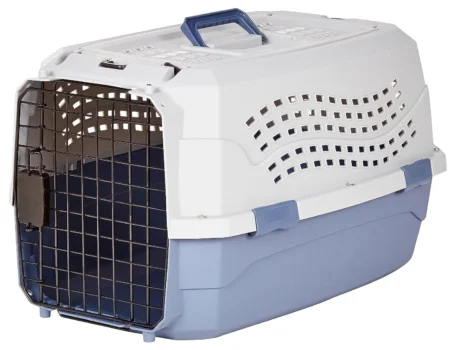
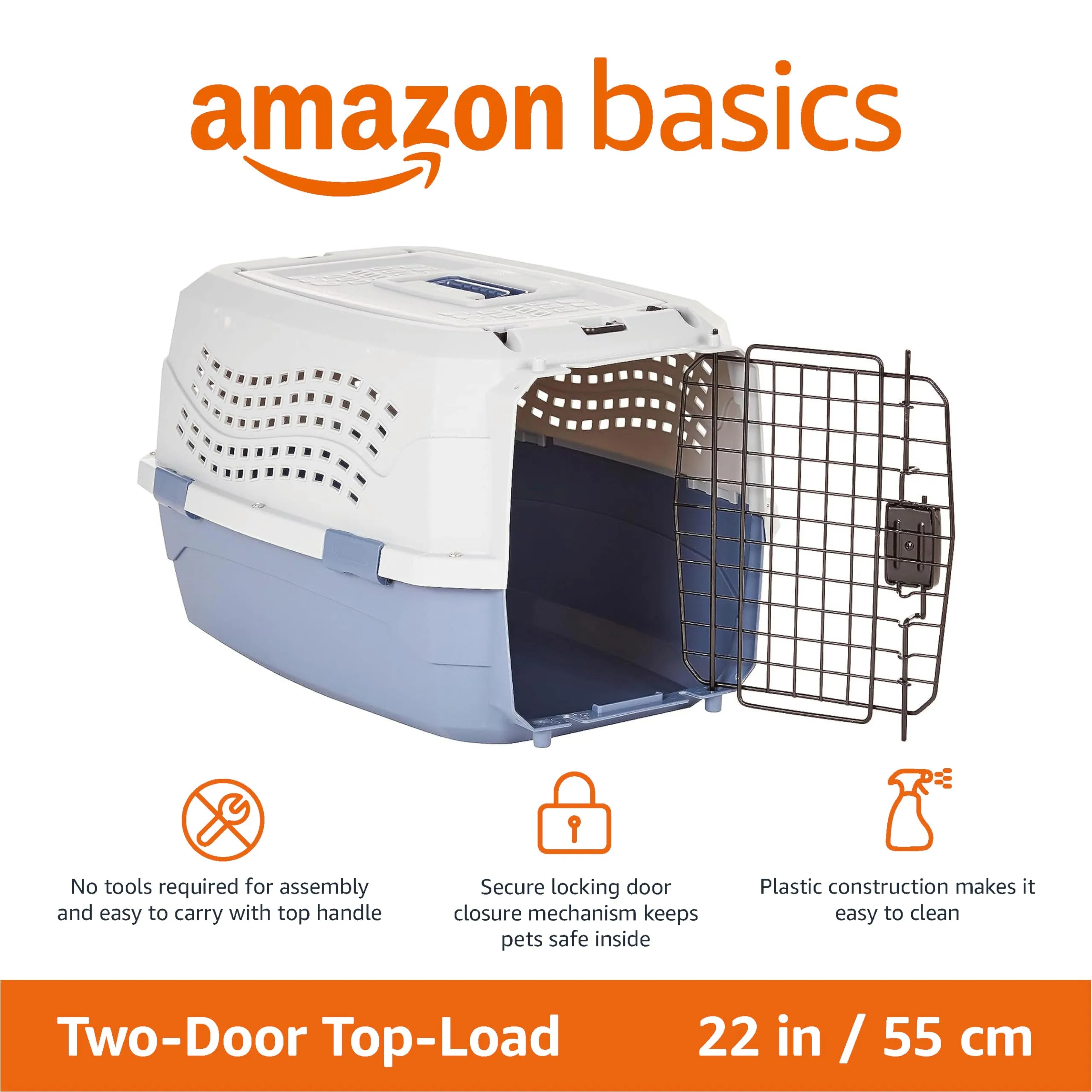
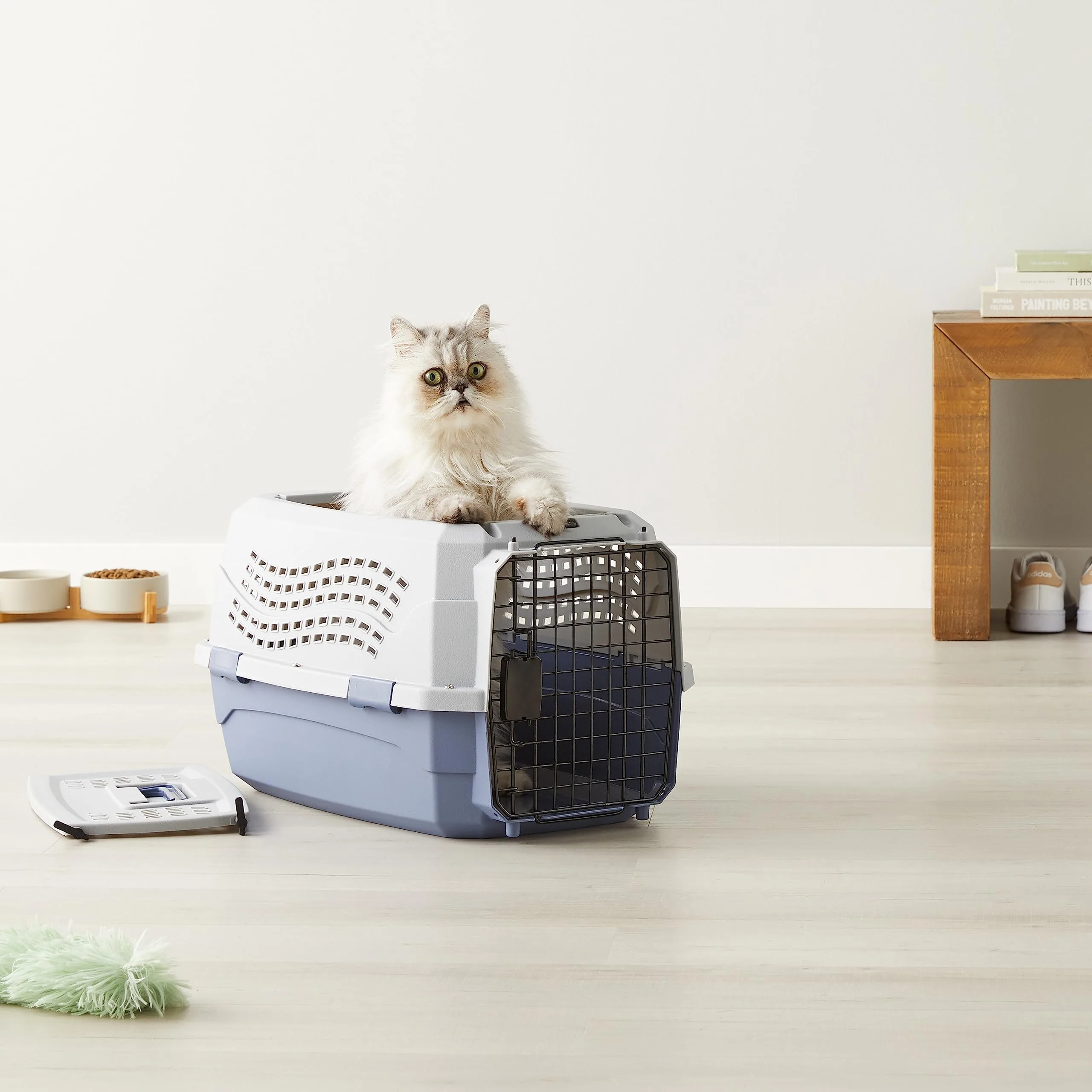
The Amazon Basics 2-Door Top-Load Pet Carrier entered my life as a potential ceasefire in this ongoing battle. It’s a no-frills, utilitarian-looking box with one brilliant trick: a second door on the roof. The premise is simple yet revolutionary: use gravity to your advantage. Instead of the horizontal shove, you lower your cat vertically into their temporary mobile home. It seemed too good to be true for its budget-friendly price tag.
But as a pet owner, my mind immediately raced with practical fears. Is the plastic flimsy? Would the top latch hold if Gizmo decided to become a frenzied, 12-pound battering ram mid-car ride? Could this cheap-looking crate actually be safe? I pushed the brand name aside and focused on what really matters: the engineering, the security, and whether it actually reduces stress for both human and feline. Here’s my honest, experience-based breakdown.
Design and Build Quality: More Than Meets the Eye
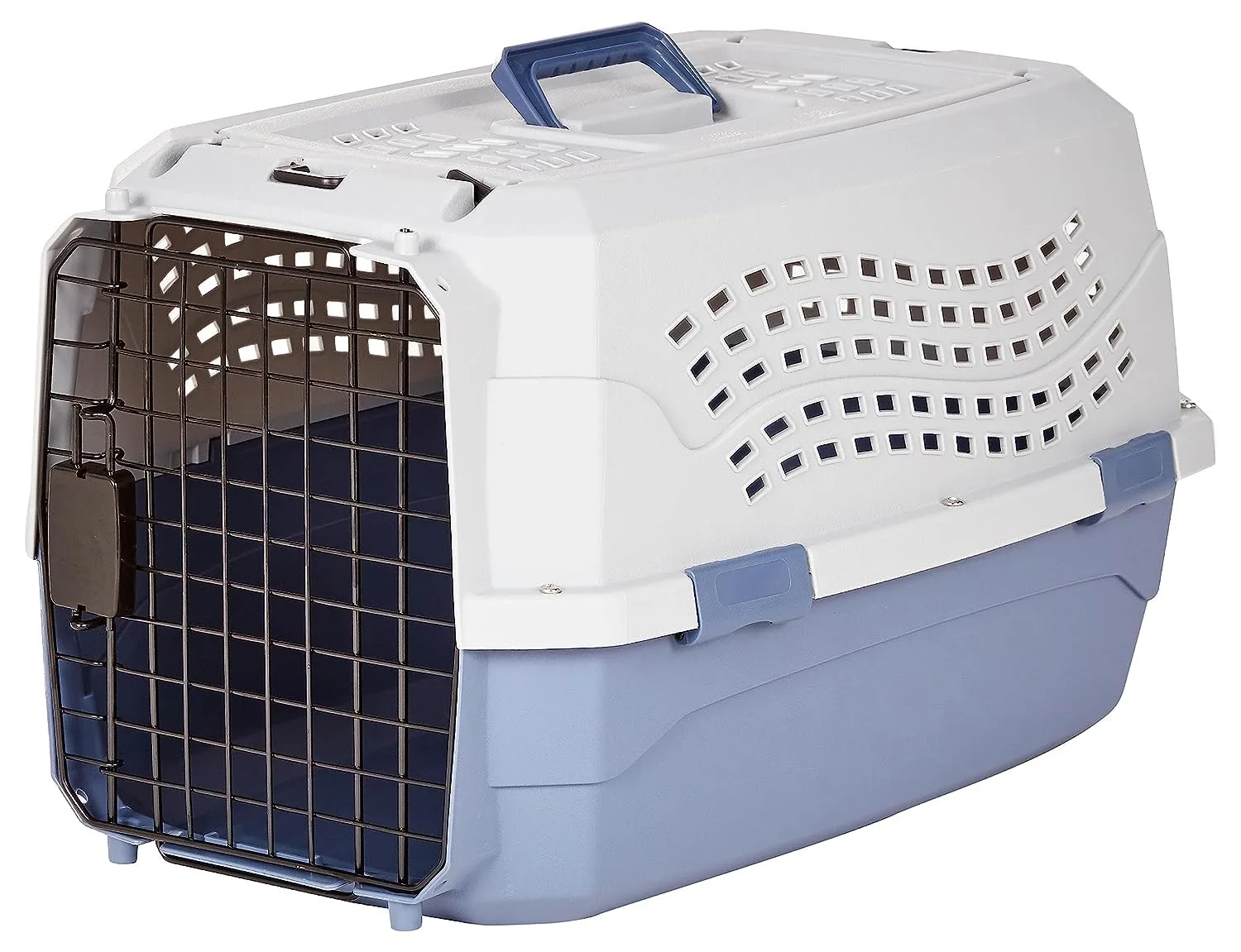
At first glance, it’s a simple hard plastic box. But the devil—and the angel—are in the details. This carrier makes specific design choices that directly address the common failures of cheap pet crates.
1. The Two-Door System: A Tactical Advantage
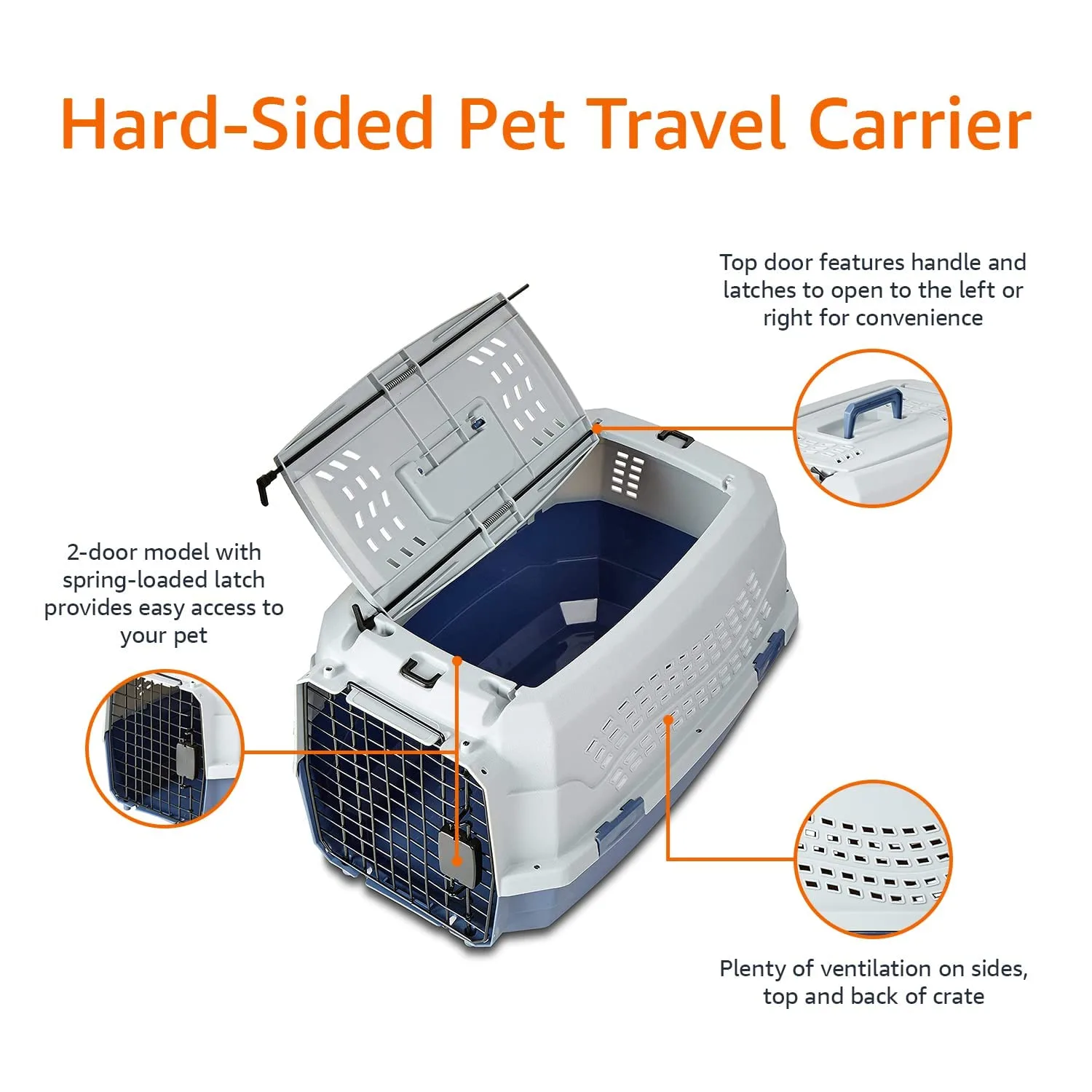
This is the core innovation. The front door is your standard steel-wire gate with a latch, perfect for normal entries/exits or for securing the carrier in the car. The top door is the game-changer. It opens fully, creating a wide opening. Loading Gizmo went from a battle of wills to a calm maneuver. I gently swaddle him in a towel (the “purrito” method), hold him over the open top, and lower him in. His paws can’t find anything to brace against. He’s in before he even processes his protest.
Beyond loading, the top door is a vet-visit hero. During exams, the vet can often partially examine your pet through the top opening without fully removing them from their secure, familiar space. This can prevent a frantic chase around the exam room.
2. Screw-Nut Assembly: Annoying but Secure
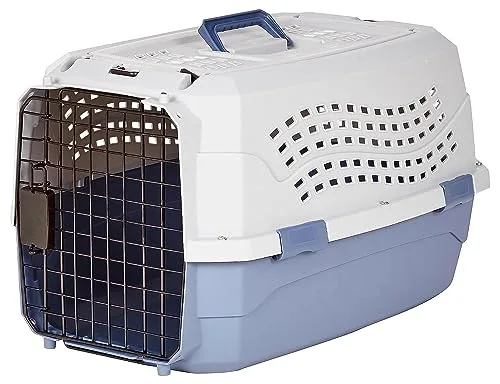
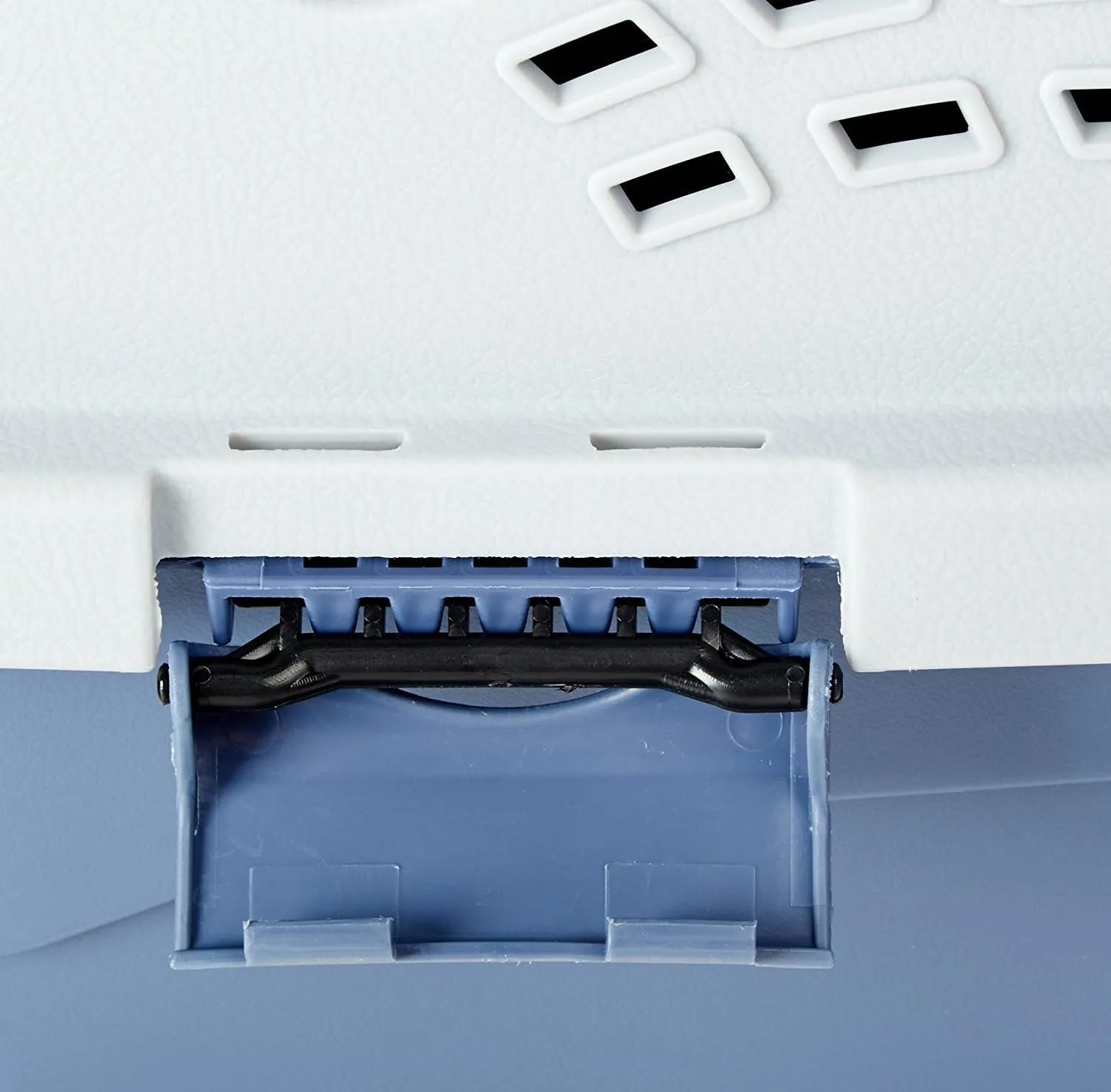
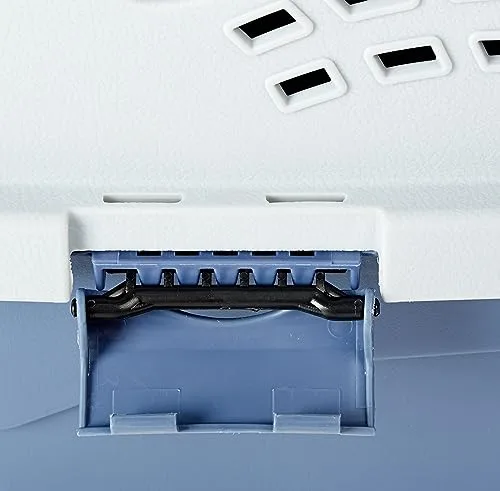
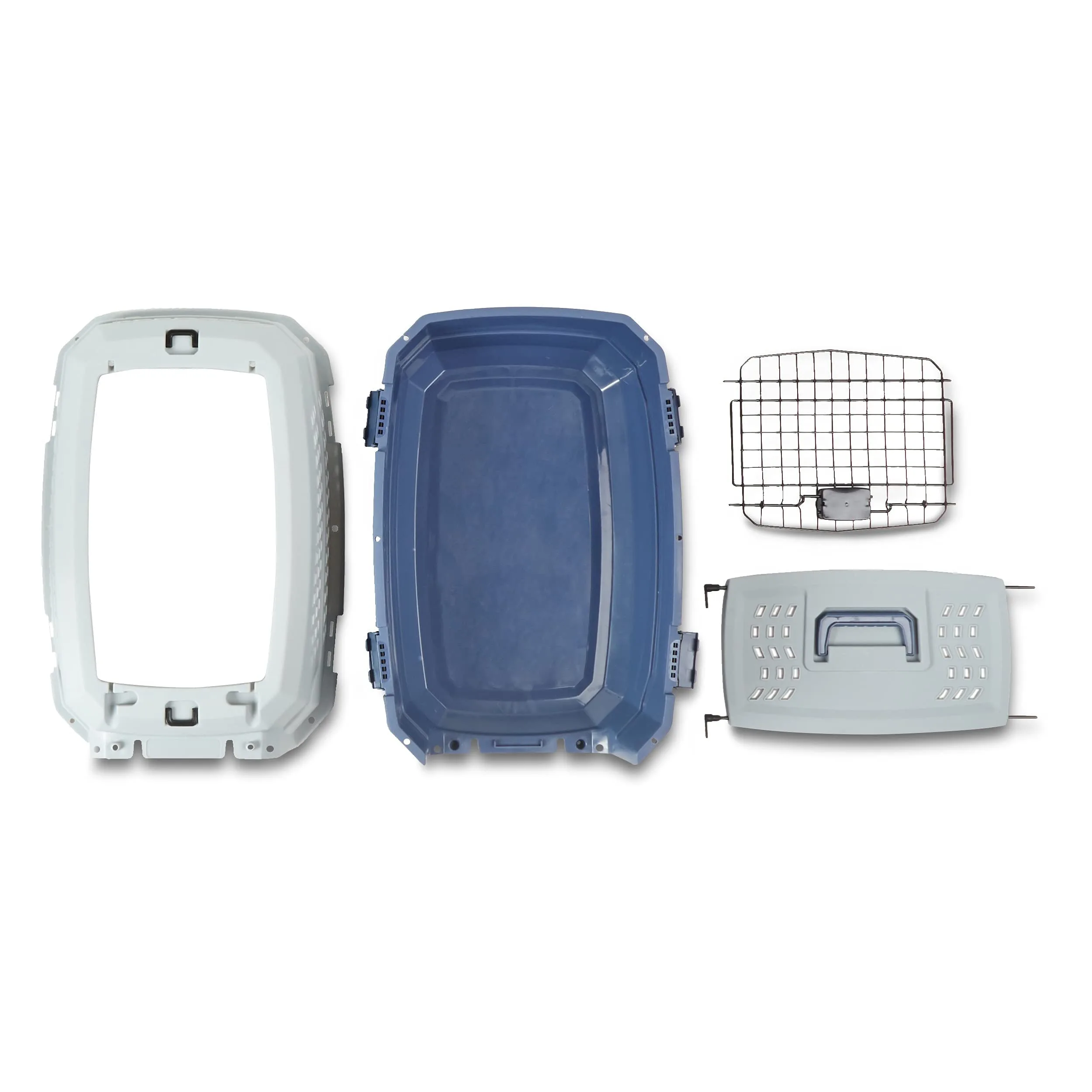
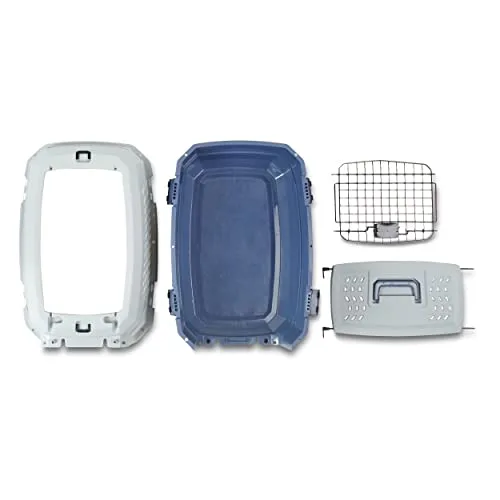
Most budget carriers use plastic clips or snaps to connect the top and bottom halves. They’re quick to assemble but terrifyingly easy to pop open if you bump the carrier sideways or, heaven forbid, drop it. Amazon Basics uses metal screws and wing nuts. Yes, assembling it out of the box is a 10-15 minute chore that requires a screwdriver. I grumbled about it. But once tightened, this connection is rock solid. You can lift the entire carrier by the top handle (more on that later) without a hint of separation. This one design choice elevates it from “disposable” to “durable tool.”
3. Ventilation Logic: See-Through Security
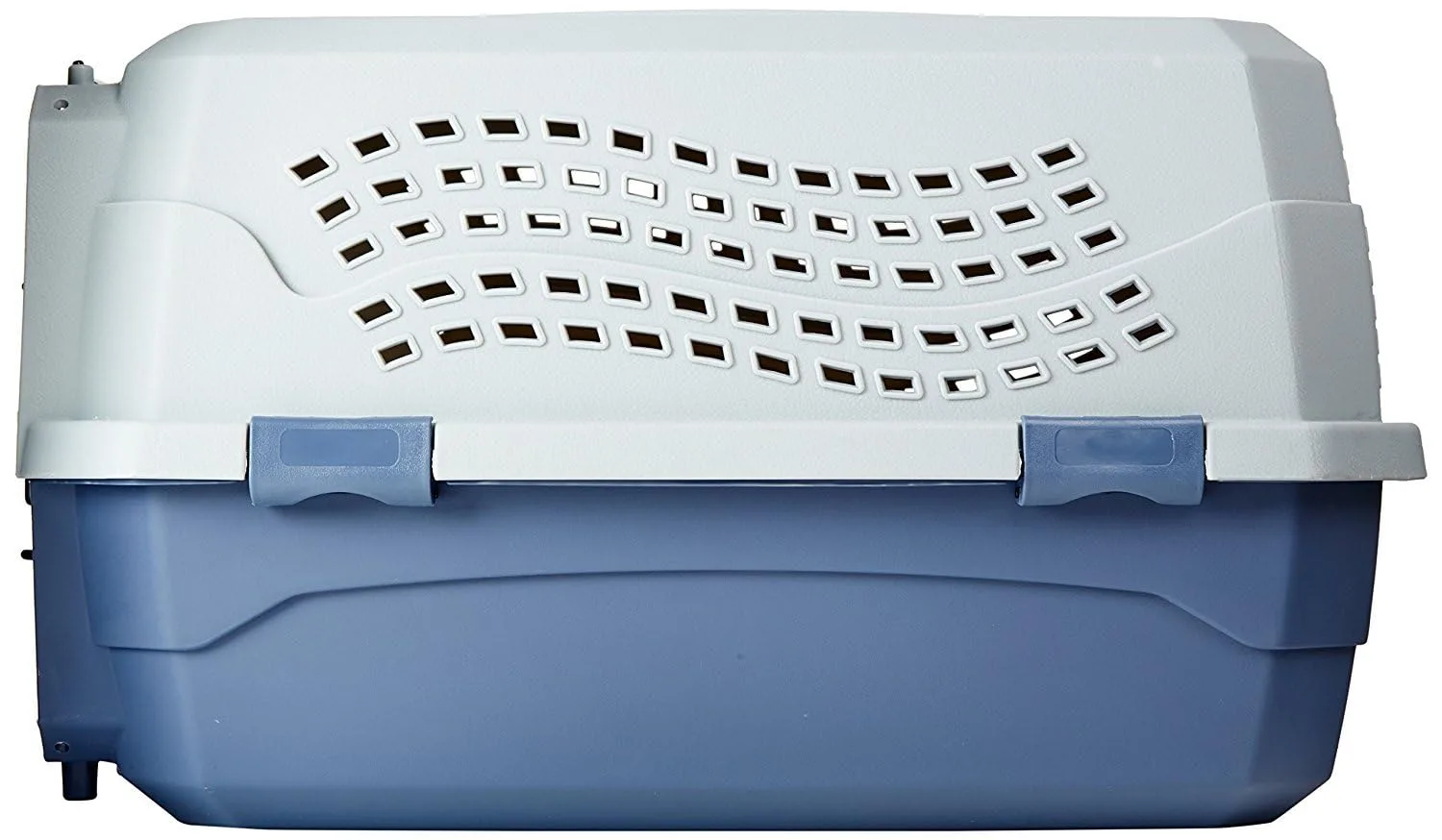
The entire carrier is a ventilation panel. The sides, front, and back are covered in elongated slots, and both doors are open wire mesh. This creates exceptional 360-degree airflow, which is crucial for a panting, anxious pet. It also allows your pet to see out from almost any angle. For some pets, this visibility is calming; they can see you and their surroundings. For others who get overstimulated, you can easily drape a light towel over part of it to create a more den-like feel.
Hands-On Experience: The “Battle Box” Test with a Reluctant Feline
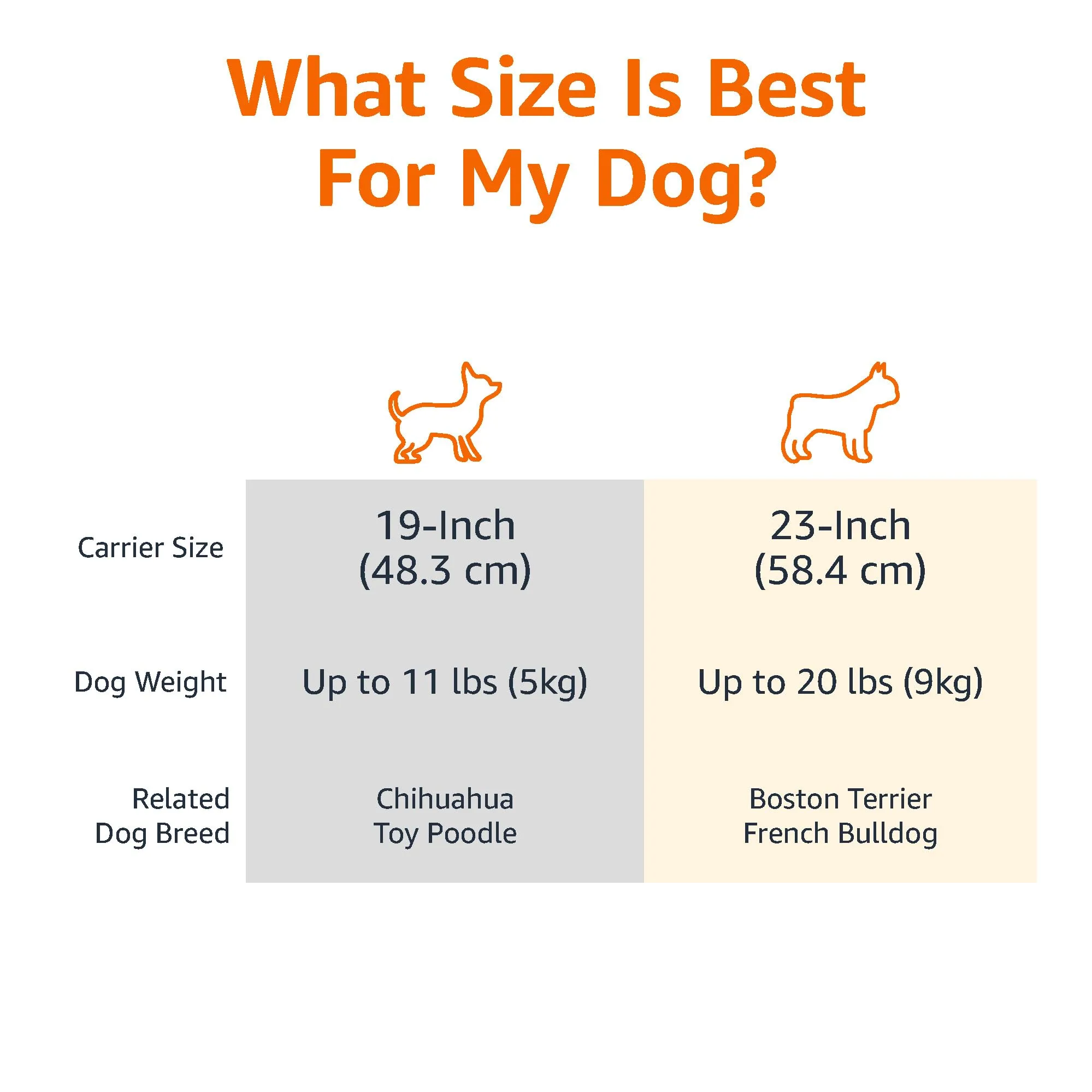
I tested the 23-inch model (advertised for pets up to 20 lbs) with my 12-pound cat over several vet trips and one trial “room-to-room” move. Here’s how it held up in the real world.
The Latch Security: Can They Houdini Out?
My biggest fear was Gizmo figuring out how to open the door from the inside. The latches on both doors are a “squeeze-to-release” style. You have to press two spring-loaded metal bars together to disengage the lock. Verdict: They are very secure. There’s no external button or lever for clever paws to bat at. The springs are quite stiff, which is great for security but does require a firm grip to open. If you have significant arthritis or hand weakness, this could be a challenge. For everyone else, it’s reassuringly robust.
Size and Space: Room to Breathe, But Not to Fly
The interior (approx. 23″L x 15″W x 13″H) is spacious for an average cat. Gizmo can easily stand up, turn around, and lie down in a curled position. It doesn’t feel like a cramped cage.
Durability and “Feel”: The Handle Conundrum
The plastic shell is rigid and has a slight flex—it doesn’t feel like a premium, impact-resistant travel case, but it feels far from flimsy. It’s survived being knocked over and bumped into doorframes without a mark.
The one design quirk that gives me pause is the handle placement. The single carry handle is attached to the top door panel. Logically, it has to be, as that’s the opening half. While it’s securely hinged and latched, carrying a heavy pet (say, 15+ lbs) by a handle attached to a moving part can feel less than rock-solid psychologically. My solution? For anything more than a quick lift from floor to car seat, I instinctively support the bottom of the carrier with my other hand. It’s a minor habit that provides major peace of mind.
Detail Gallery: A Closer Inspection
Pros & Cons: The Honest Balance Sheet
| ✅ What Works Brilliantly | ❌ The Trade-Offs & Quirks |
|---|---|
| Top-Loading is a Game-Changer: Seriously reduces stress and physical struggle for loading anxious pets. It feels like a humane cheat code. | Assembly is a Project: You’ll need a screwdriver and 10-15 minutes to put it together. It’s not a “unbox and go” product. |
| Structurally Secure: The screw-and-nut assembly means this box won’t accidentally come apart if jostled or dropped—a critical safety feature. | Handle Psychology: Carrying by the top-hinged door feels less stable with heavier pets, necessitating a hand under the base for confidence. |
| Superior Ventilation: The extensive slots provide excellent airflow, keeping pets cooler and less claustrophobic. | Bare, Slippery Floor: The hard plastic bottom is like an ice rink for paws. A towel, small blanket, or non-slip mat is an absolute necessity. |
| Exceptional Value for Money: It offers a premium feature (top-loading) and secure build at a truly budget-friendly price point. | Not for Airline Cabin Use: Its height typically exceeds under-seat limits. This is a car/vet carrier, not a flight companion. |
| Easy to Clean: The hard plastic interior can be wiped down or even hosed off after a messy trip. The top and bottom separate fully for deep cleaning. | Stiff Latches: The secure squeeze latches require decent hand strength, which could be difficult for some. |
How It Compares: Finding Its Place in the Carrier Ecosystem
| Feature | Amazon Basics 2-Door Top-Load | Soft-Sided Carrier (e.g., Sherpa) | Basic Hard-Sided 1-Door Crate |
|---|---|---|---|
| Crush Protection | 🛡️ High (Rigid Hard Shell) | 🛡️ Low (Padded Fabric) | 🛡️ High (Rigid Hard Shell) |
| Loading Ease | ⬇️ Superior (Top & Front Options) | 👍 Good (Often Top & Front Zippers) | 👎 Difficult (Front-Only Shove) |
| Cleaning | 🧼 Easy (Wipe/Hose Down) | 🧺 Moderate (Removable, Washable Liner) | 🧼 Easy (Wipe/Hose Down) |
| Air Travel Approved | ✈️ Typically Cargo Only | ✈️ Yes (Most Cabin-Approved) | ✈️ Typically Cargo Only |
| Best Use Case | 🚗 Car Travel, Stressful Vet Trips | 🛫 Air Travel, Quick Trips | 🏠 Permanent Crate Training, Car |
In Action: From Assembly to Real-World Use
Final Verdict: The Practical, Stress-Reducing Workhorse
The Amazon Basics 2-Door Top-Load Pet Carrier won me over through sheer, pragmatic effectiveness. It’s not fancy. It won’t win design awards. But it solves a very real, very frustrating problem for pet owners with dignity and security. The top-loading feature alone is worth the price of admission, transforming a pre-vet ritual of dread into a manageable, 30-second process.
This carrier is a perfect fit for you if:
- You have a “liquid” cat or a small dog that braces against carriers. The top-load design neutralizes their primary defense mechanism.
- Your primary use is car travel to the vet, groomer, or on road trips. It offers excellent protection and ventilation for these scenarios.
- You value security and durability on a budget. The screw assembly and secure latches provide peace of mind that far exceeds its price point.
- You want an easy-to-clean carrier. For accidents or general mess, the wipe-down plastic is a practical blessing.
You should consider a different carrier if:
- You need an airline-approved, in-cabin carrier. Look for a soft-sided bag specifically designed to fit under airplane seats.
- You have severe arthritis or hand weakness. The stiff latches may be difficult to operate consistently.
- You want a carrier that doubles as a cozy, permanent bed or hideaway. This is a transport tool; its hard interior isn’t inherently cozy without added bedding.
- You frequently carry a pet over 15-18 lbs. While it can hold the weight, the handle placement might make you uncomfortable for extended carrying.
For me, this carrier has been a small victory in pet parenting. It hasn’t made Gizmo love the vet, but it has removed the worst part of the ordeal: the fight to get him there. It’s a tool that respects both the pet’s fear and the owner’s need for a safe, efficient solution. In the world of pet products, that’s a rare and valuable thing.
Frequently Asked Questions (From One Stressed Pet Owner to Another)
Q: How do you get a scared cat OUT of the top?
A: The top door is fantastic for loading, but for unloading a nervous cat at the vet, I usually open the front door. I place the carrier on the exam table with the front facing the vet, open it, and let the vet or tech gently encourage the cat out. The top door can also be used to reach in and lift them out if they’re cooperative.
Q: Can it be secured with a seatbelt?
A: Yes! This is a major advantage of hard-sided carriers. The seatbelt can be threaded through the sturdy carrying handle and/or around the body of the carrier to keep it firmly in place on the car seat, which is much safer in case of a sudden stop.
Q: Is there a way to make it more comfortable/cozy?
A: Absolutely. I always line the bottom with a folded towel or a small, non-slip pet mat. For longer trips, you can add a favorite small blanket or an item of your clothing that smells like you. Just ensure any bedding is secure and won’t bunch up and block the ventilation slots.
Q: My dog is a chewer. Will they chew through the plastic?
A: The plastic is tough, but a determined chewer could potentially damage the ventilation slots or the plastic rim. This carrier is better for anxious but non-destructive pets. For serious chewers, a heavy-duty metal crate is a safer choice.
Q: Can two small cats travel together in this?
A: The 23-inch size could technically hold two very small, bonded cats for a short, calm trip. However, for their comfort and safety (and to prevent potential squabbles in a stressful situation), it’s almost always better to have one carrier per cat.
Q: How do you clean it after a messy accident?
A: The beauty of the screw assembly is that you can completely separate the top and bottom halves. I take it outside, hose it down, scrub with a pet-safe disinfectant, and let it air dry. It’s far easier to clean thoroughly than a fabric carrier.
Q: Does it come in other sizes?
A: Yes, Amazon Basics typically offers this 2-door top-load design in a few sizes. Be sure to check the dimensions and weight limit carefully to choose the right one for your pet, ensuring they have enough room to stand and turn comfortably.
Disclaimer: I am a passionate pet owner, not a veterinarian. The information in this article is based on research and personal experience. Always consult your vet before changing your pet’s diet or medication.