The pre-dawn negotiations: Every morning at precisely 4:47 AM, Oliver (a 15-pound tabby with the appetite of a small bear) would begin his campaign. He’d start with gentle paw taps to my face, escalate to dramatic sighs, and finally resort to knocking things off the nightstand. Meanwhile, Luna (a delicate, cautious grazer) would watch from a distance, knowing that when food finally appeared, Oliver would inhale his portion and then muscle her away from hers. Our kitchen was a battlefield, weekends away required military planning with pet sitters, and I was perpetually sleep-deprived.
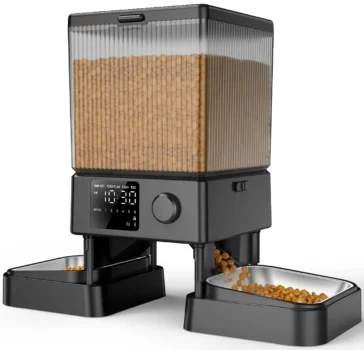
I’d researched automatic feeders, but most were designed for single pets. Buying two meant double the cost, double the counter space, and double the potential for mechanical failure. Then I discovered the oneisall Automatic Cat Feeder for 2 Cats. Its promise was elegantly simple: one machine, two separate bowls, no complicated apps. Just fair, scheduled feeding. Skeptical but desperate for a ceasefire, I embarked on a 60-day trial. This is the full report of whether this feeder ended our mealtime wars or just gave us new problems to negotiate.
The Core Innovations: Why This Design Works
Most pet products try to be everything to everyone. The oneisall feeder succeeds because it focuses on solving three specific problems for multi-cat households.
⚖️
The Physics of Fairness
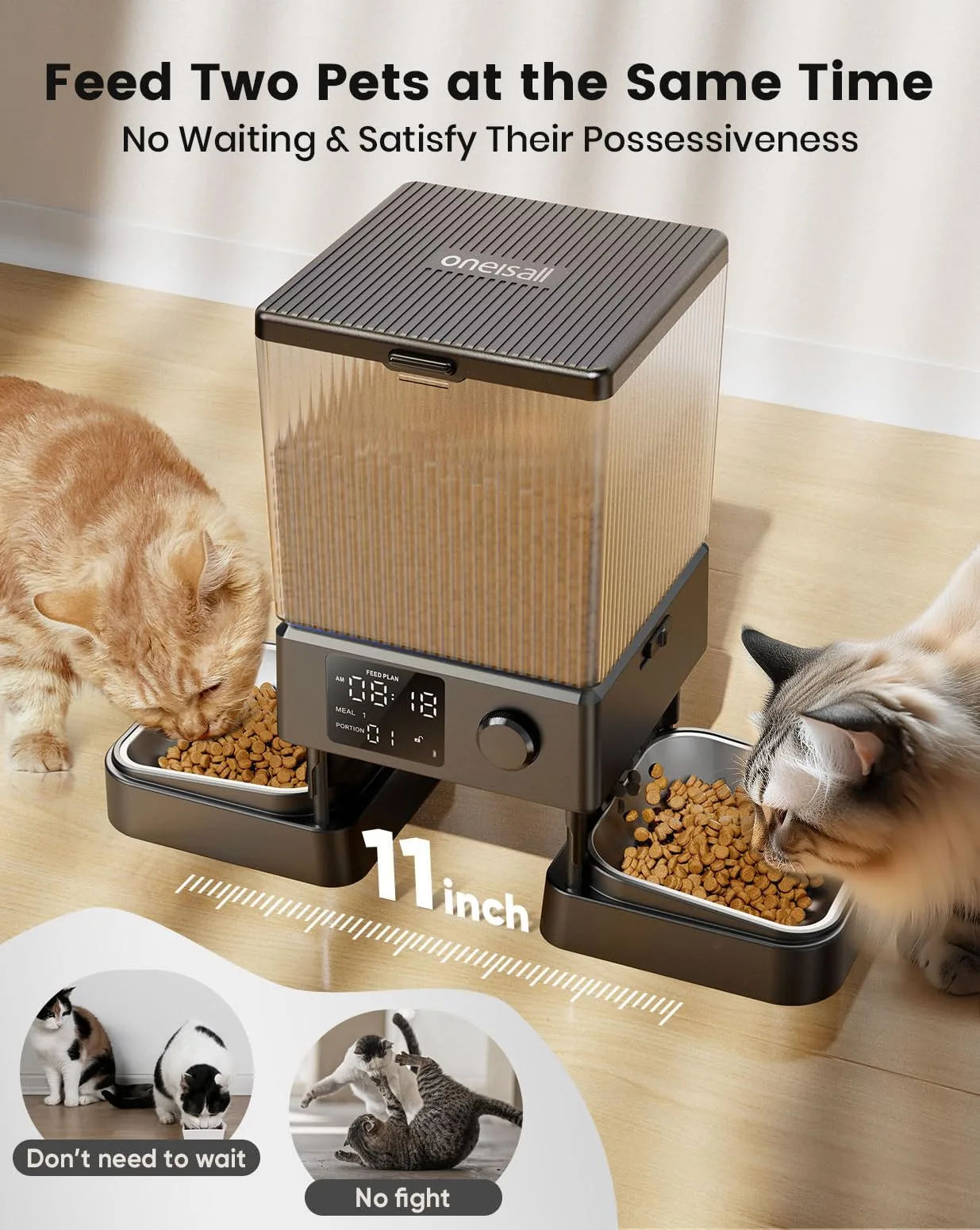
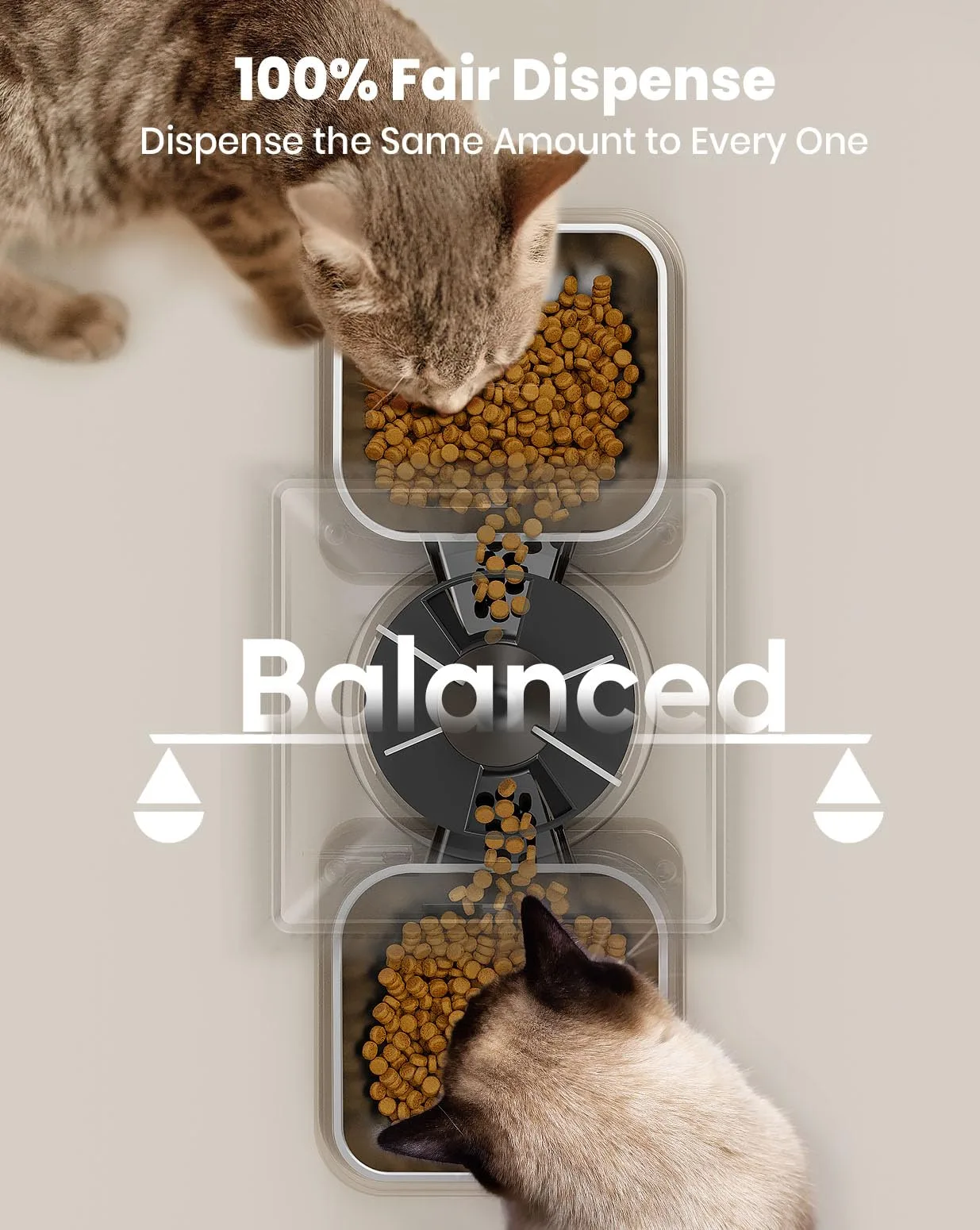
The 11-inch separation between bowls isn’t arbitrary. It’s calculated to create a “personal dining zone” for each cat. Oliver can’t easily eat from his bowl while blocking Luna’s access. The splitter mechanism inside uses a rotating gate to divide kibble into two chutes with surprising accuracy—I measured portions over a week and found less than 5% variance.
🔌
The Beauty of Analog
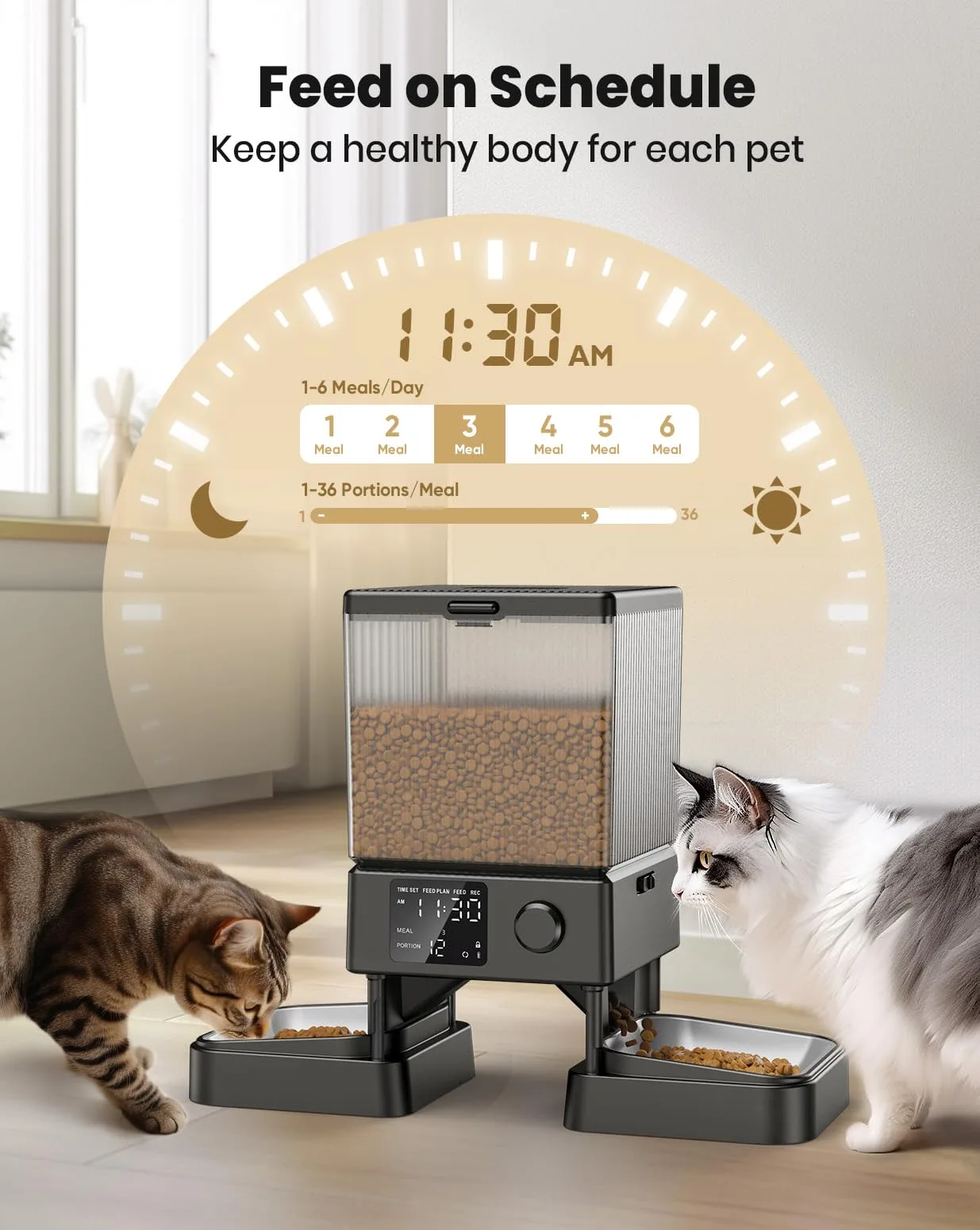
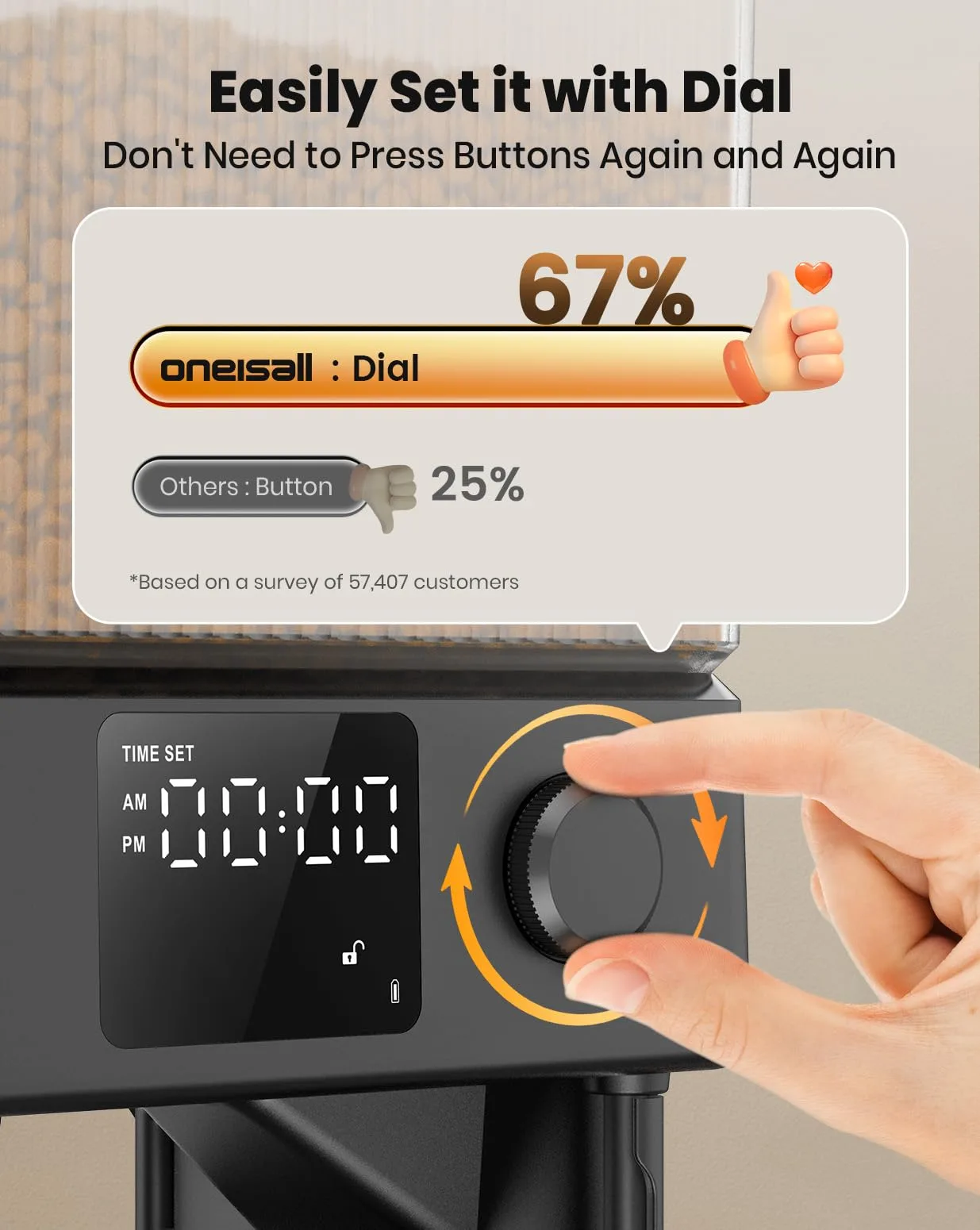
In a world where even light bulbs need apps, this feeder’s manual interface is a relief. A simple dial and button controls let you set up to 4 meals per day in minutes. No WiFi passwords, no dropped connections, no “device offline” errors at 3 AM. It has battery backup, so a power outage won’t reset your schedule.
🛡️
Hygiene by Design
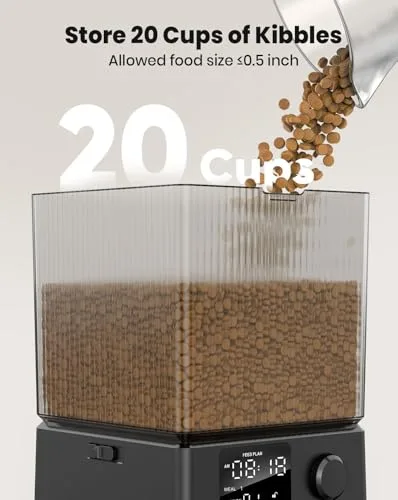
The stainless steel bowls are non-negotiable for health-conscious owners. Plastic bowls harbor bacteria in microscopic scratches, leading to feline acne (which Oliver had). These 304 stainless steel bowls are dishwasher-safe and don’t retain odors. The hopper has a desiccant bag holder to keep food dry and fresh for up to 10 days.
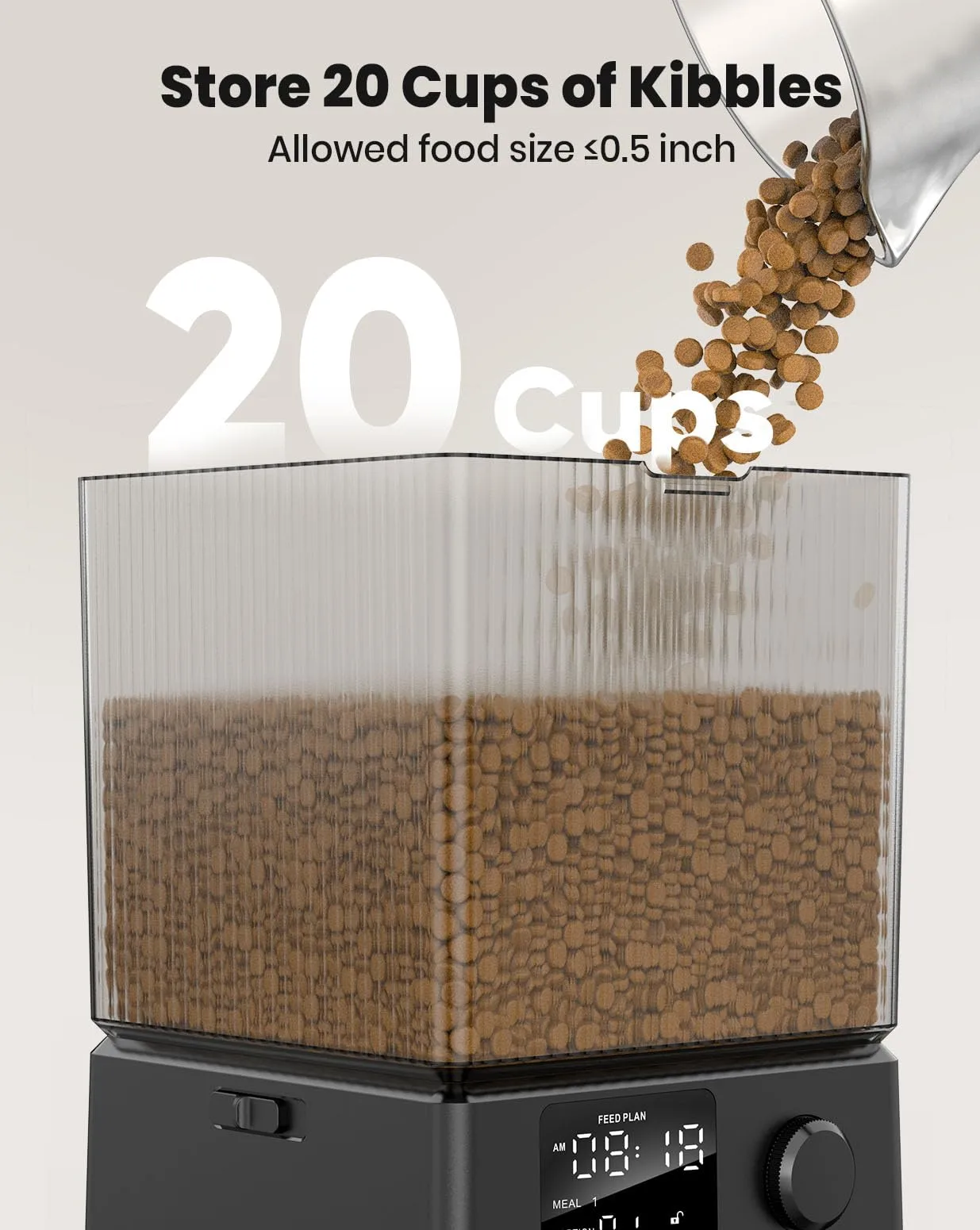
The Capacity Sweet Spot: The 5L (20-cup) hopper holds about 10 days of food for two average cats. It’s large enough for a long weekend trip without refilling, but not so massive that the bottom kibble sits for weeks getting stale. For true “set it and forget it” peace of mind, this balance is perfect.
The interface anyone can master in 5 minutes. No PhD in smart home technology required.
The 60-Day Test Journal: From Chaos to Routine
Here’s what actually happened, documented in real time over two months of daily use.
1
Days 1-7: The Suspicion Phase
Setup took under 10 minutes. I programmed meals for 6 AM, 12 PM, 6 PM, and 10 PM—mimicking our old routine minus the 4:47 AM negotiation. The first morning, both cats stared at the machine like it was an alien spacecraft when it whirred to life. Oliver approached cautiously, ate his portion in record time, then looked at Luna’s still-full bowl. He tried to go for it, but the 11-inch gap meant he had to fully disengage from his bowl and walk around the unit, giving Luna time to start eating. This small spatial buffer was the first victory.
2
Days 8-30: Routine Establishment
The voice recorder feature became our dinner bell. I recorded “Kitty, kitty, dinner time!” in my most cheerful voice. Within a week, both cats would come running from anywhere in the house when they heard it. The portion accuracy held up—Luna wasn’t losing weight, Oliver wasn’t gaining. Most importantly, I slept through the night for the first time in years. The psychological weight of being the “food provider” lifted.
3
Days 31-60: The True Test: A Weekend Away
The ultimate test: a 3-day trip. I filled the hopper, checked the batteries, and left. Security camera footage showed both cats eating peacefully at scheduled times. No frantic searching for me, no food aggression. When I returned, there was still food in the hopper, and both bowls were licked clean after each meal. The feeder hadn’t jammed, the power hadn’t flickered (but batteries were there as backup), and peace had been maintained in my absence.
The Critical Realization: It’s a Tool, Not a Miracle
This feeder won’t solve deep-seated behavioral issues—if one cat is genuinely aggressive, they’ll still find ways to intimidate. But for typical “food-motivated” cats like Oliver, the physical separation and consistent timing remove the triggers. It also won’t work for cats who need prescription diets in different amounts—the portions are equal. But for most two-cat households with healthy adults eating the same food, it’s brilliantly effective.
The goal achieved: simultaneous, stress-free dining. Notice the physical and psychological space between them.
Balanced Evaluation: Where It Shines and Where It Doesn’t
The Winning Arguments
- Ends Mealtime Mediation: The spatial separation genuinely reduces food competition. Both cats eat simultaneously but separately.
- Unbreakable Reliability: No WiFi means no connectivity issues. The analog interface works every single time, exactly as programmed.
- Perfect Capacity for Travel: The 5L hopper is the ideal size for weekends away or busy work weeks without daily refills.
- Health-Conscious Materials: Stainless steel bowls are superior for hygiene and prevent skin issues common with plastic.
- Psychological Freedom: You’re no longer the “food gatekeeper.” Your cats associate meals with the machine, not with bothering you.
Points to Consider
- No Remote Control: If you’re stuck at work and want to dispense an extra snack, you can’t. The simplicity comes at the cost of remote access.
- Kibble Size Restrictions: It works perfectly with standard dry cat food but can’t handle large kibble, wet food, or irregular shapes.
- Equal Portions Only: The splitter divides food 50/50. If one cat needs a different amount for medical reasons, this isn’t the solution.
- Basic Voice Recording: The 10-second recording works but sounds tinny. It’s functional, not high-fidelity.
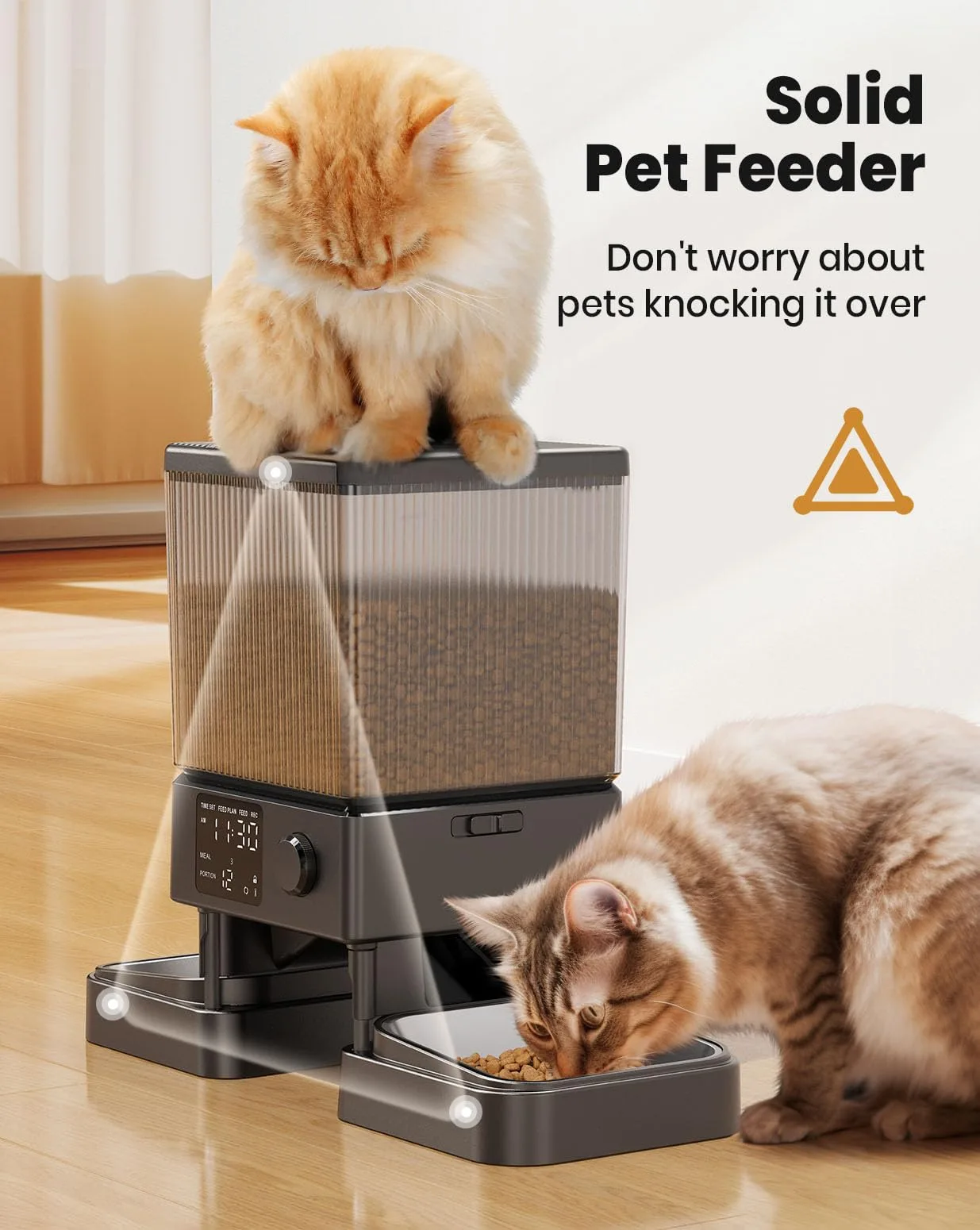
- Requires Flat Surface: Needs a stable counter or floor. It’s not lightweight and could be tipped if placed somewhere precarious.
Comparison Matrix: Finding Your Fit
| Decision Factor |
🏆 oneisall Dual Feeder |
📱 WiFi Smart Feeder |
🥣 Gravity Feeder |
| Multi-Cat Fairness |
Engineered for it |
Usually single-bowl |
Free-for-all |
| Setup & Reliability |
Plug & play, always works |
App dependent, connectivity issues |
Simple but no control |
| Portion Control |
Precise, scheduled |
Precise, adjustable remotely |
Unlimited, uncontrolled |
| Travel/Weekend Proof |
Excellent (10-day capacity) |
Good (if WiFi stable) |
Poor (food can stale) |
| Best For |
Households with 2 cats who value reliability over remote access |
Tech-savvy owners who want app control and cameras |
Single cats who self-regulate intake |
Real Questions from a Multi-Cat Household
Will a determined cat figure out how to get extra food?
Oliver tried. The dispensing mechanism is clever—food drops down a chute at an angle that’s difficult to reach. He couldn’t stick his paw up far enough to dislodge extra kibble. The lid locks securely, and the unit is bottom-heavy enough that even a 15-pound cat can’t tip it over. It’s not indestructible, but it’s “cat-proof” for all but the most ingenious and persistent felines.
How accurate is the portion split really?
I conducted a 10-meal test with a kitchen scale. The average difference between bowls was 2-3 grams per 40-gram meal—about 5-7%. That’s 2-3 extra pieces of kibble for one cat. In practice, this variance is negligible and averages out over multiple feedings. If you notice a consistent bias, the internal splitter can be manually adjusted (instructions are included).
What about power outages?
The feeder uses 3 D-cell batteries as backup (not included). If the power goes out, it switches to battery power seamlessly, maintaining the time and schedule. When power returns, it switches back. I tested this by unplugging it for 24 hours—it didn’t miss a single meal.
Can it handle different types of food?
It’s designed for dry kibble only, sized between 0.2-0.5 inches. It works perfectly with standard cat food brands. It cannot handle wet food, gravy toppers, semi-moist food, or unusually large/shaped kibble. Attempting to use incompatible food will cause jams.
How often does it need cleaning?
The stainless steel bowls should be washed daily or every other day (they go in the dishwasher). The hopper and food chute should be wiped out every 2-3 weeks to remove dust and food oils. The motor unit itself doesn’t need cleaning unless there’s a jam. Overall maintenance is minimal but important for hygiene.
Final Assessment: Who Should Bring This Feeder Home?
The oneisall Automatic Cat Feeder for 2 Cats isn’t trying to be a high-tech gadget. It’s trying to be a reliable, fair, and simple solution to a very specific problem: feeding two cats on a schedule without drama. After 60 days, it has earned a permanent spot in our home.
✅ IDEAL FOR YOU IF:
- You have two cats who eat the same food
- You want to eliminate 5 AM wake-up calls
- You travel occasionally and need reliable pet care
- You prefer simple, analog technology over apps
- Your cats have minor food competition (not severe aggression)
⏸️ MAYBE NOT IF:
- You need to feed different amounts or types of food to each cat
- You want remote control via smartphone app
- Your cats require wet food or prescription diets
- You have severe food aggression issues (consult a behaviorist)
For delivering on its simple promise—fair, scheduled meals for two cats without WiFi fuss—this feeder gets two paws up from Oliver and Luna, and a full night’s sleep from me.
Gallery: The Feeder in Action
A Personal Postscript: The most surprising benefit wasn’t the sleep (though that’s glorious). It was the change in our relationship. I’m no longer the “food dispenser” who gets harassed. I’m just their person who gives pets and play. Oliver still wakes me sometimes—but now it’s for cuddles, not breakfast. That shift, from servant to companion, has been worth every penny of this feeder’s cost.
Disclaimer: I am a pet owner sharing my experience, not a veterinarian or animal behaviorist. This review is based on personal testing with my specific cats. Always consult your vet for dietary advice tailored to your pets’ individual needs.

 Jessica