Kimberly
Welcome to WeLovePetz, your number one source for all things pets.
The Curious Case of the $40 Grey Boulder
How a felted wool rock from New Zealand ended my cat’s decade-long affair with cardboard
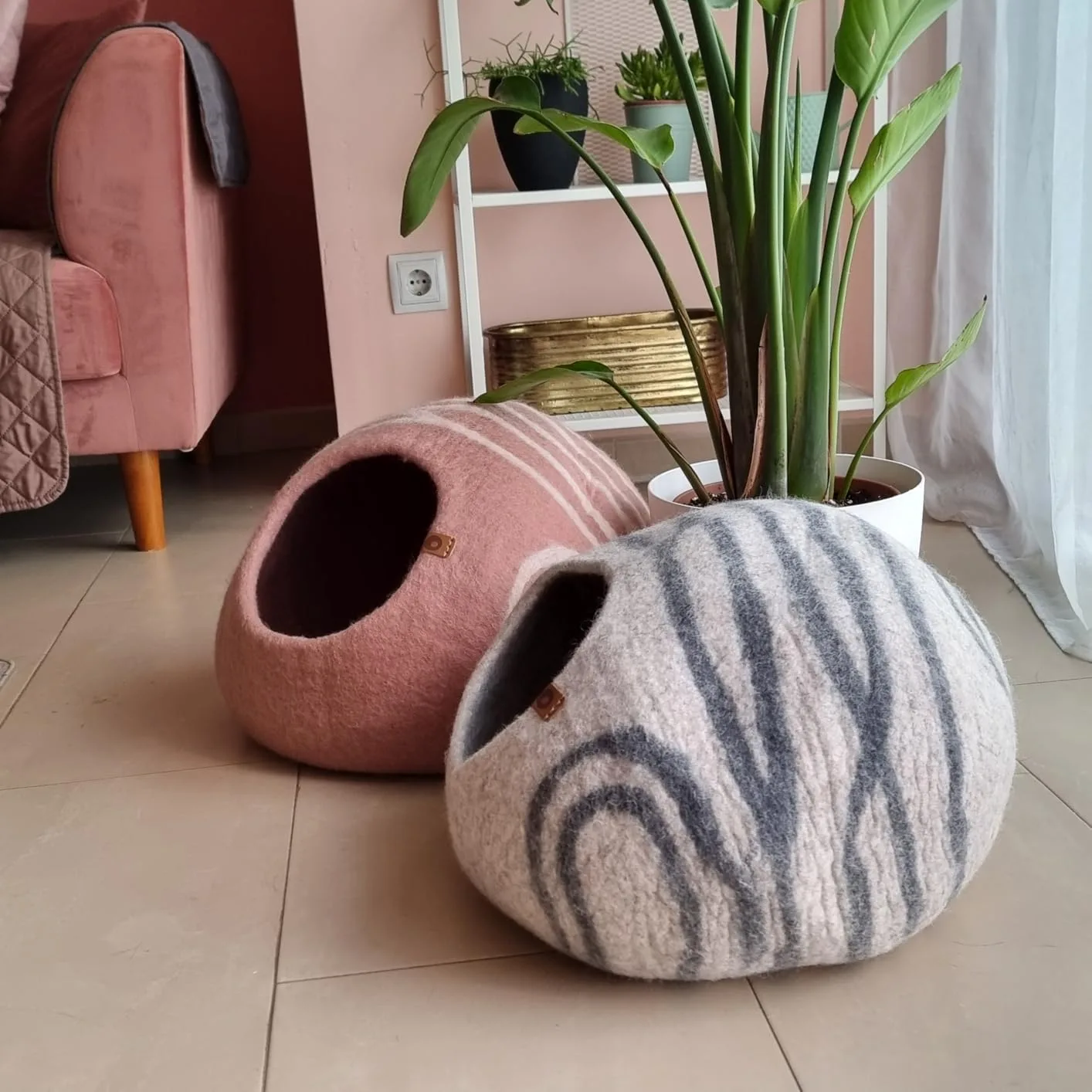
The moment of questionable financial decision-making:
(I justified it as “home decor that might also be for the cat.”)
The First Touch: It Smelled Like a Sheep, In a Good Way
There was no chemical “new product” smell. No off-gassing plastic scent. When I lifted the dome from its recycled packaging, it smelled like… a clean barn. Like lanolin and rainwater and grass. It was the smell of material, not manufacturing. This was my first clue that this was different. This wasn’t extruded polyester; this was wool that had been felted by hand, using water, soap, and friction—a process older than written language.
Initial Observations:
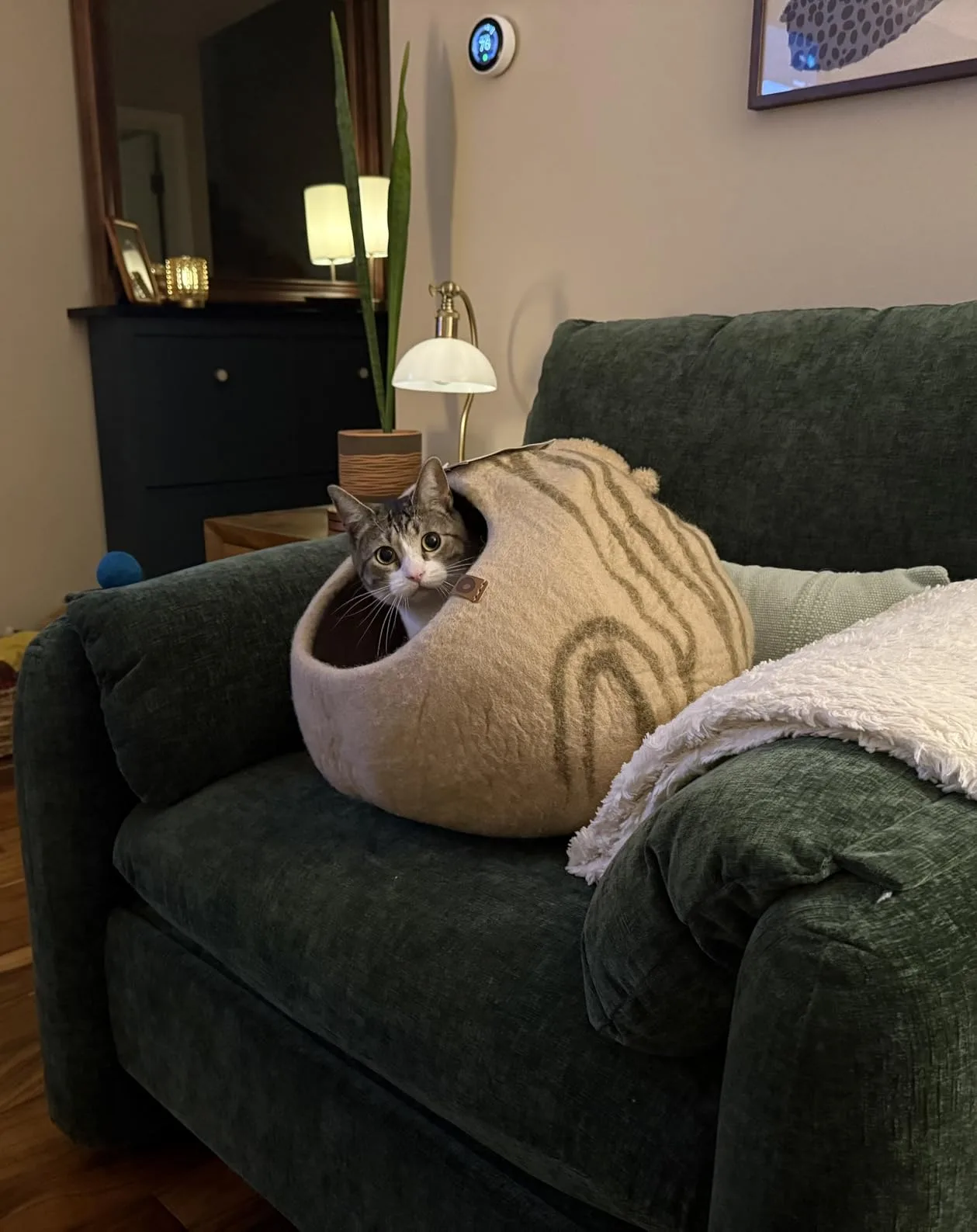
The weight surprised me. It’s substantial. It has a dense, earthy heft to it. The felt is nearly an inch thick in places—a compressed mat of a million merino fibers. I pressed my palm against it. It was firm yet yielding, like memory foam’s more sophisticated, natural cousin. I placed it in the corner of my living room. It didn’t look like a cat bed. It looked like a piece of modernist sculpture. Jasper, master of cardboard, gave it a wide berth.
The Slow Courtship: From Suspicion to Ownership
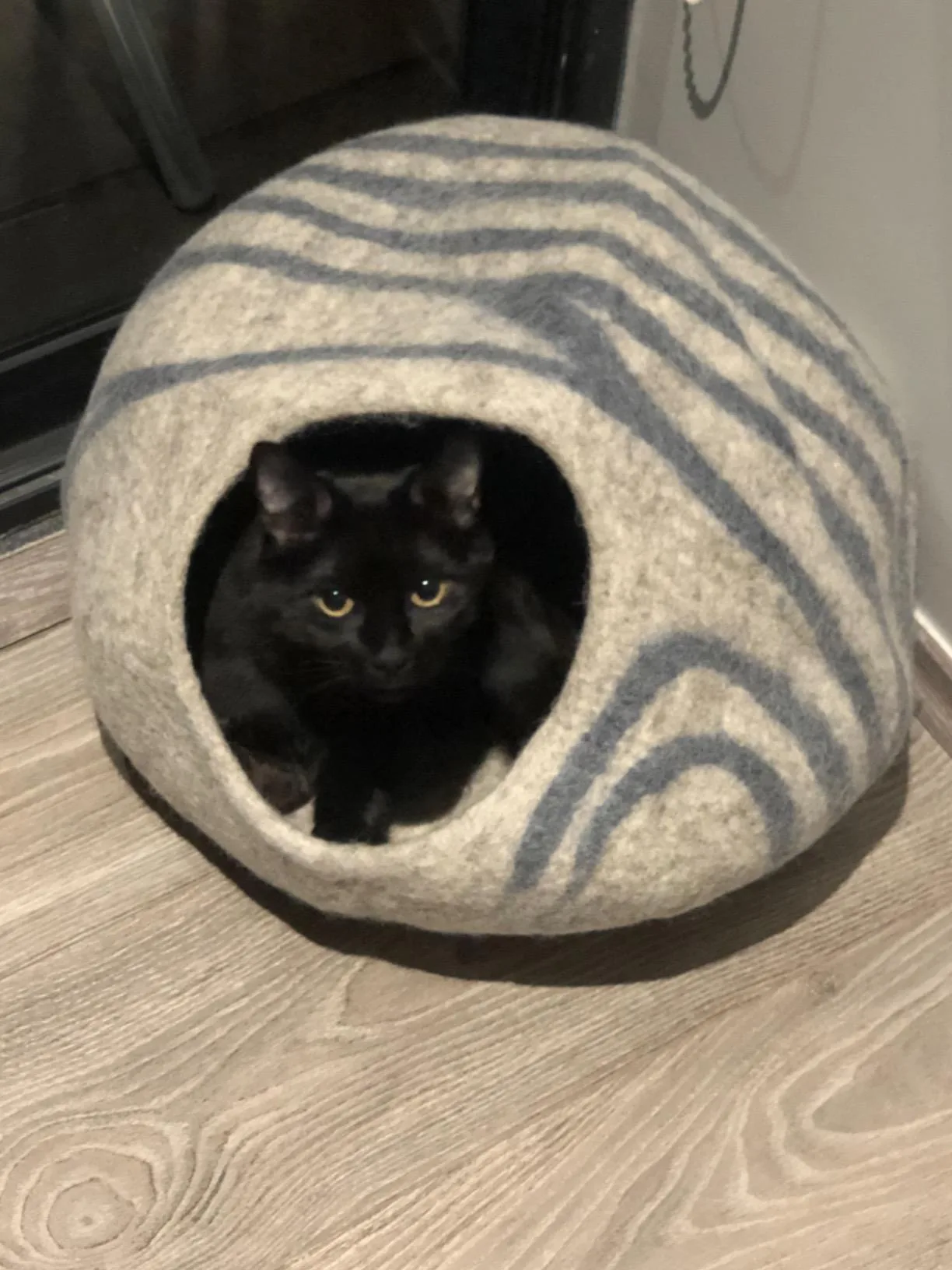
For three days, the woolen boulder sat in exile. Jasper would circle it, sniff, and walk away. I followed the internet’s oldest trick: I placed a worn t-shirt inside—one that smelled like me, like safety, like the idiot who provides food. I left it there overnight.
The next morning, I found the shirt pushed into a neat pile outside the cave. Jasper was inside. He had reclaimed the space in the most cat way possible: by removing my scent and installing his own. He wasn’t just sleeping in it; he was occupying it. The conquest was complete.
The Alchemy of Wool: Why This Rock Works
Thermal Sorcery
Merino wool is a temperature regulator. In winter, Jasper’s body heat gets trapped in the dense fibers, creating a personal micro-climate about 10 degrees warmer than the room. In summer, the wool wicks moisture and breathes, preventing that sticky, overheating feeling he gets on synthetic plush. It’s a year-round bed that adapts passively—no electronics, just biology.
The Shape-Shifter Trick
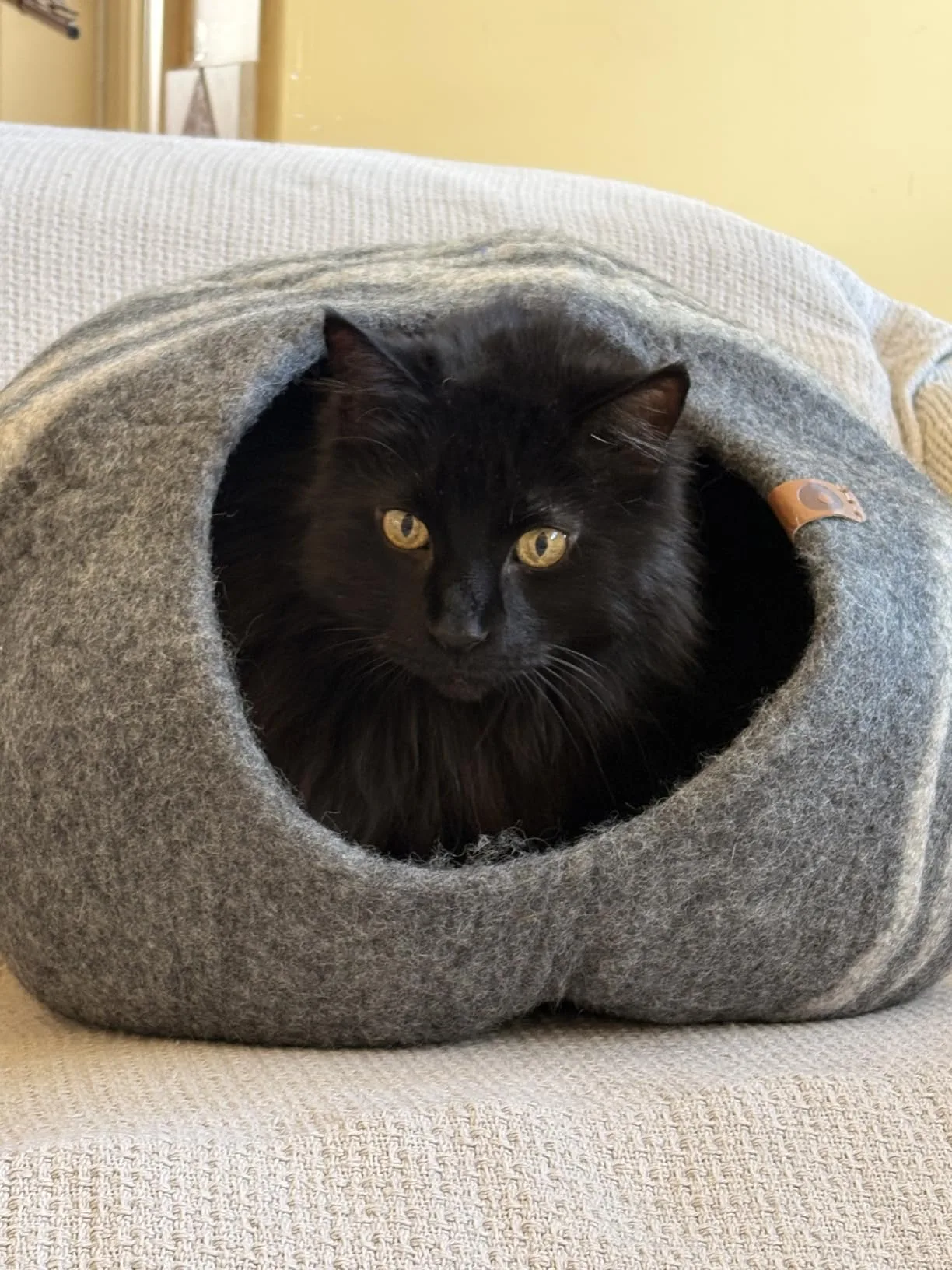
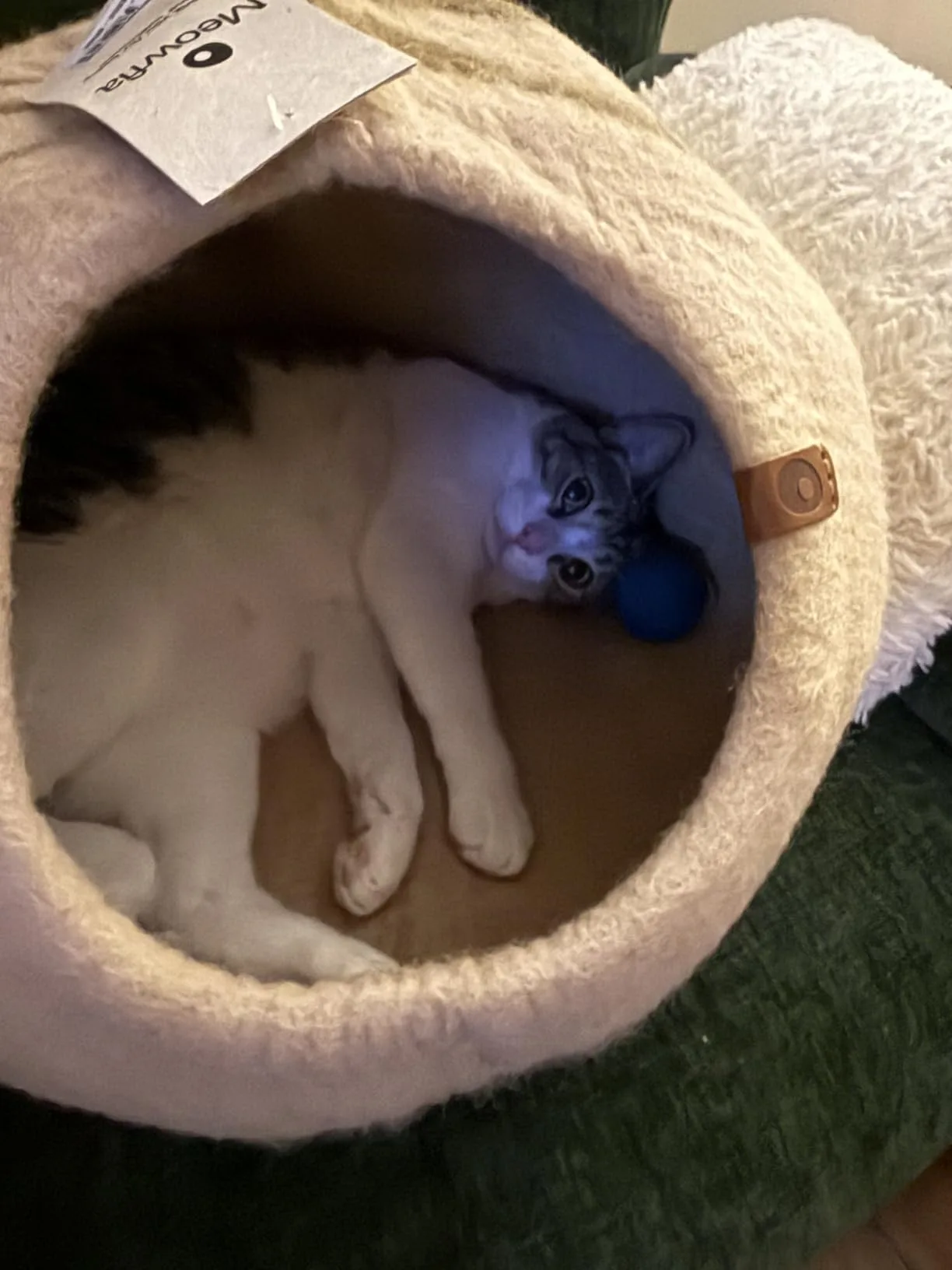
This is the genius part. Some days Jasper wants a fortress. The cave stands tall, a dark, private bunker. Other days (usually after a particularly energetic bird-watching session), he wants to sprawl. A firm press on the top flattens the dome into a thick, luxurious mat. It’s two beds in one. The wool holds whatever shape you give it, like a very well-behaved cloud.
The Silent Endorsement
The ultimate test: the “biscuit-making” ritual. When Jasper is truly content, he kneads. With cheap beds, his claws would catch and pull threads. With the felted wool, his paws sink in slightly and find purchase without damaging it. The dense fibers withstand the kneading. I’ve watched him make biscuits for a full five minutes before settling down—the highest feline praise.
The Camouflage
Cat hair is a fact of life. The light grey color and nubbly texture of the felt are magically forgiving. Shed fur sits on the surface; a quick pass with a lint roller or a damp hand picks up 95% of it. It doesn’t embed itself like it does in plush fabrics. The bed maintains its sleek, stone-like appearance with almost no effort.
No Rose-Tinted Glasses: The Honest Trade-Offs
The Beautiful Compromises (Why It’s Worth It)
It’s an Heirloom, Not Disposable: This won’t end up in a landfill in a year. The craftsmanship is evident. It feels like it could last Jasper’s lifetime and perhaps be passed down (to a very confused future cat).
It’s Actually Good Design: It serves the human’s need for aesthetics and the cat’s need for function equally. It doesn’t force me to choose between a nice home and a happy pet.
The Material is Alive: Wool has natural anti-microbial properties. It resists odors in a way that synthetic foams never can. After two months of use, it still smells like clean wool, not “cat.”
It Solves the Cardboard Problem: The shipping box from the MEOWFIA itself sat untouched. The ultimate victory.
The Necessary Acknowledgments
Cleaning is a Ritual: You cannot toss this in a hot wash. It requires a gentle, cold hand-wash or wool cycle, followed by 24-48 hours of air-drying. This isn’t a convenience product; it’s a commitment.
Sizing is Precise: The Medium is for cats under 10 lbs. Jasper is 9 lbs and fits like a pea in a pod. A 12-pound cat would be a sardine. You must measure your cat and trust the size chart religiously.
The Price is an Investment: $40 for a cat bed feels steep compared to a $10 polyester disc. But you’re not buying a bed; you’re buying a handcrafted, natural-material object that happens to be a bed.
It Has a Personality: Because it’s handmade, no two are identical. There might be slight variations in shape or density. This isn’t a flaw; it’s a feature of buying something real.
The Things You Actually Want to Know
The sacred process: Fill a bathtub or large sink with lukewarm water and a tiny amount of wool-specific detergent (like Eucalan). Submerge the cave, gently press out air bubbles, and let it soak for 15 minutes. Gently swish it. Do not wring, twist, or scrub. Drain the water, press gently to remove excess, then roll it in a towel to absorb more moisture. Reshape it with your hands and let it air dry completely, away from direct heat, for 1-2 days. It’s a meditation.
It’s remarkably resilient. The felting process tangles the wool fibers so tightly that they don’t pull apart easily. Jasper is an enthusiastic scratcher, and while he’s left some faint surface marks from kneading, there are no pulls, holes, or tears. It’s not indestructible—a truly determined cat could damage it—but it’s far more durable than any woven fabric bed I’ve owned.
Wool is a natural temperature regulator. It insulates against both cold and heat. In my apartment (which gets quite warm in summer), Jasper still uses it, but almost exclusively in its flattened “mat” configuration, which allows for more airflow. He chooses it over cooler tile floors, which tells me it’s not trapping excessive heat.
Start with it flattened! This was a game-changer. Place it as a mat in their favorite spot. Let them get used to the texture and smell. Once they claim the mat, you can slowly pop up one side, then eventually the whole cave. The transition from “mat” to “half-cave” to “full cave” lets a cautious cat acclimate on their terms. The flexibility is key for the claustrophobic feline.
This is the core question. The $15 synthetic cave is a consumable. It will look sad in a month, smell in two, and be in the trash in six. The MEOWFIA is a capital-P Purchase. It’s for people who are tired of buying disposable pet products and want something that feels intentional, natural, and designed to last. You’re paying for materials, craftsmanship, and design intelligence, not just a place for a cat to sit.
Convinced it’s time to upgrade from cardboard to craftsmanship?
Choose your size wisely. When in doubt, size up.
The Final Verdict: A Stone Worth Turning
Two months in, the MEOWFIA Cat Cave is no longer a novelty in my home; it’s part of the landscape. It sits in the corner, a quiet, grey presence. Jasper sleeps in it for hours at a time—deep, still sleep that he never achieved in a box. The cardboard shipping boxes from other deliveries now pile up, ignored and unclaimed.
This isn’t a product that screams for attention. It doesn’t have flashing lights or memory foam or a heating element. Its magic is in its simplicity: wool, water, shape. It works because it understands what a cat is: a creature that seeks security, comfort, and a vantage point, all wrapped in one.
It won’t solve all your cat problems. But it might just solve the one where your living room looks like a recycling center.
Disclaimer: I am a passionate pet owner, not a veterinarian or animal behaviorist. The information in this article is based on research and personal experience. Always consult your vet before changing your pet’s diet or medication, and remember that all cats have unique personalities and preferences.
Authors